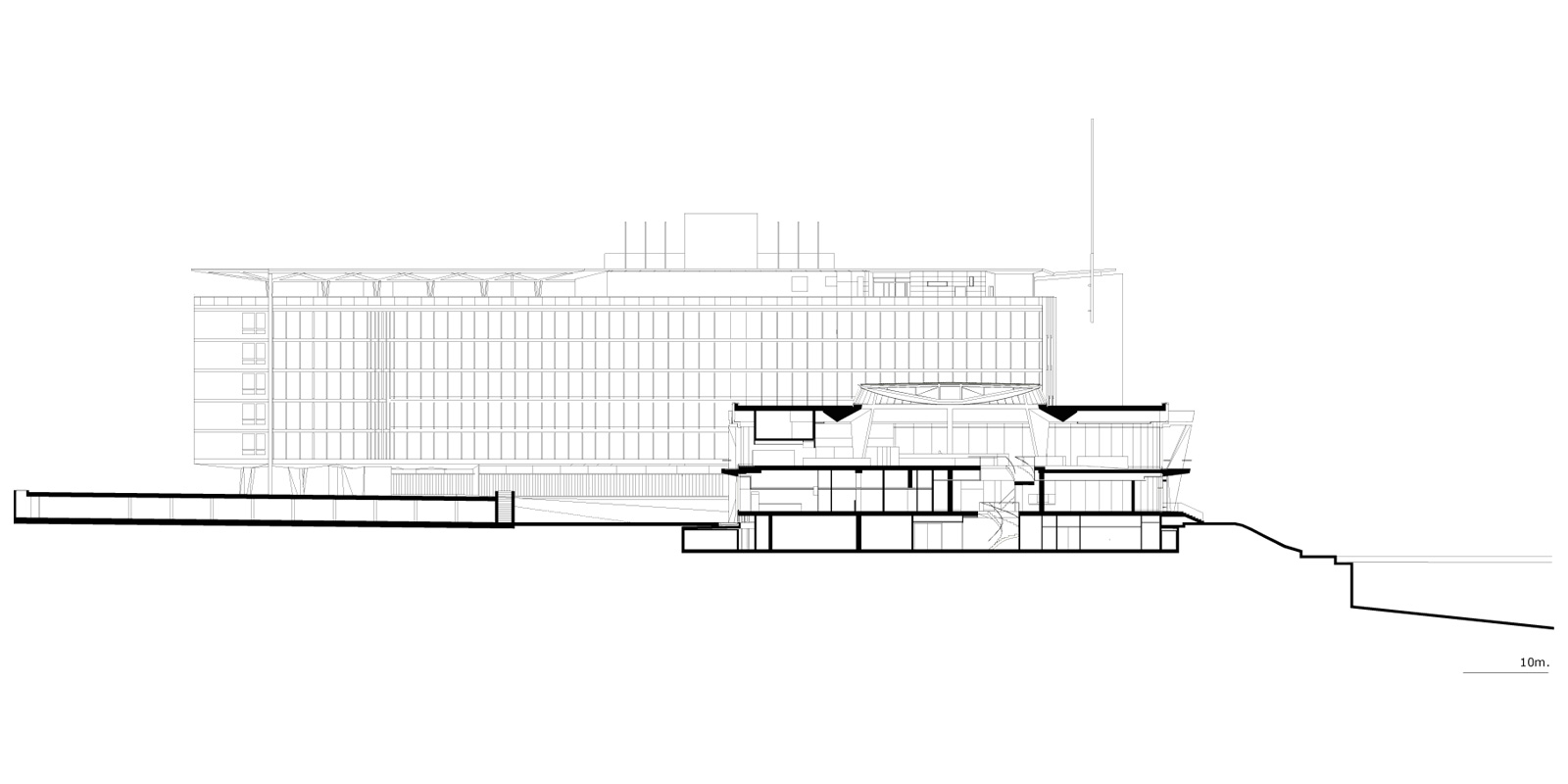
Nestlé WellNes Centre
The Nestlé WellNes Centre project was designed to meet the client’s wish to replace its existing restaurant and provide its employees with a new dining facility that reflects the company’s vision and its position as a leader in the food industry.
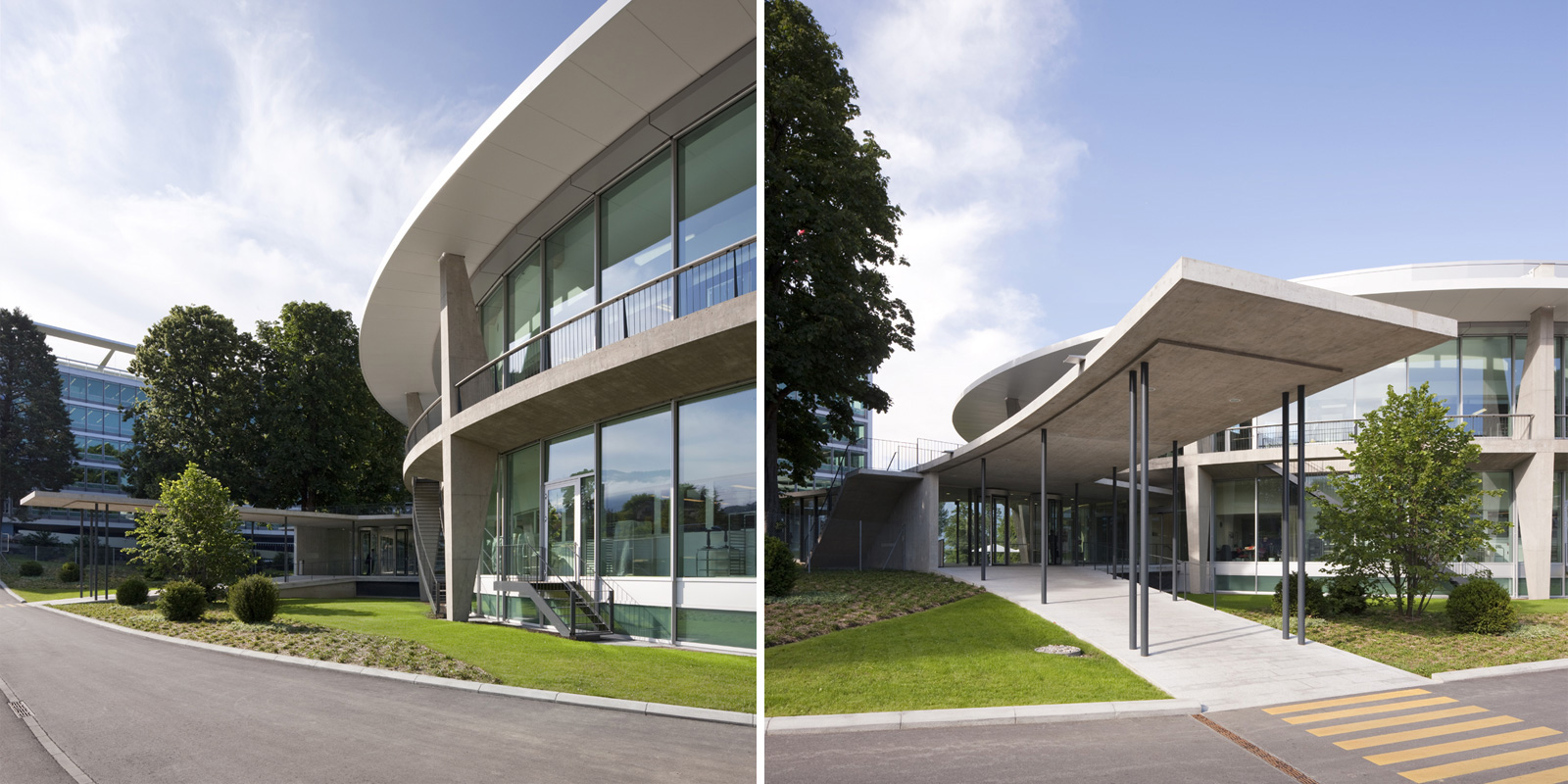
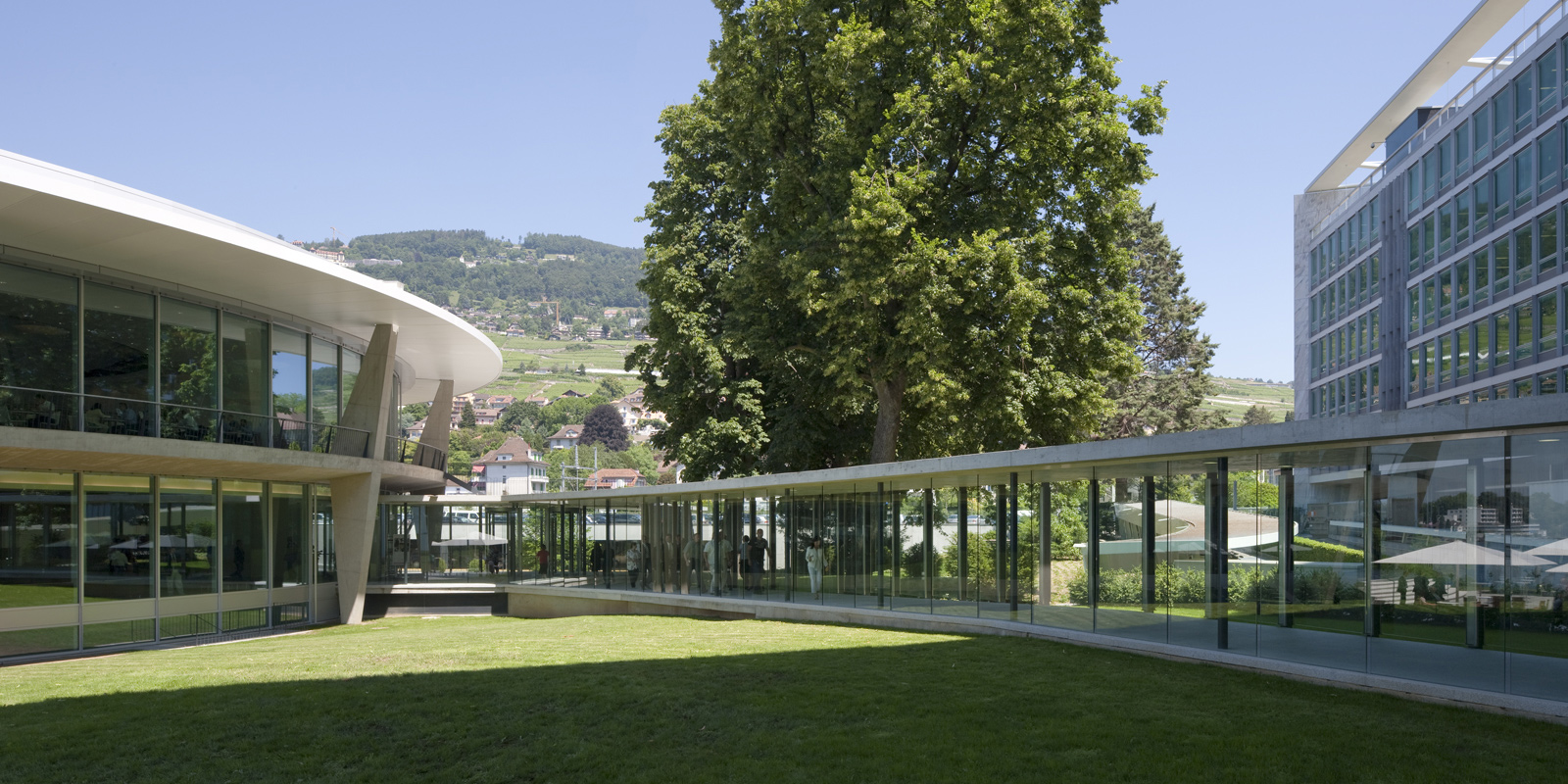
The construction of this building marks the final stage of the renovation project for the Nestlé site in Vevey, led by Richter Dahl Rocha & Associés. Begun in 1996, it comprises the complete renovation of the building designed by Jean Tschumi and built in 1960, the conversion of part of the extension carried out by Burckhardt + Partner in 1975, as well as the construction of the new connecting space linking the two buildings and the renovation of the northern section of the outdoor facilities.
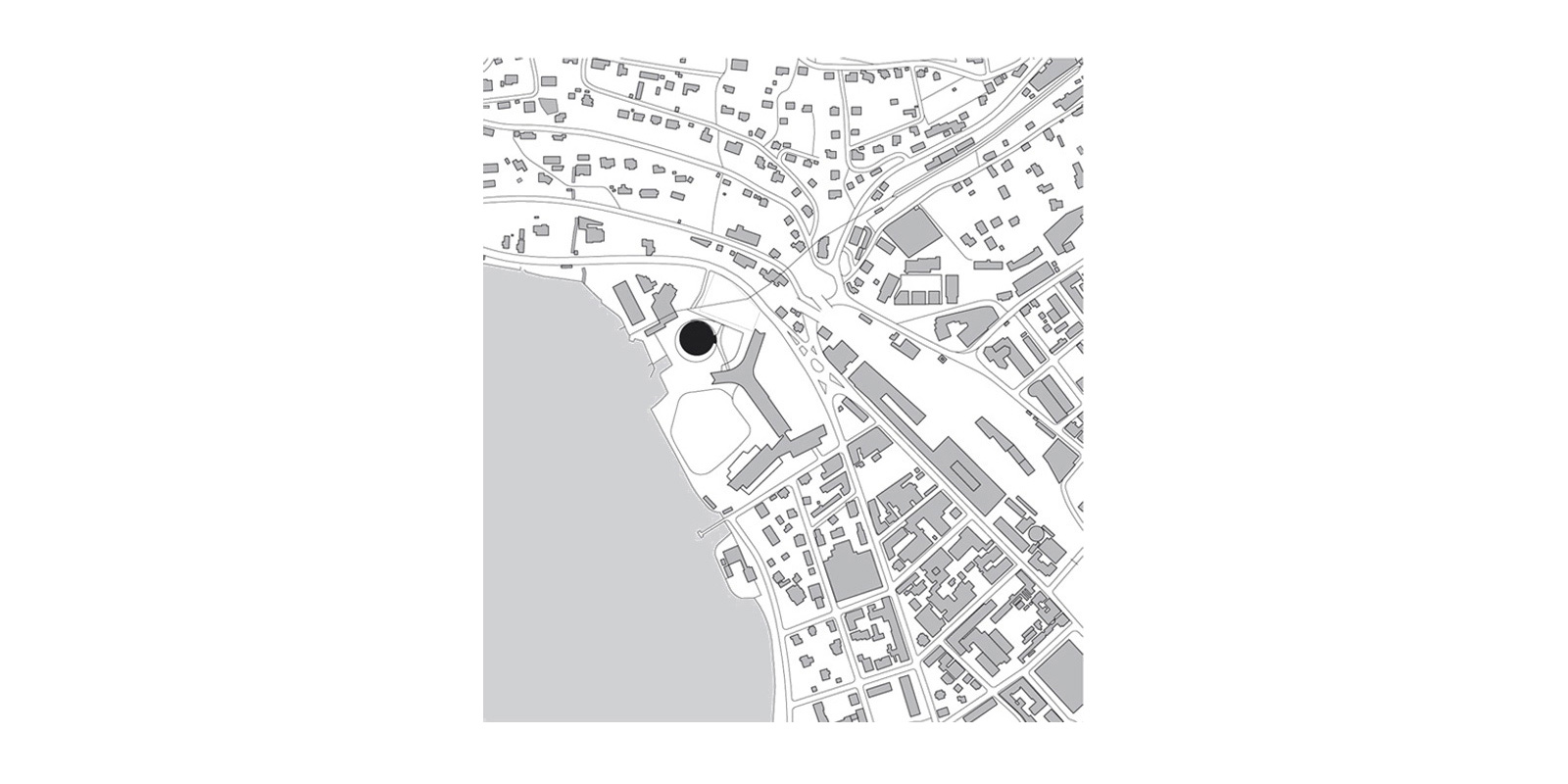
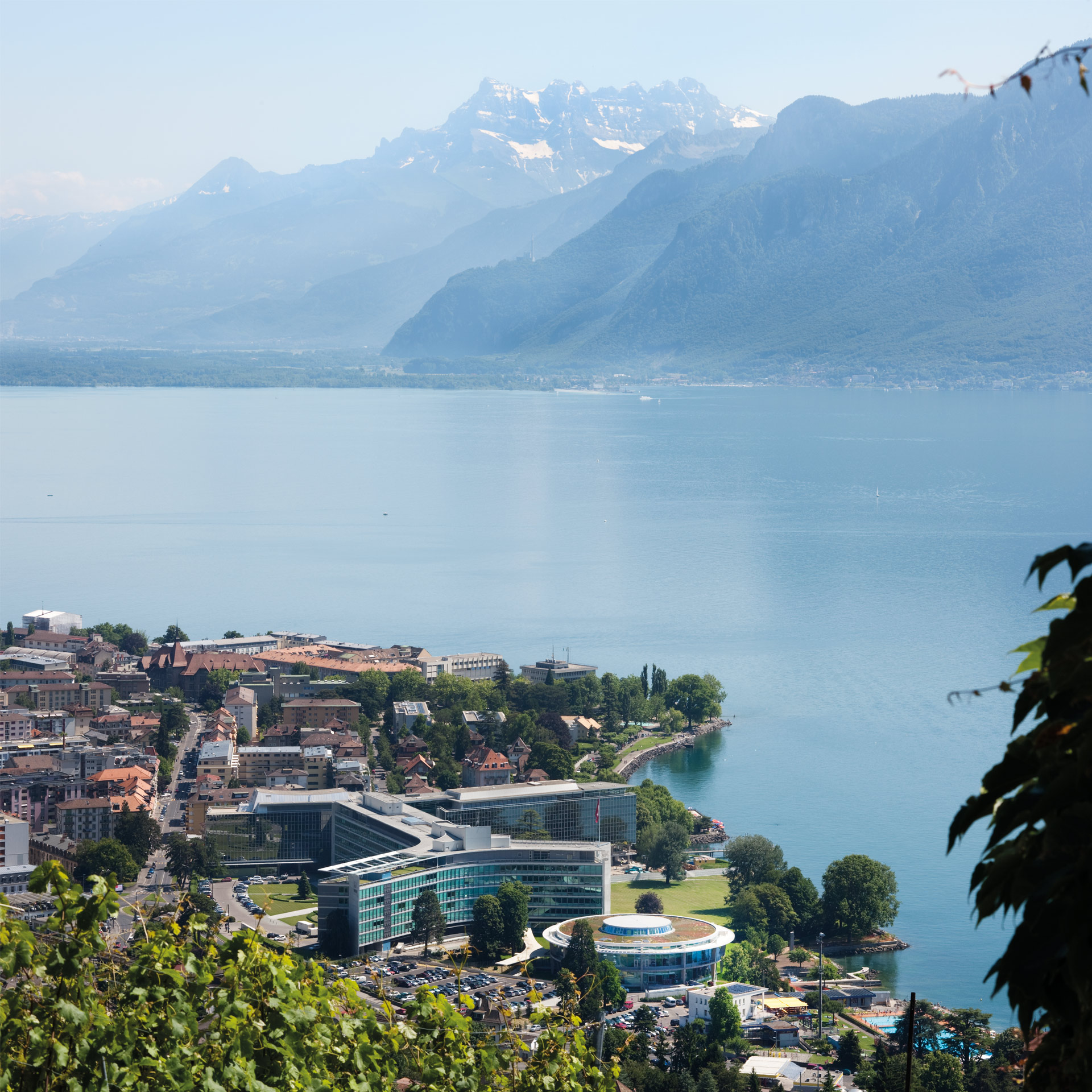
The construction of the new building has helped to consolidate the ‘En Bergère’ site, its riverside and its magnificent park, both functionally and in terms of landscaping.
To this end, the neighbouring plot was incorporated, and the surface car park that occupied it was concentrated onto two underground levels and relocated near the road, freeing up the land for the construction of the new building and the extension of the park towards the west.
The project meets the challenge of incorporating a new, unplanned element into the site without altering its historical value or its architectural and landscape qualities.
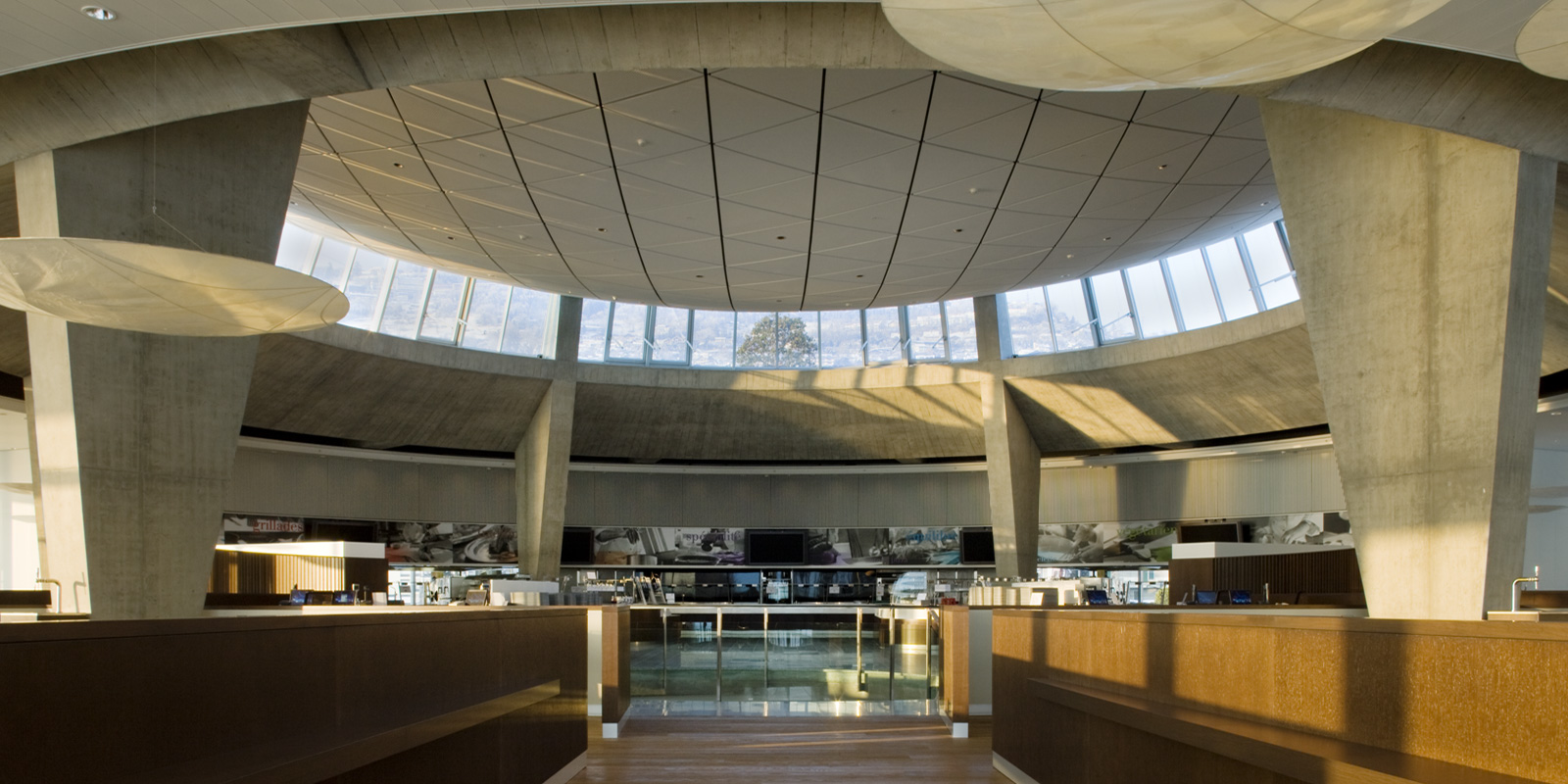
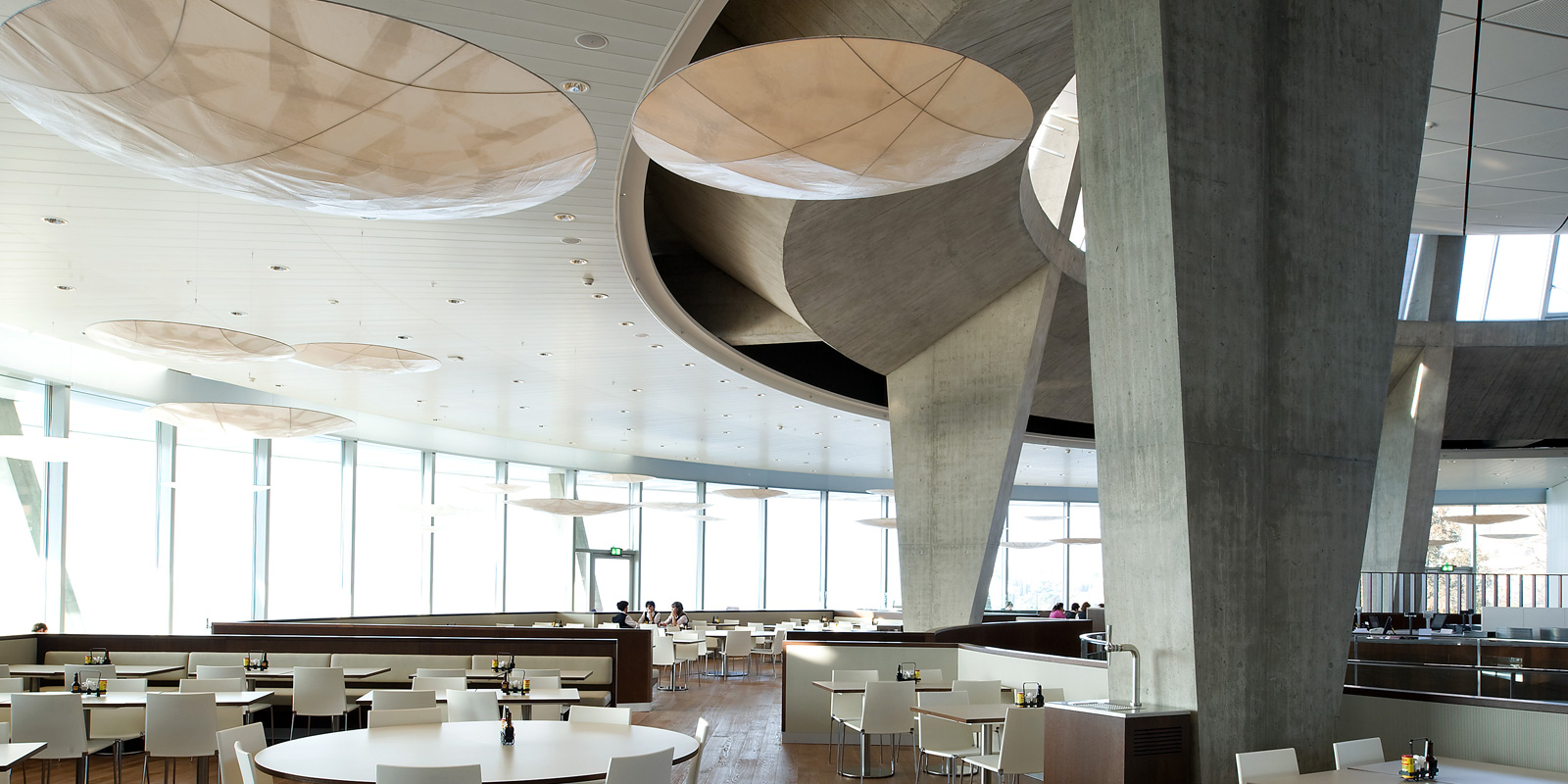
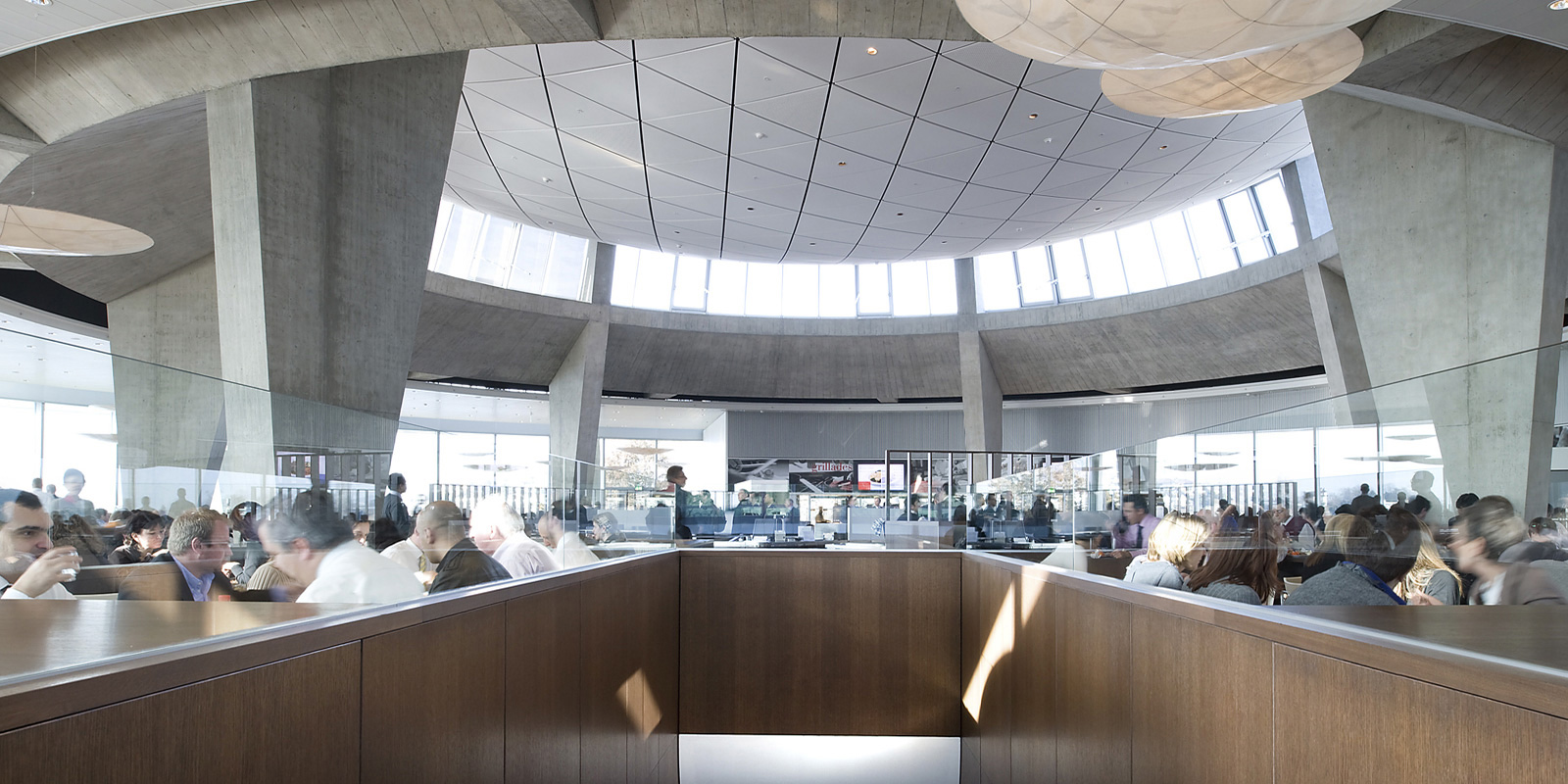
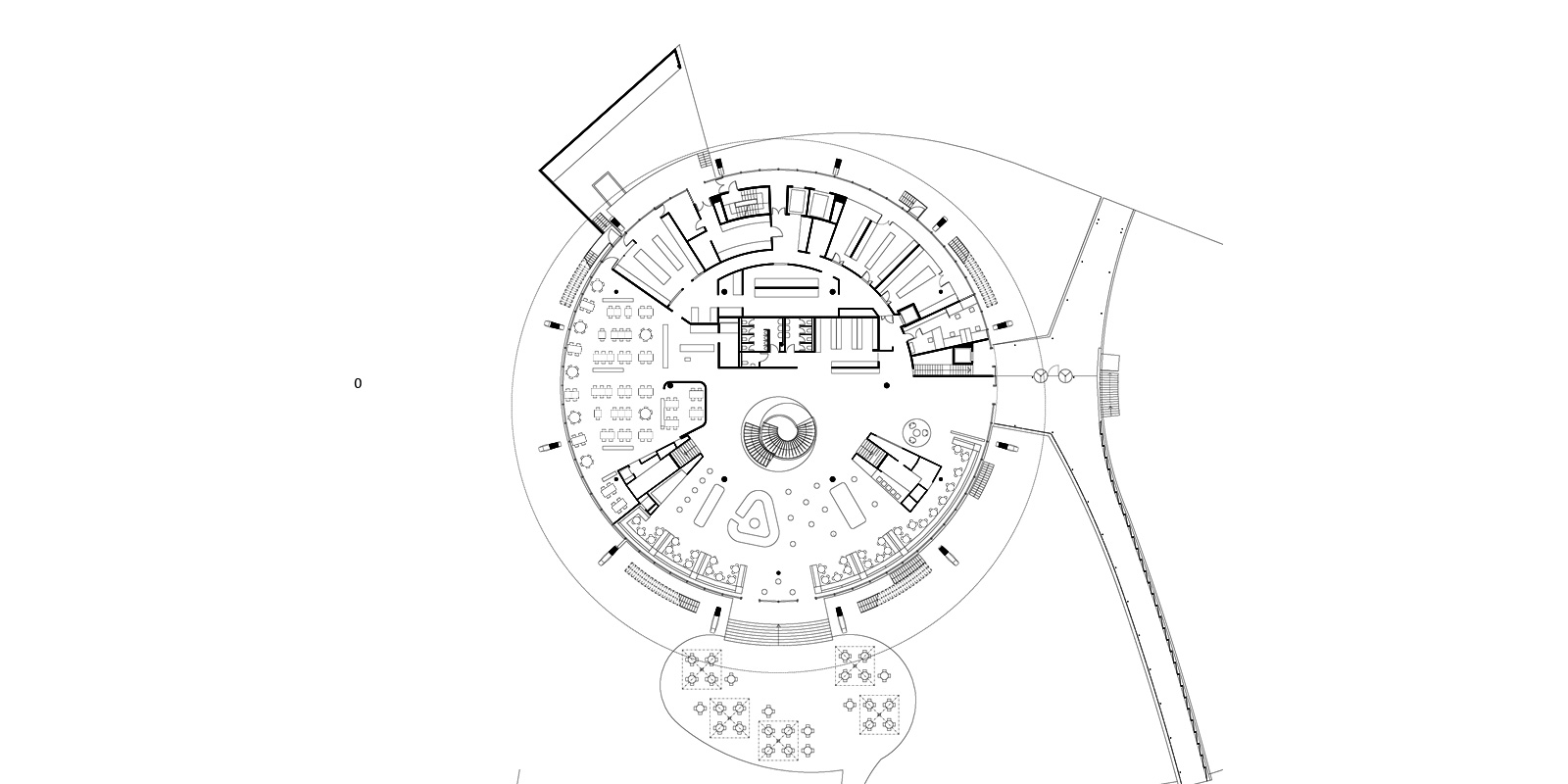
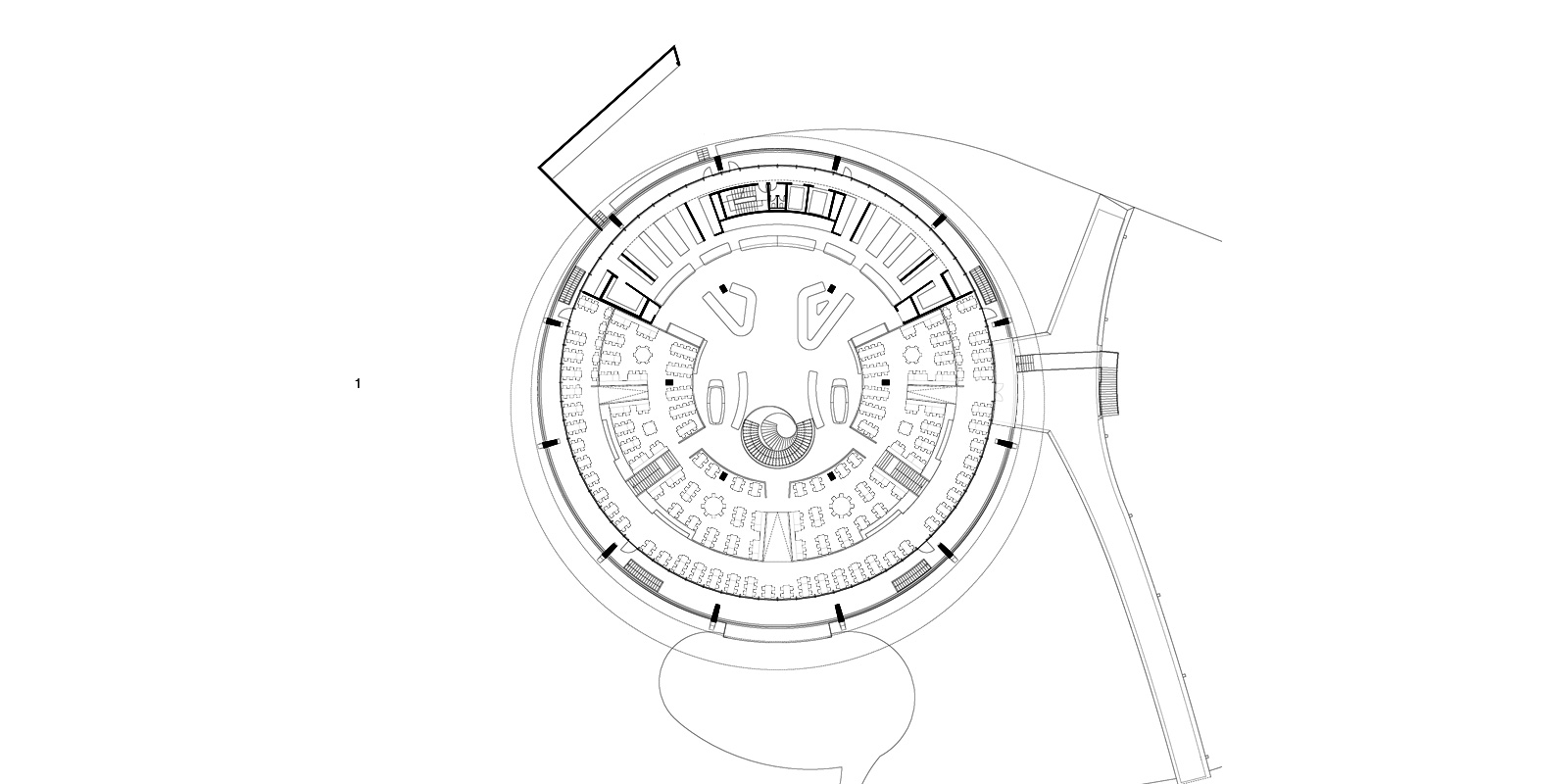
At the top of the building are the self-service restaurant and its kitchen, whilst the ground floor houses the cafeteria, the restaurant, and the food preparation areas. The lower ground floor, reserved for staff, houses meeting rooms, a fitness centre and a small medical centre.
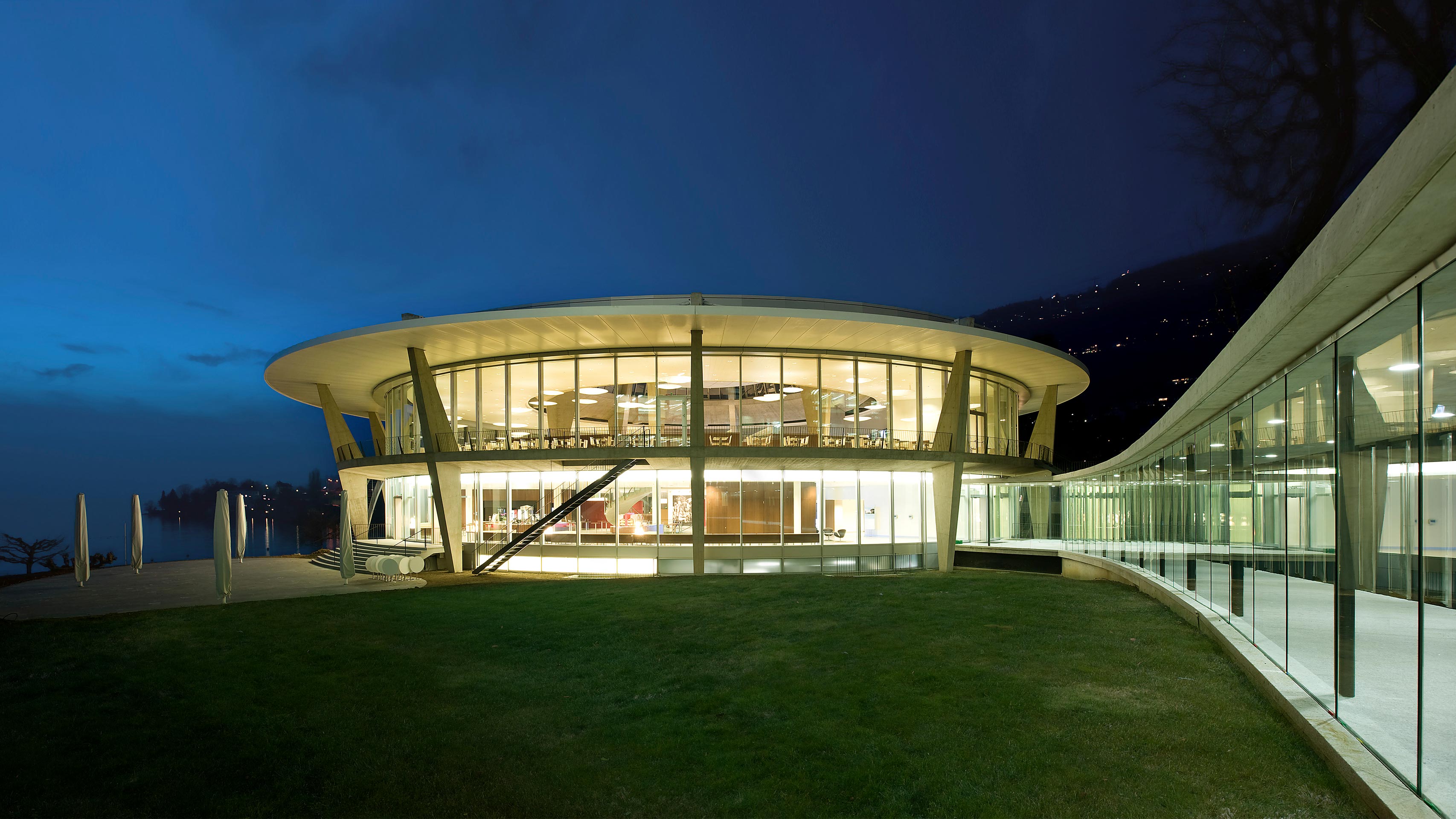
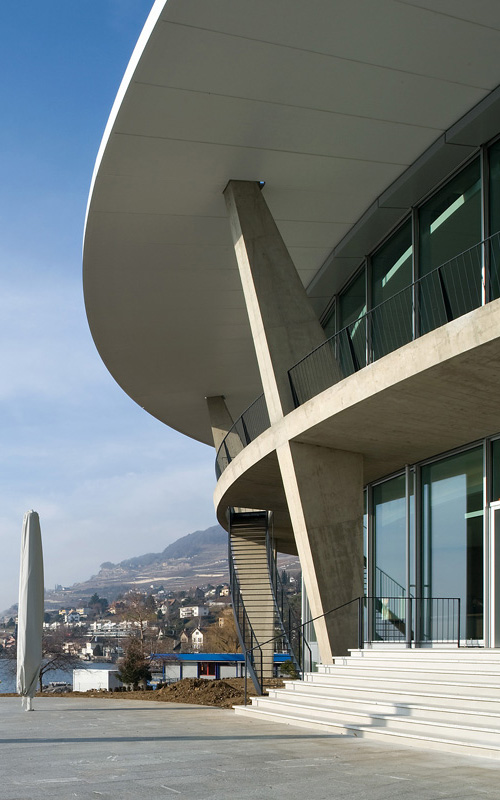
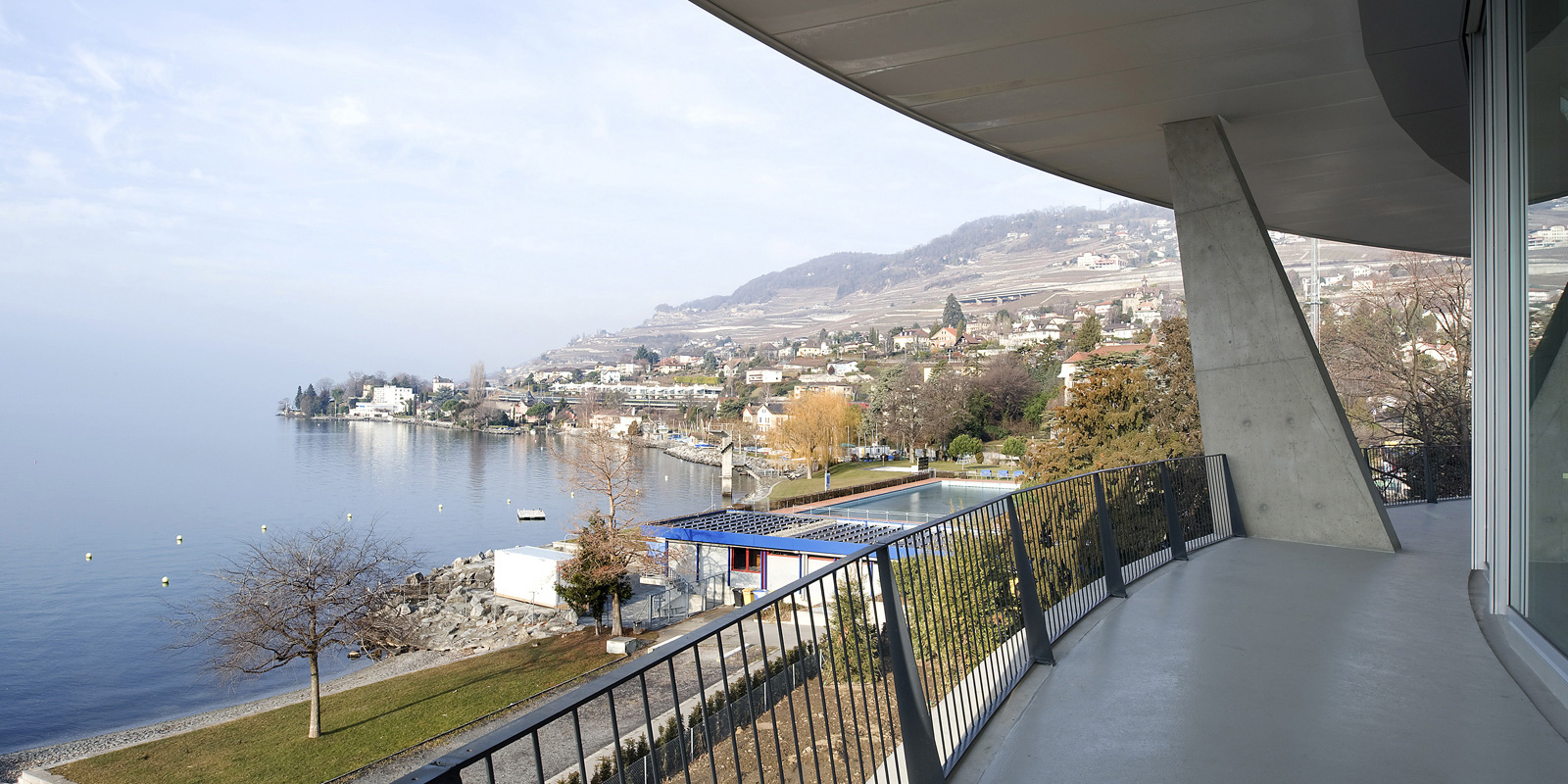
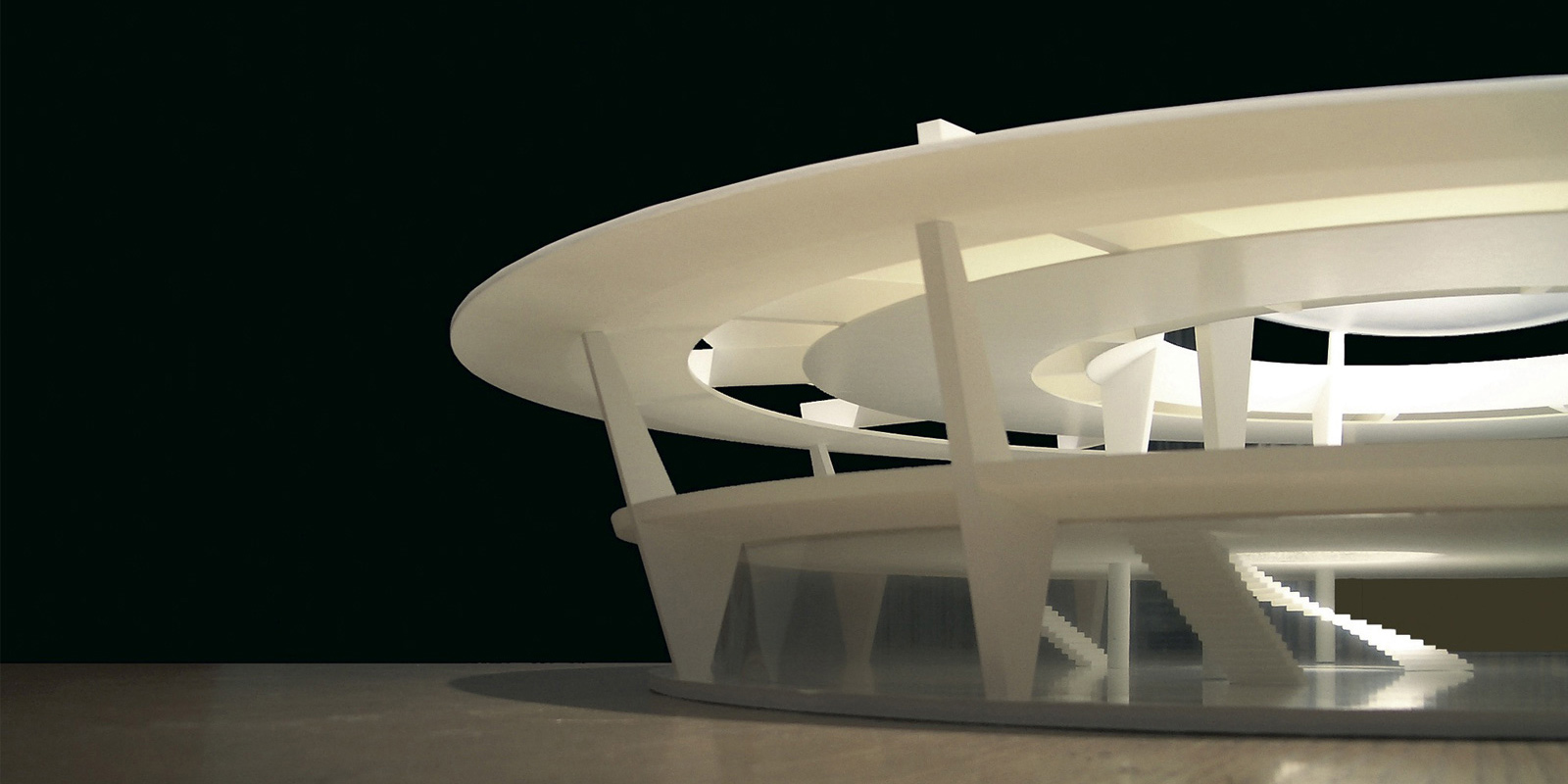
Echoing the curves of the building designed by Jean Tschumi, the rounded shape of the new restaurant and its curtain wall façade, which opens fully onto the landscape, create ideal circulation conditions whilst making the most of the spectacular views offered by this majestic site.
All tables are positioned near the outer perimeter, offering views of the park, Lake Geneva and the Alps as a backdrop.
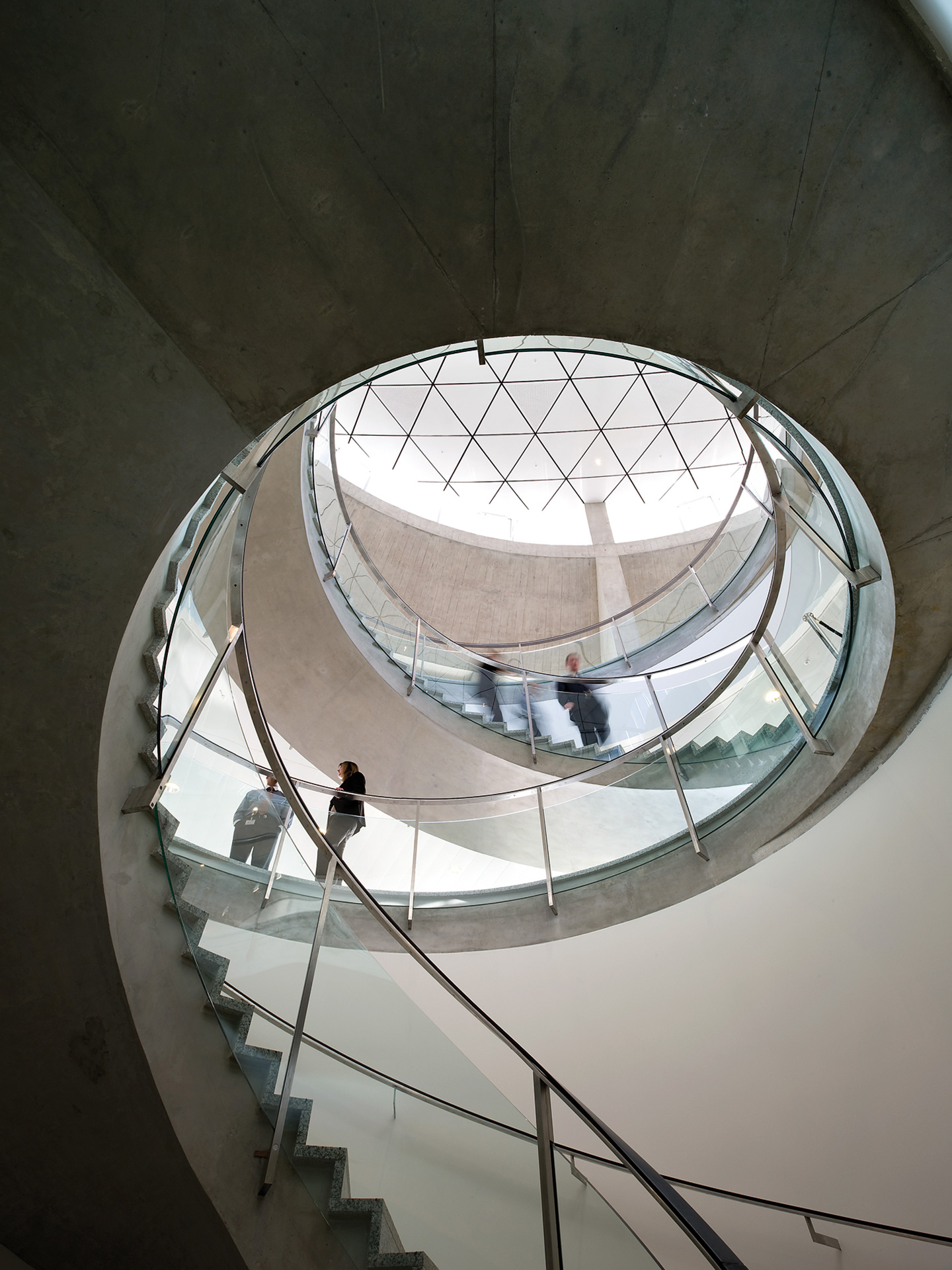
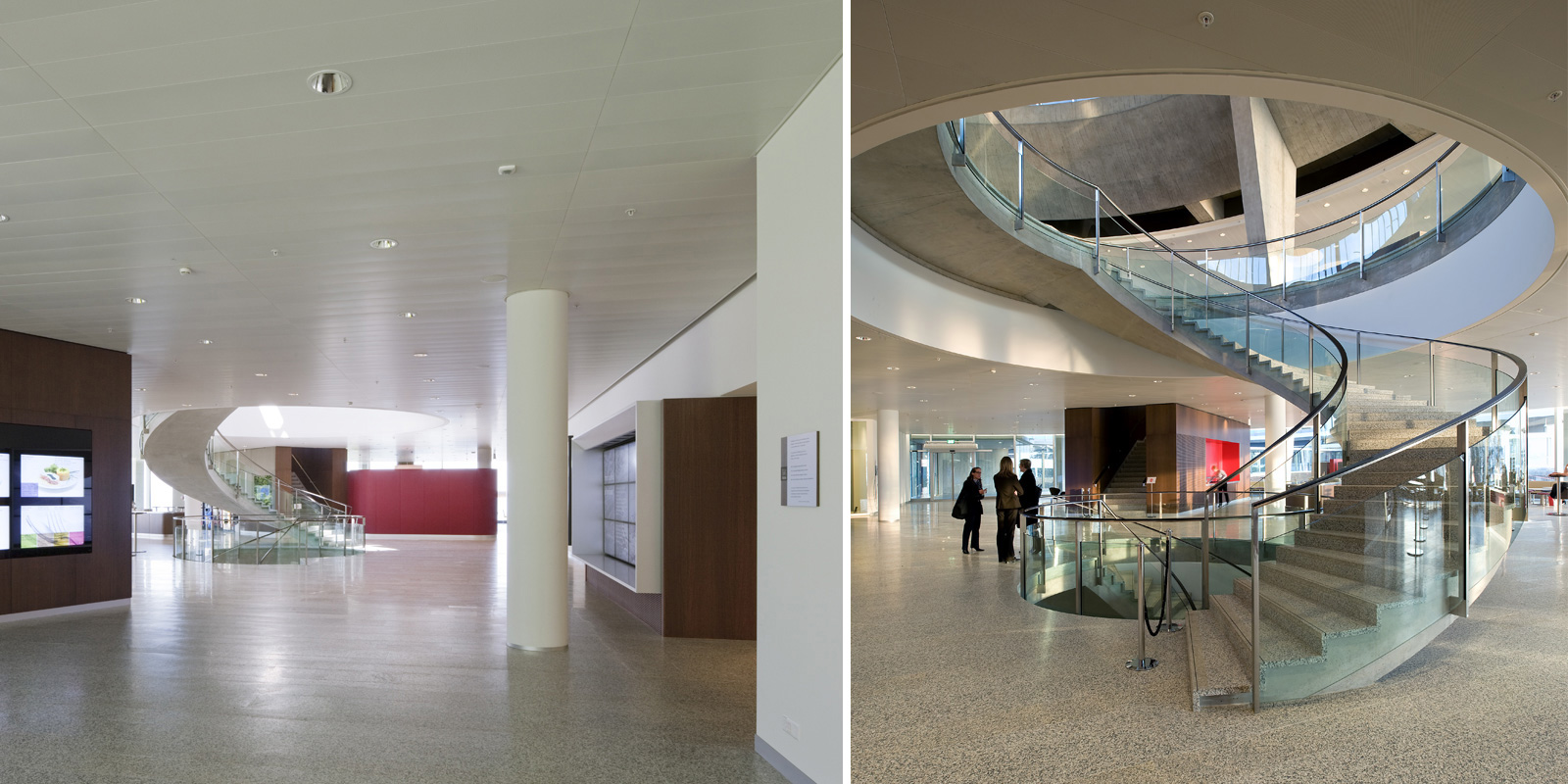
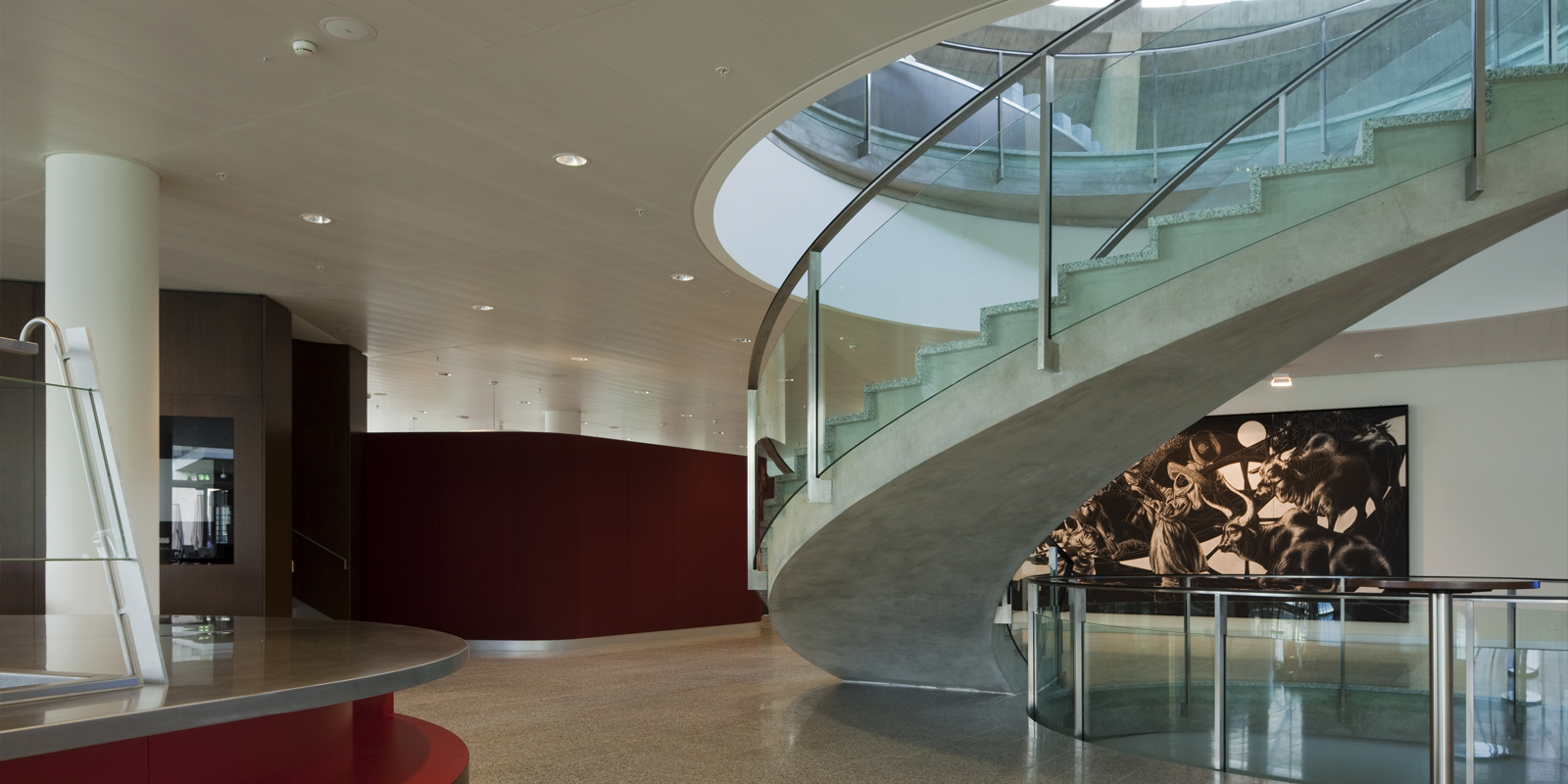
At the heart of the building, connecting the three levels, a vast spiral staircase echoes the double helix of the famous ‘Chambord’ staircase situated at the fork of the Y-shaped plan of Tschumi’s building.
The concrete structure is exposed on the exterior of the building. Comprising sculptural pillars supporting the slabs, it contributes – along with the metal eaves – to the building’s contemporary aesthetic, whilst paying homage to Jean Tschumi’s original design.