The development of the Quartier follows a tender process launched by EPFL based on a masterplan developed by RDR architects; the competition was open to multidisciplinary teams comprising investors, architects, engineers, planners and builders. The consortium led by HRS, acting as the main contractor, won the tender with the project developed by RDR architects and the project partners.
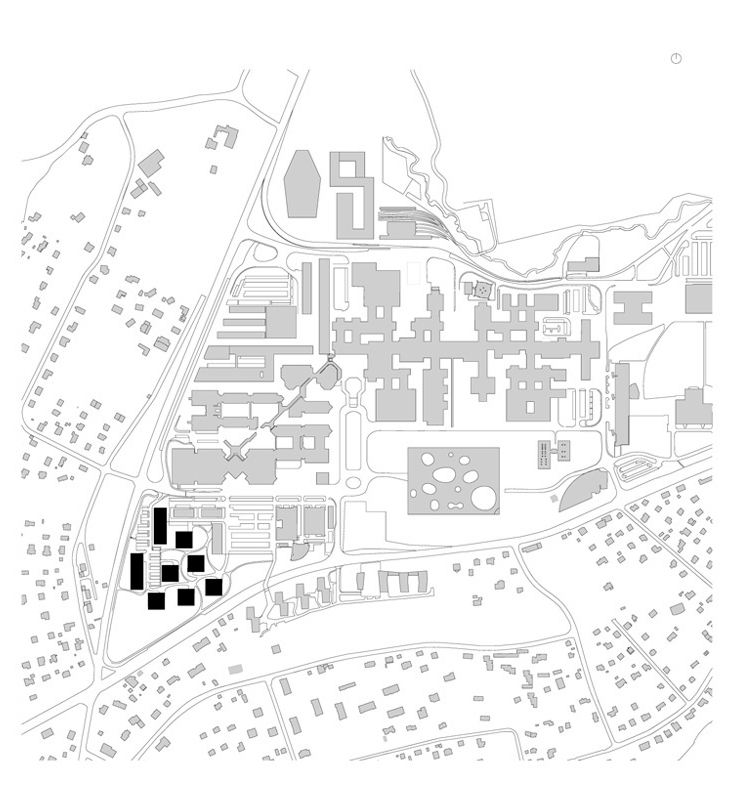
Distinguishing itself from the development plan for the initial construction phases of the EPFL site—which is structured around an elevated pedestrian walkway—this extension proposes reclaiming the natural terrain as a space for circulation and student interaction.
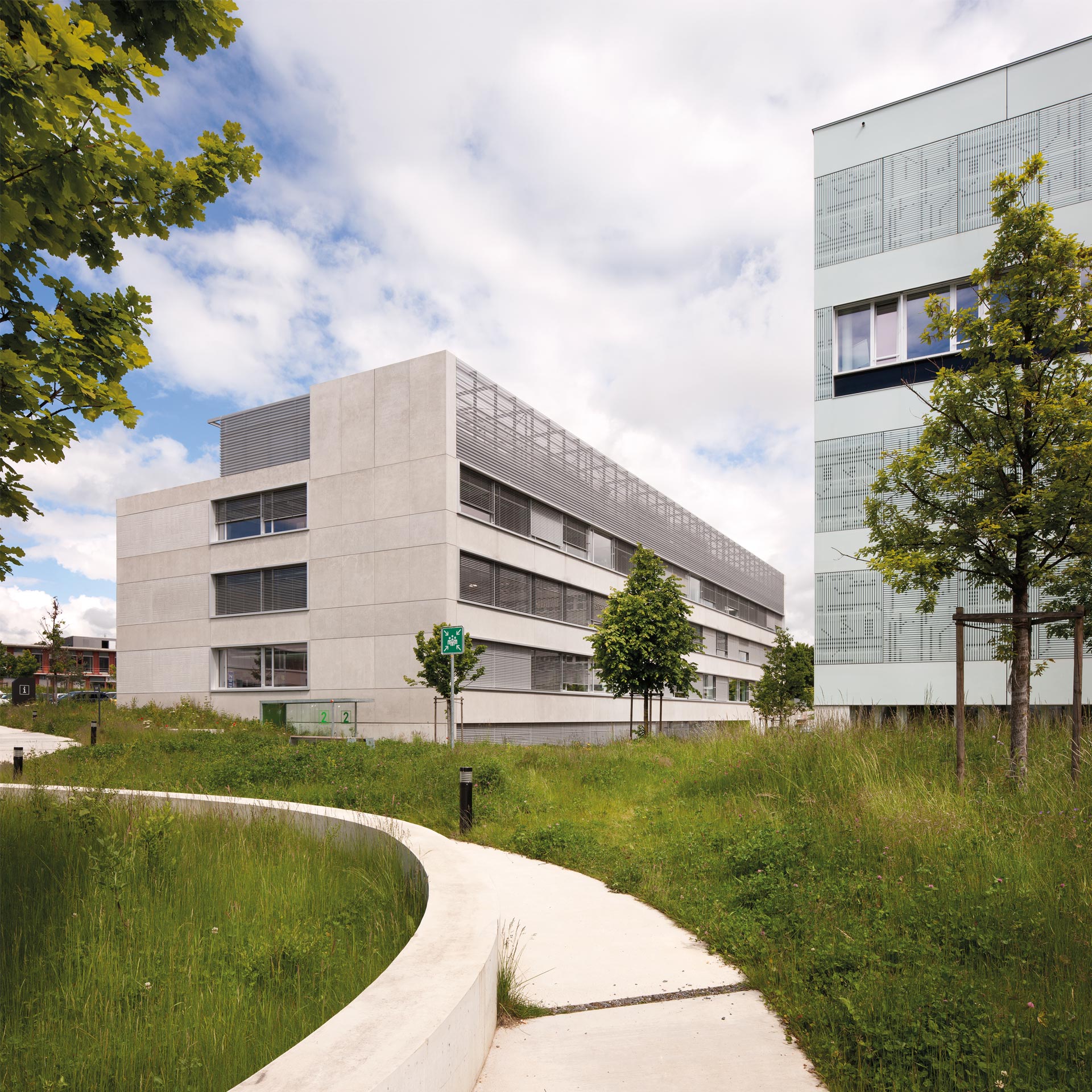
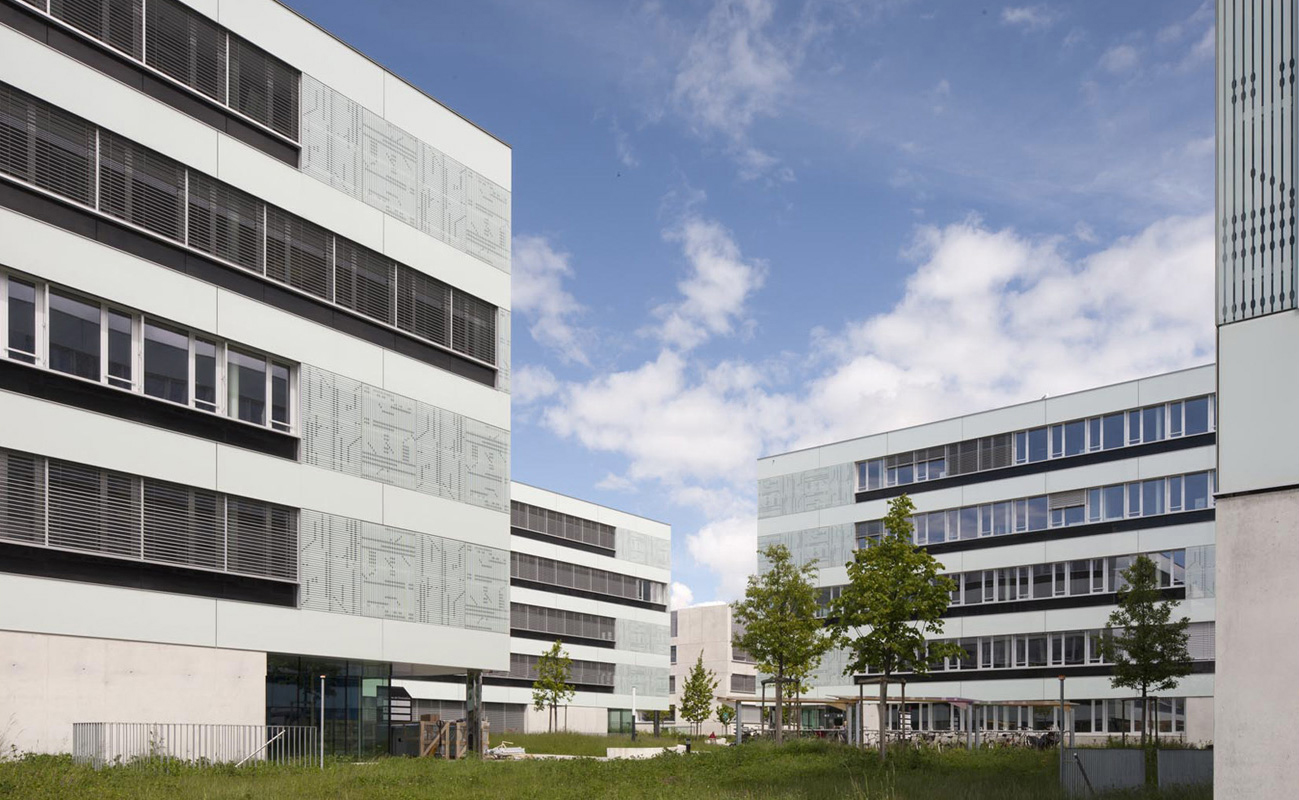
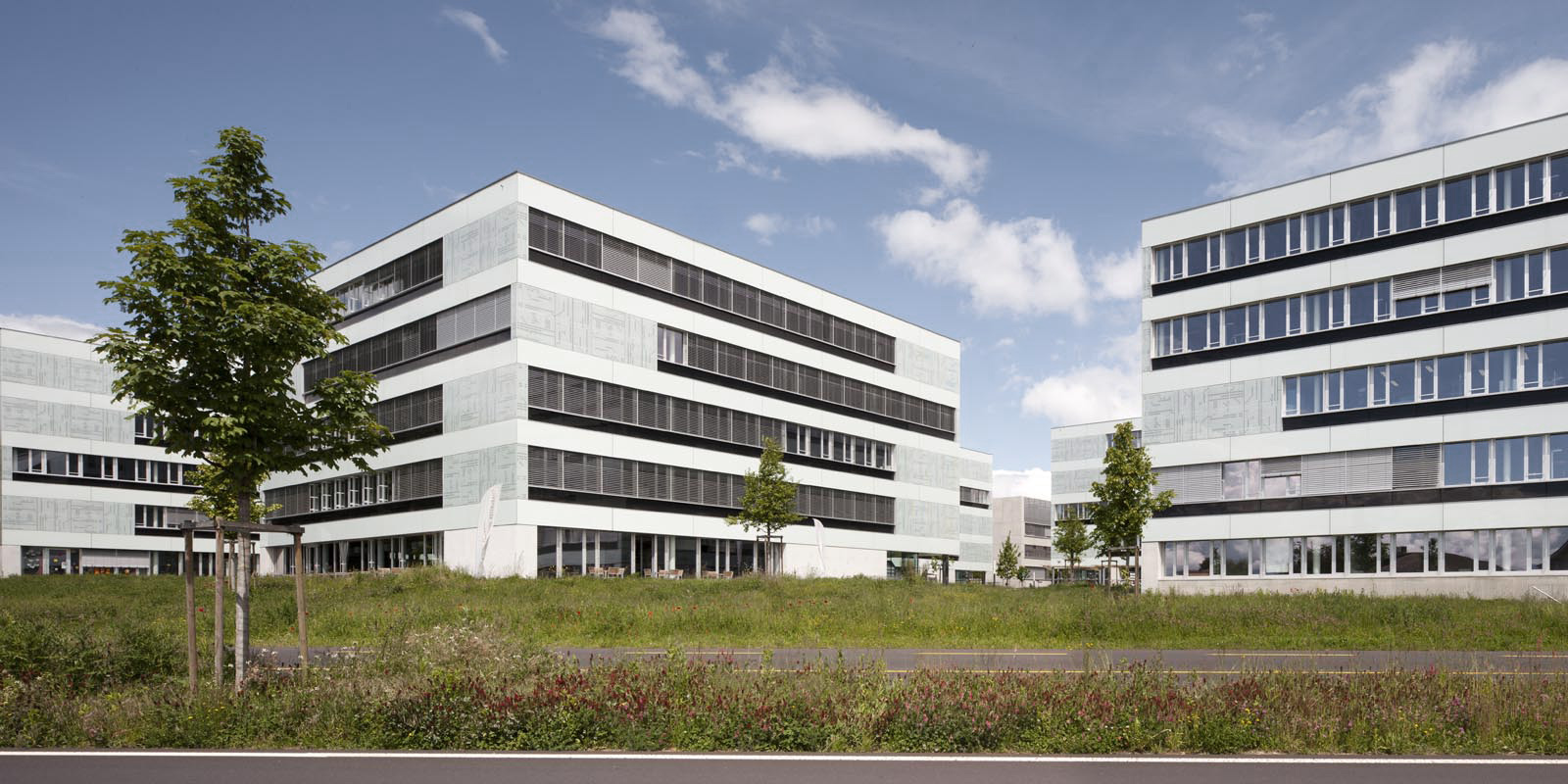
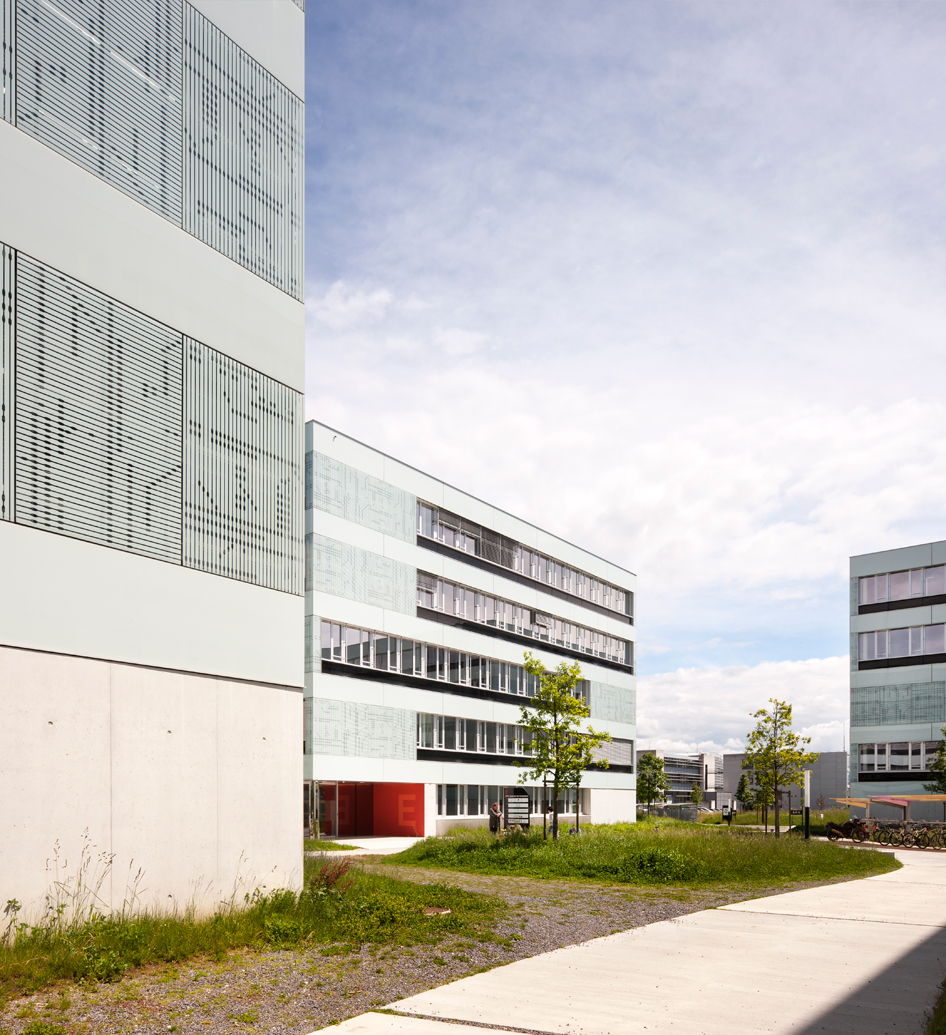
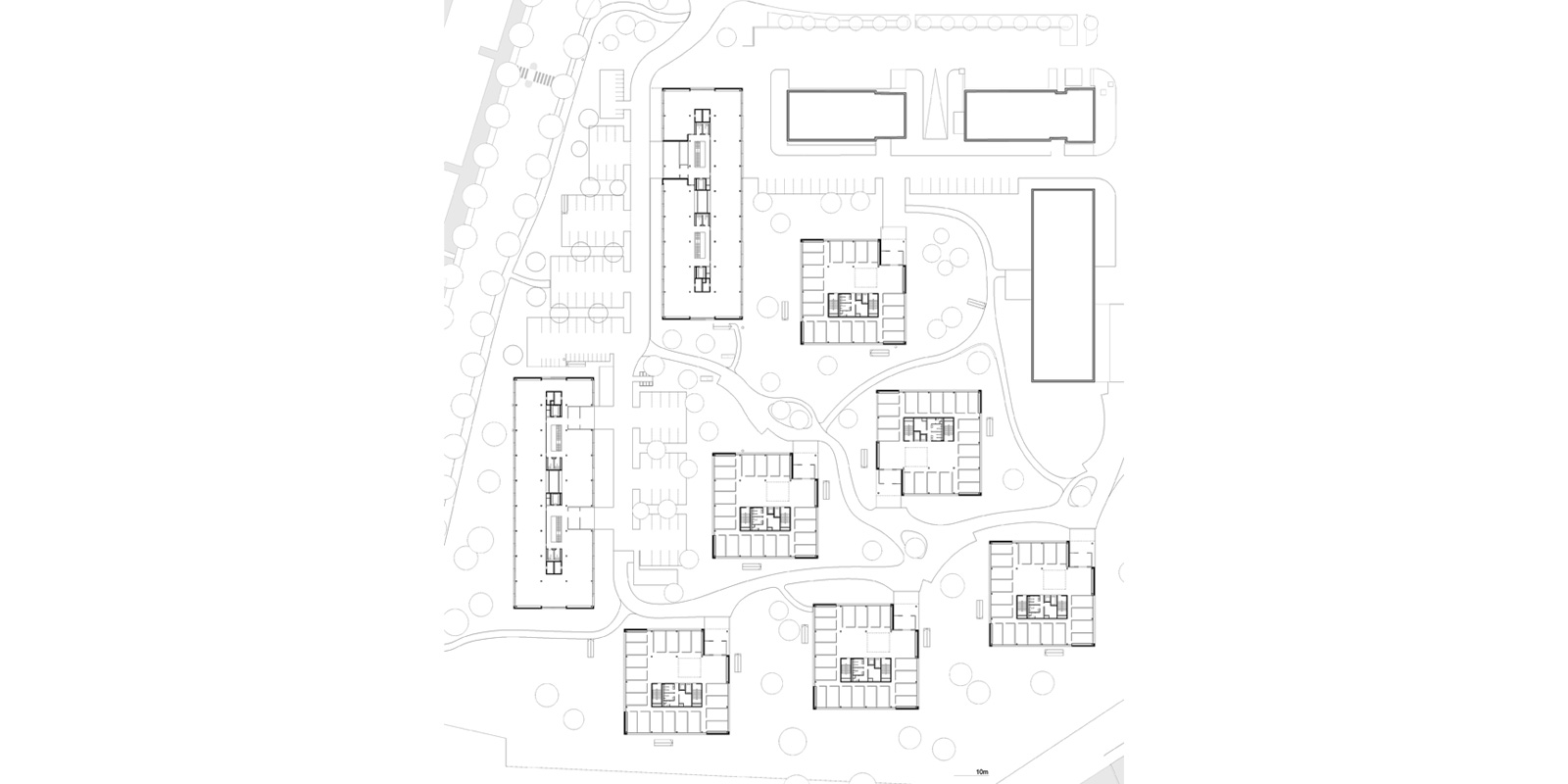
The urban form is defined primarily by its voids. The two laboratory blocks are added to the three existing buildings of the Science Park to define the boundaries of a park within which the six office blocks are freely arranged. The layout of the buildings opens up cross-views across the rest of the campus as well as towards the lake and the Alps.
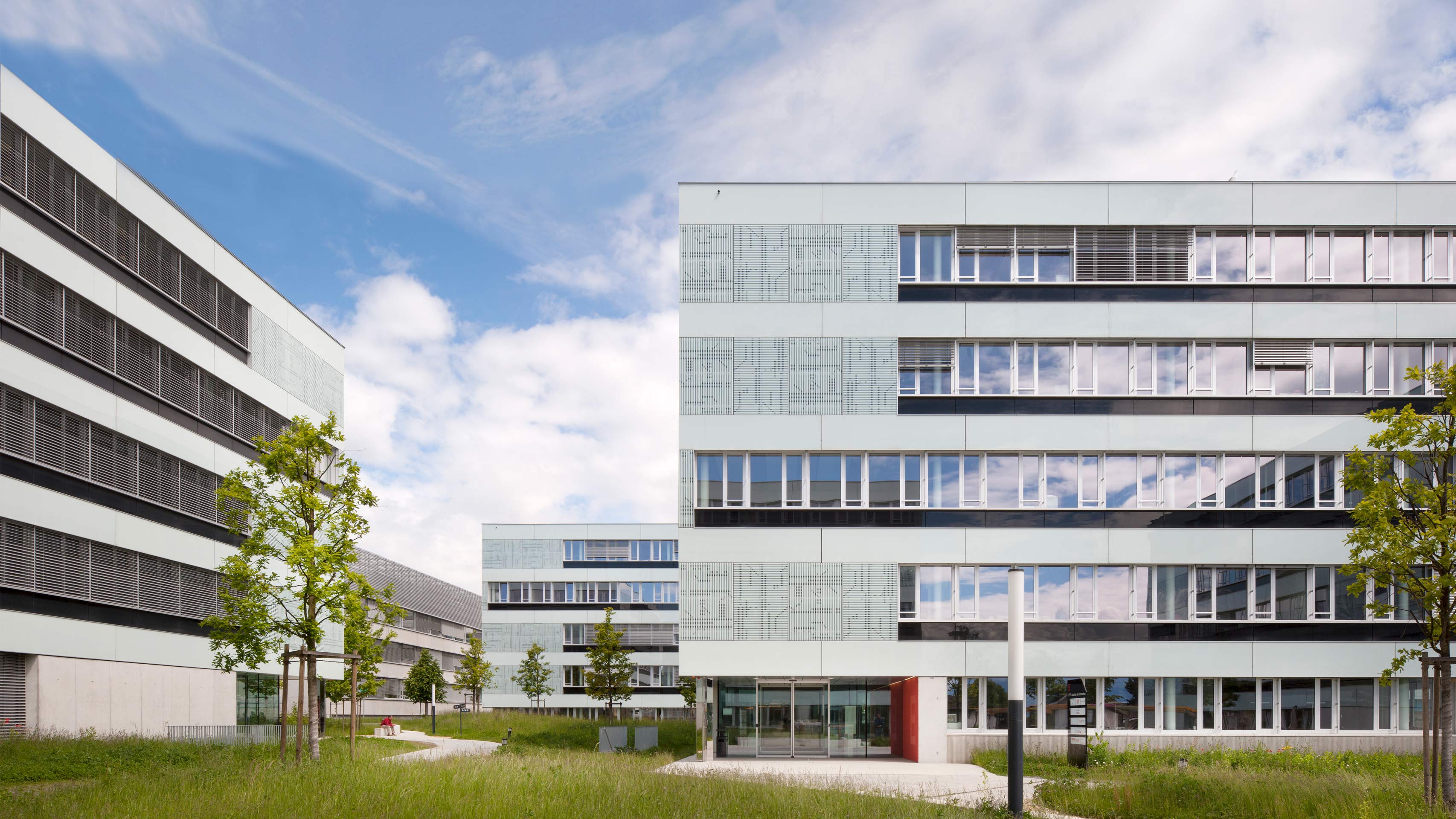
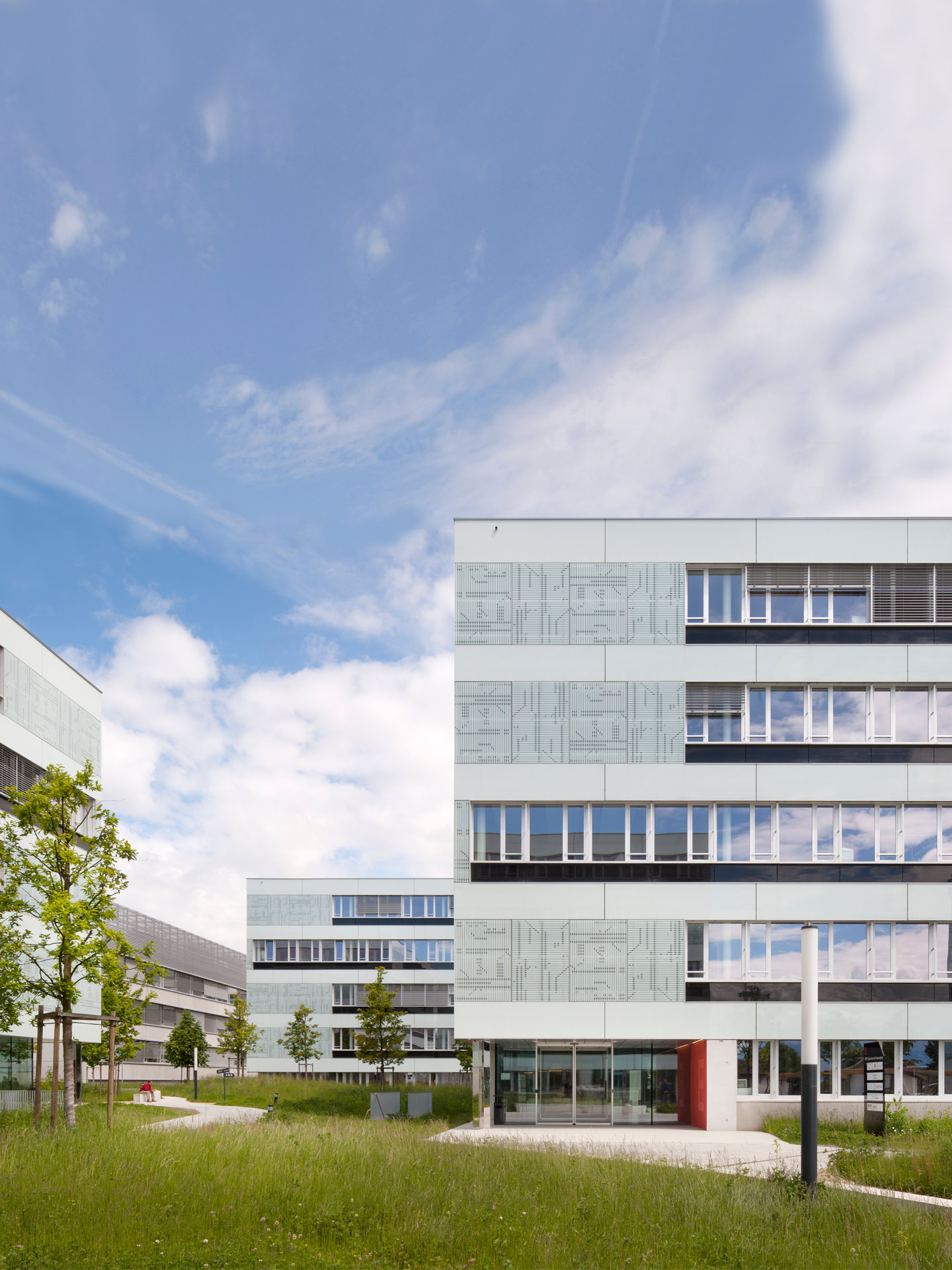
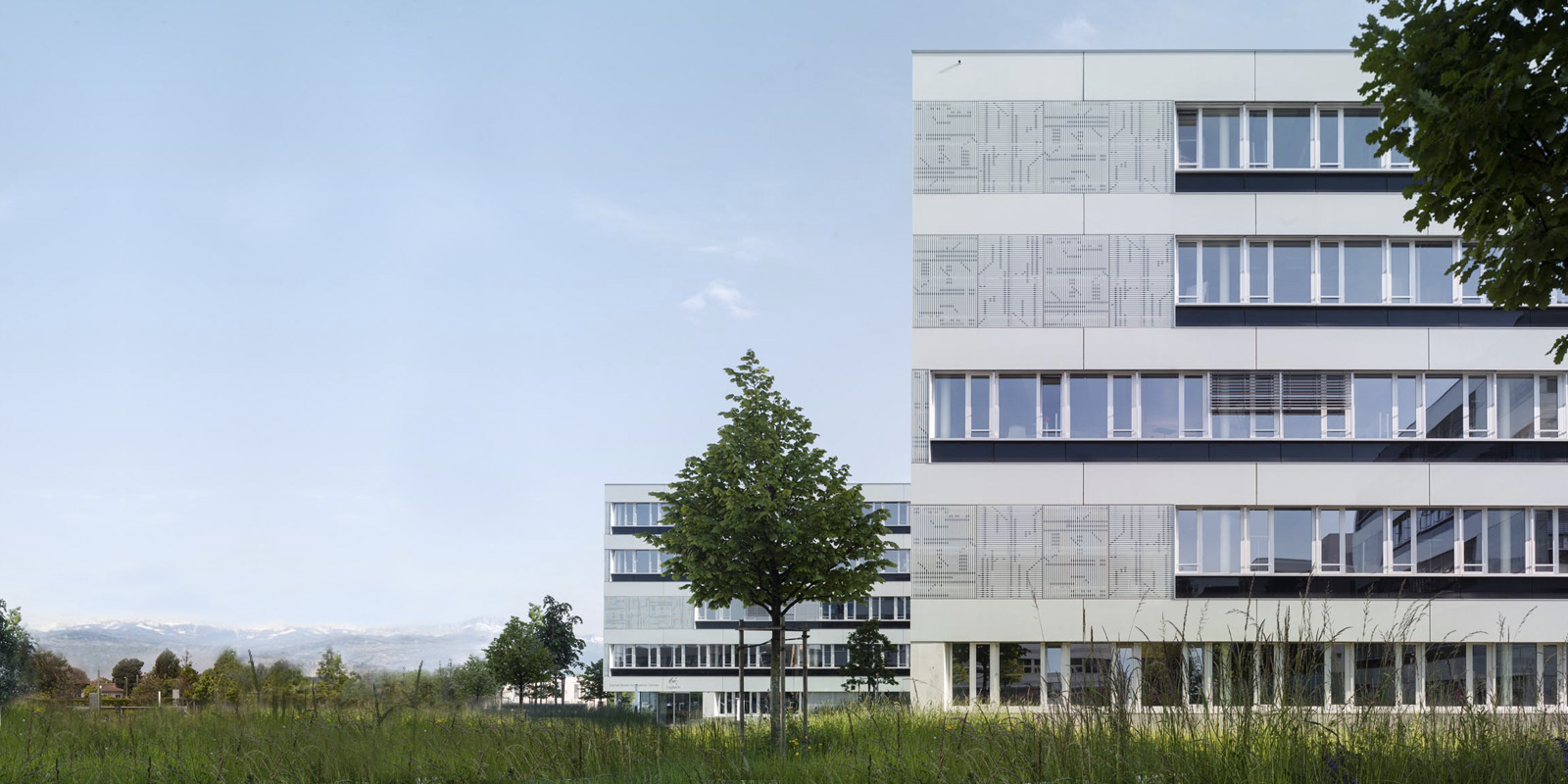
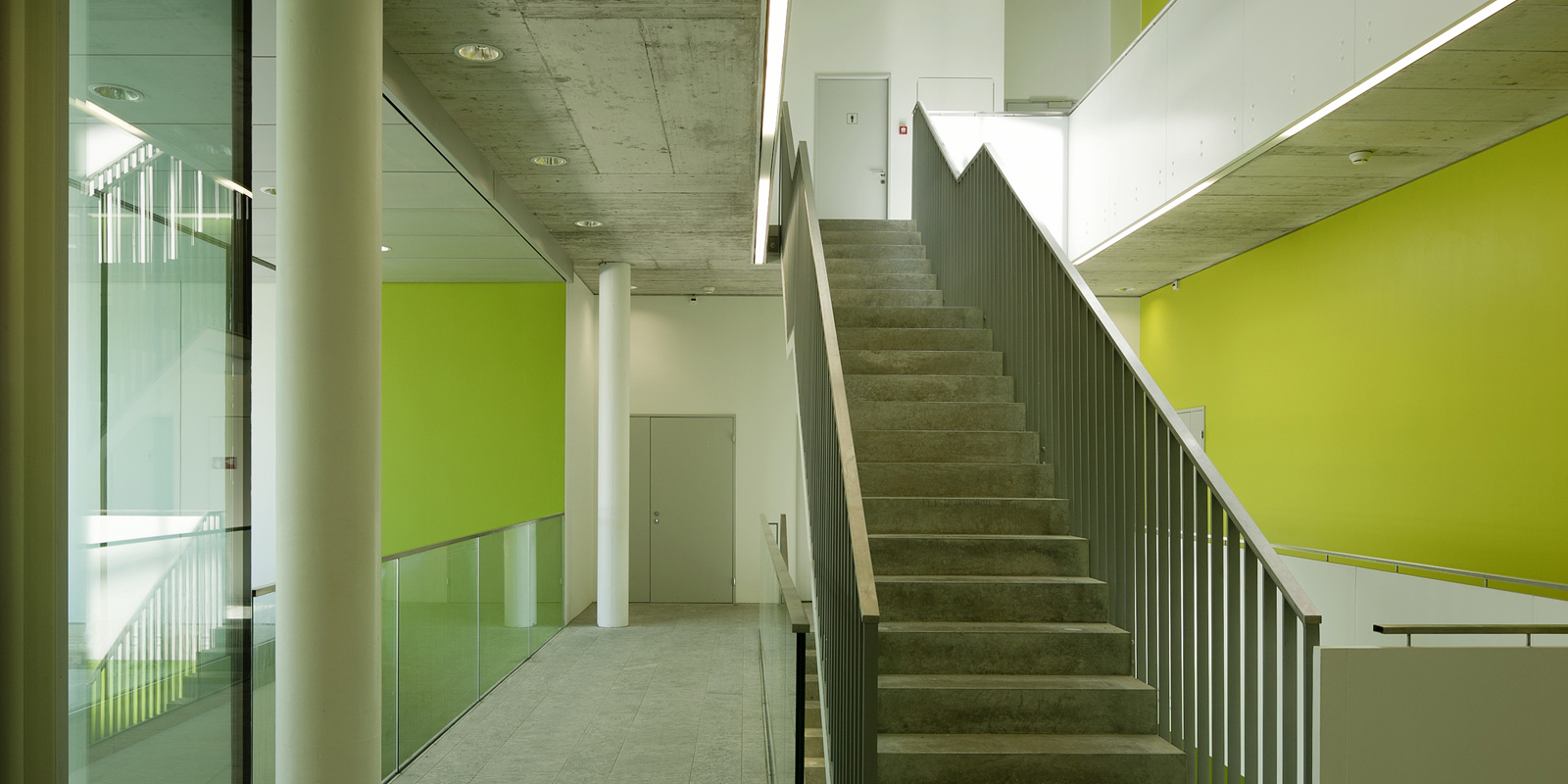
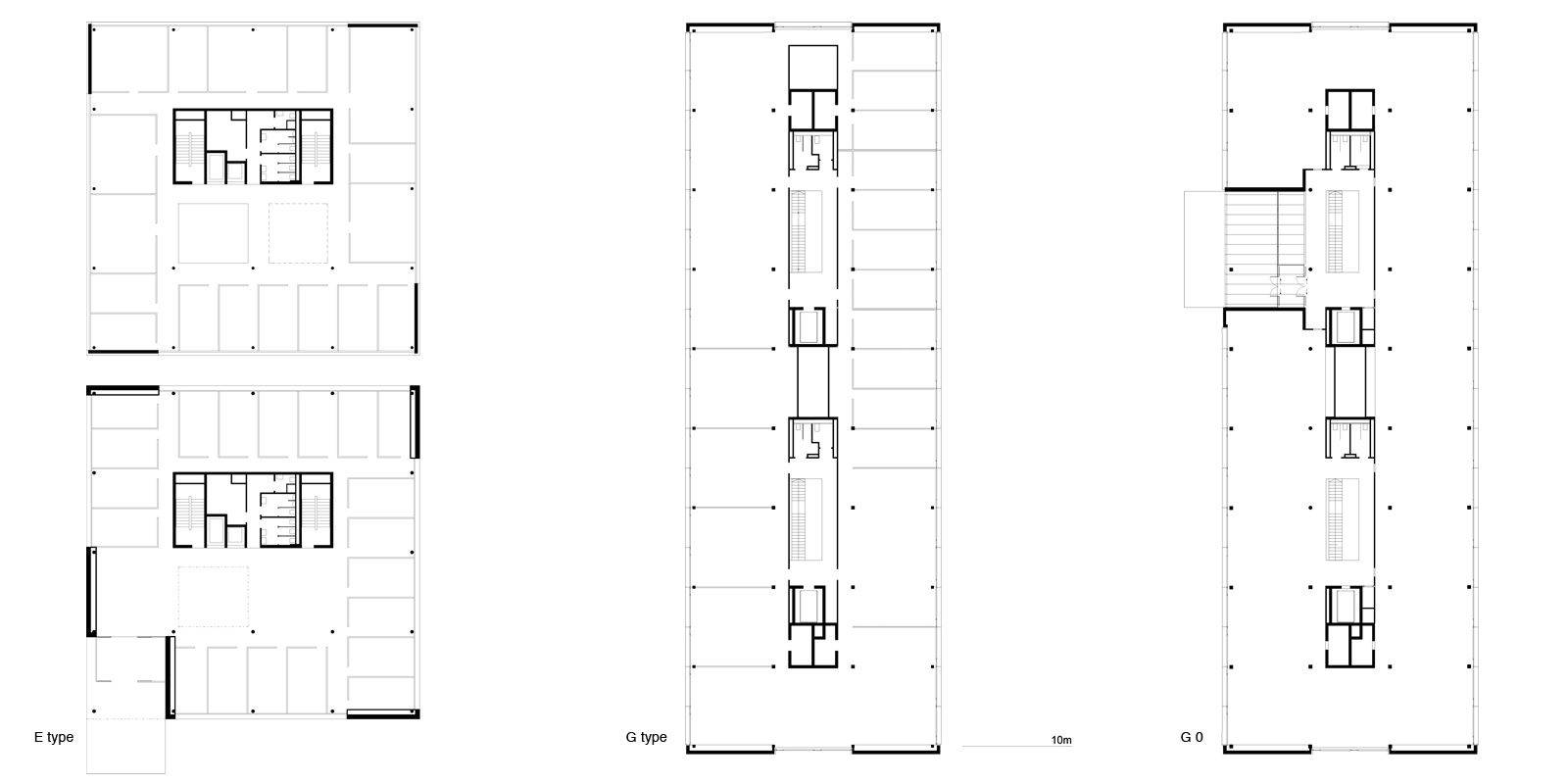
The office buildings are laid out on a square base measuring 30 m on each side, with a covered entrance situated at one of the corners. A core attached to a central atrium topped by a skylight houses the vertical circulation routes and sanitary facilities. Aligned with the 7.20m by 7.20m structural grid prevalent on the EPFL site, four office wings extend around the atrium, offering good flexibility in layout, from individual offices to open-plan spaces.
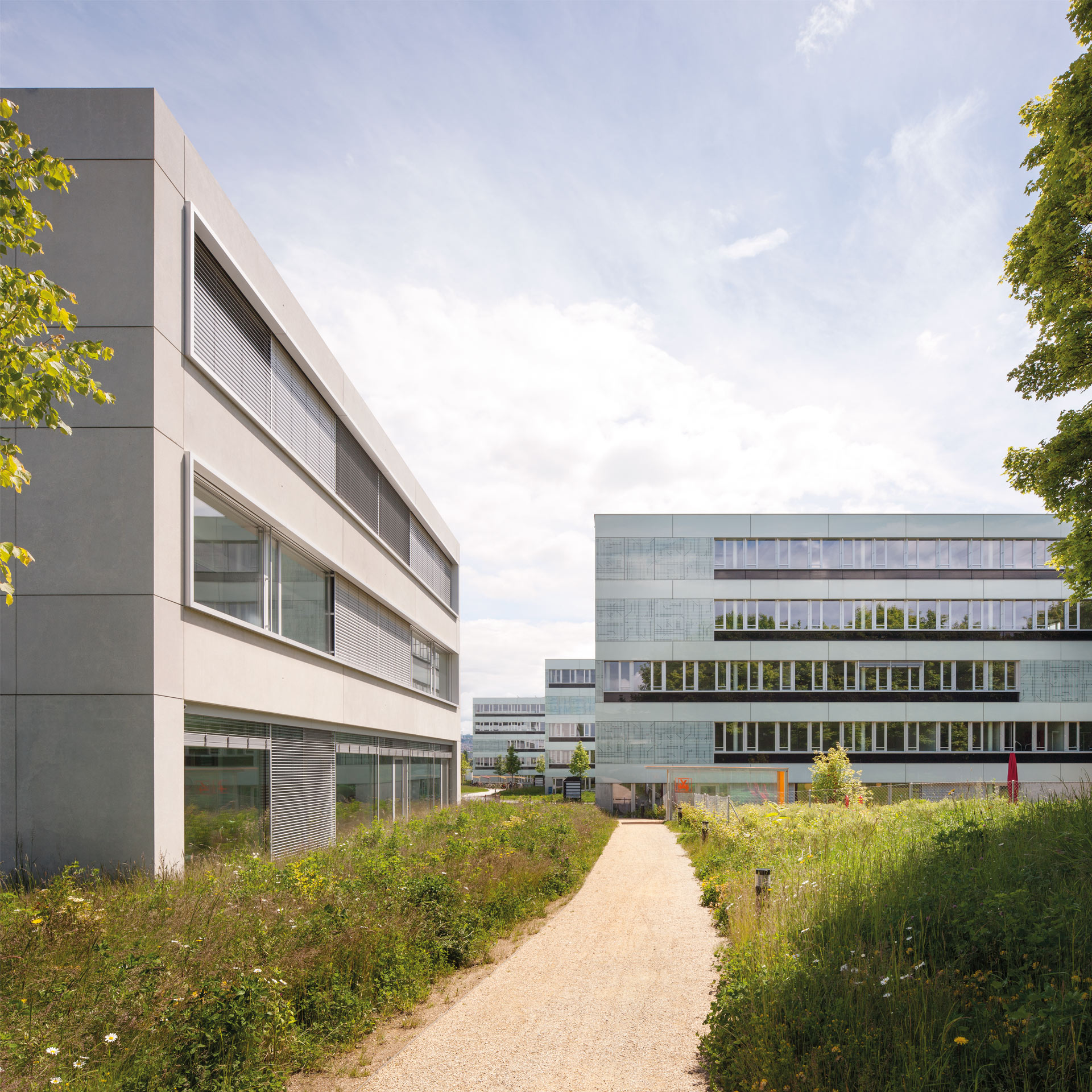
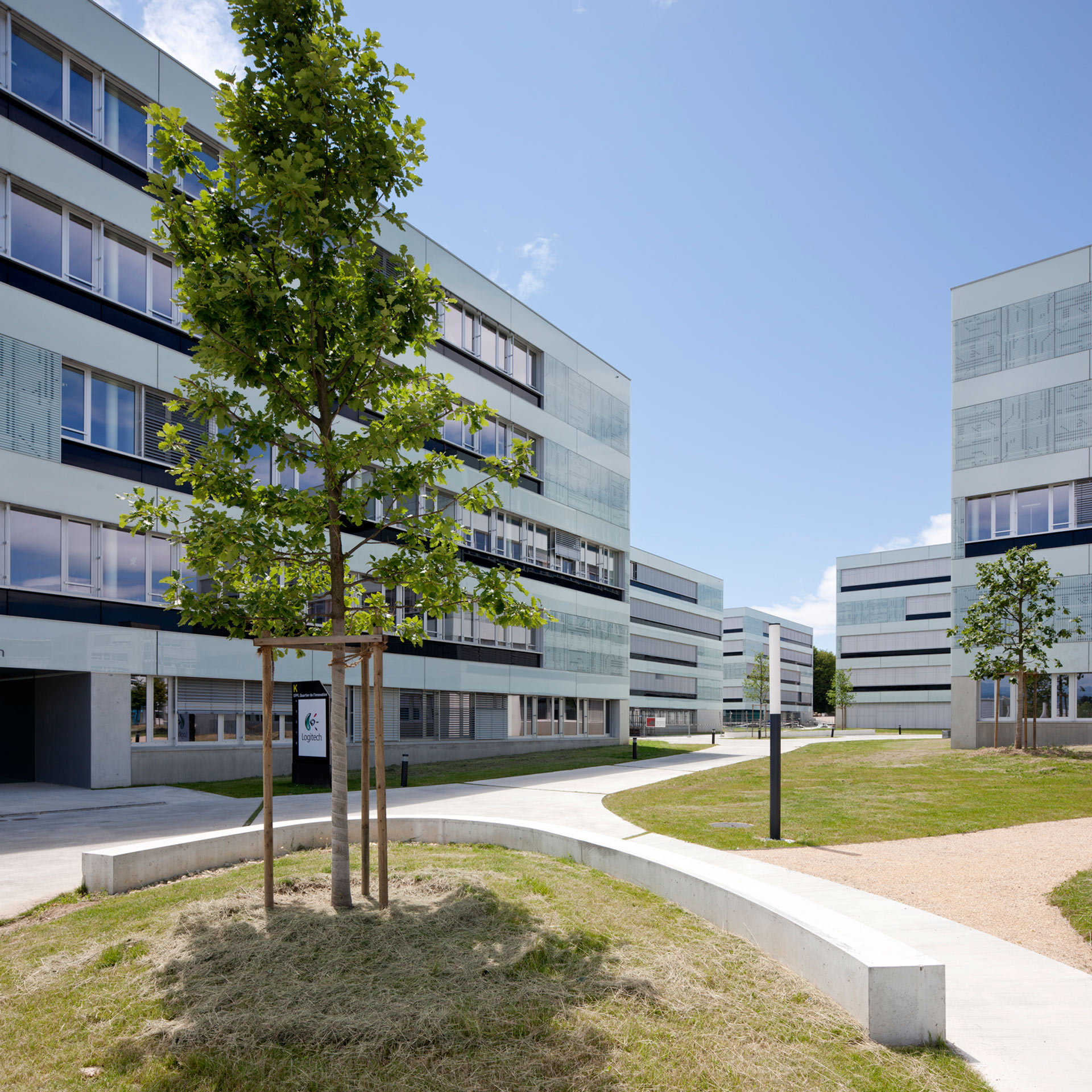
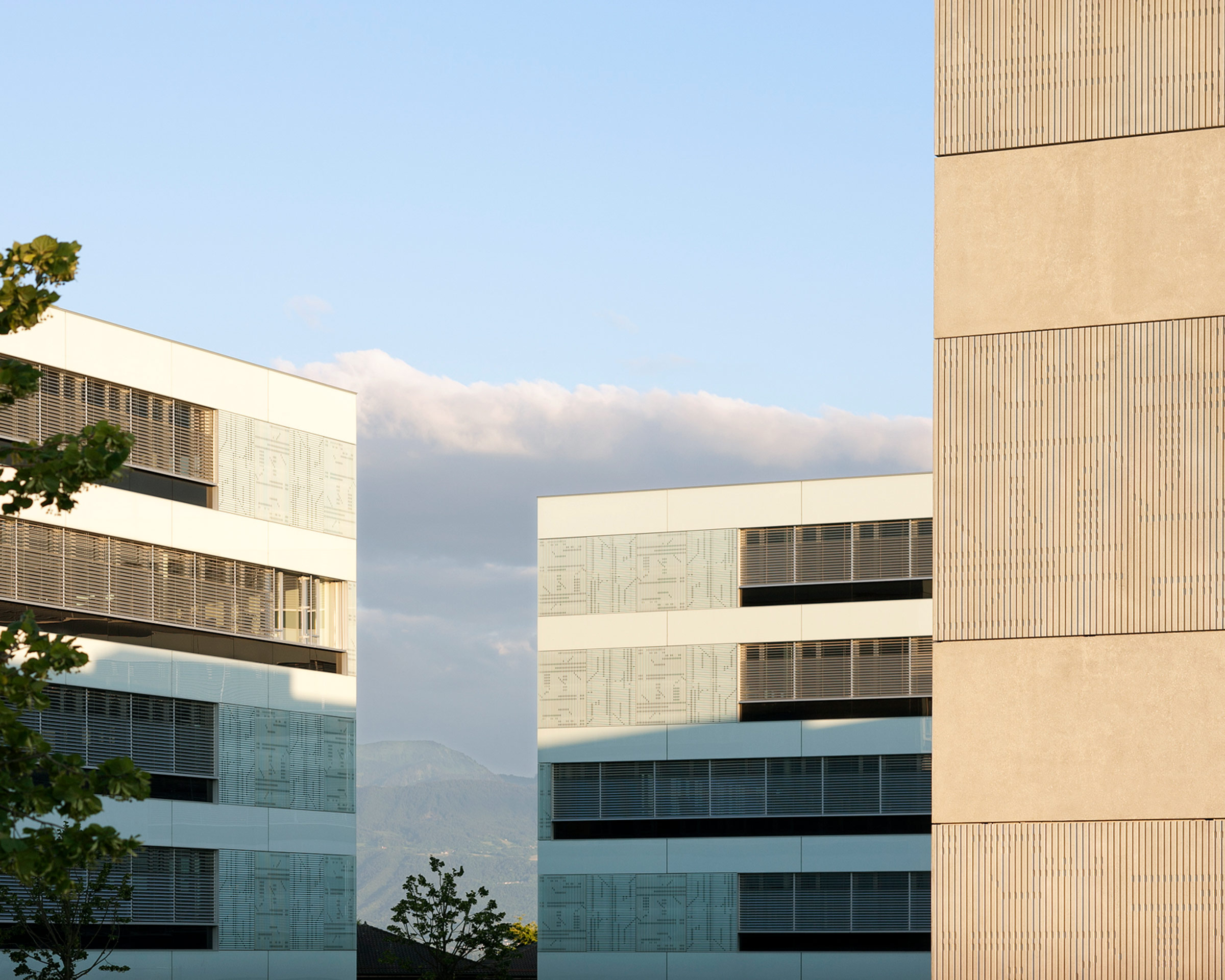
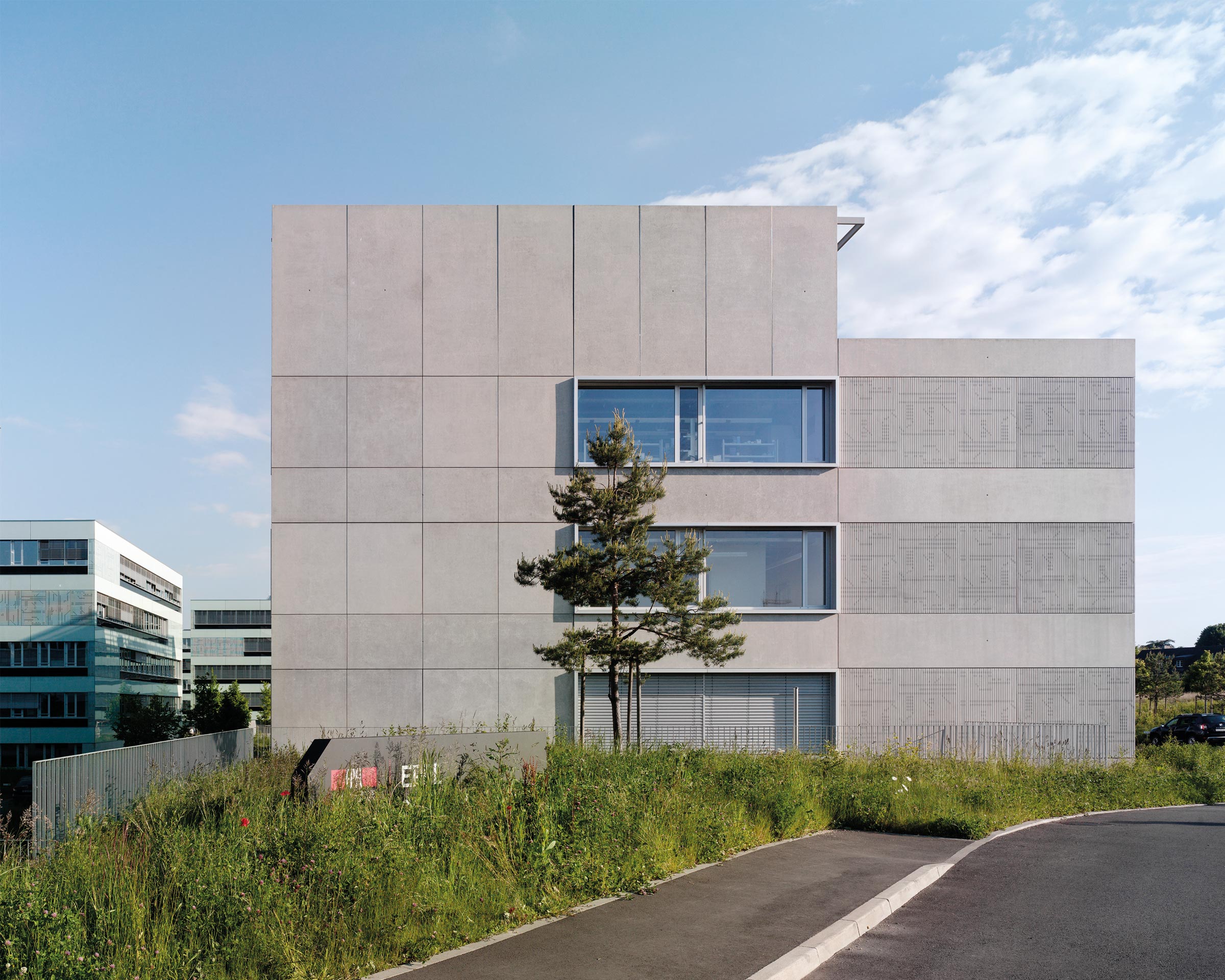
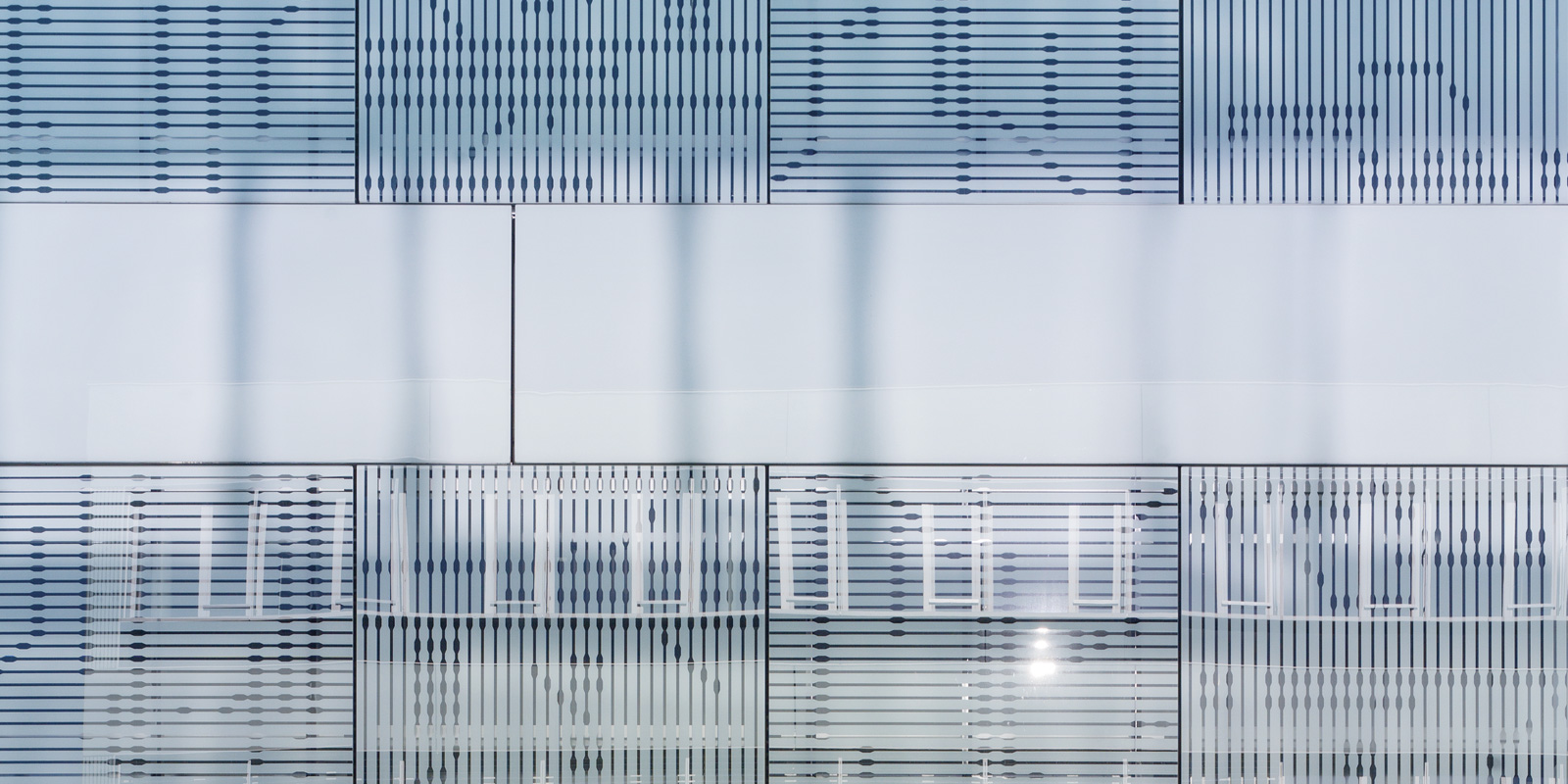
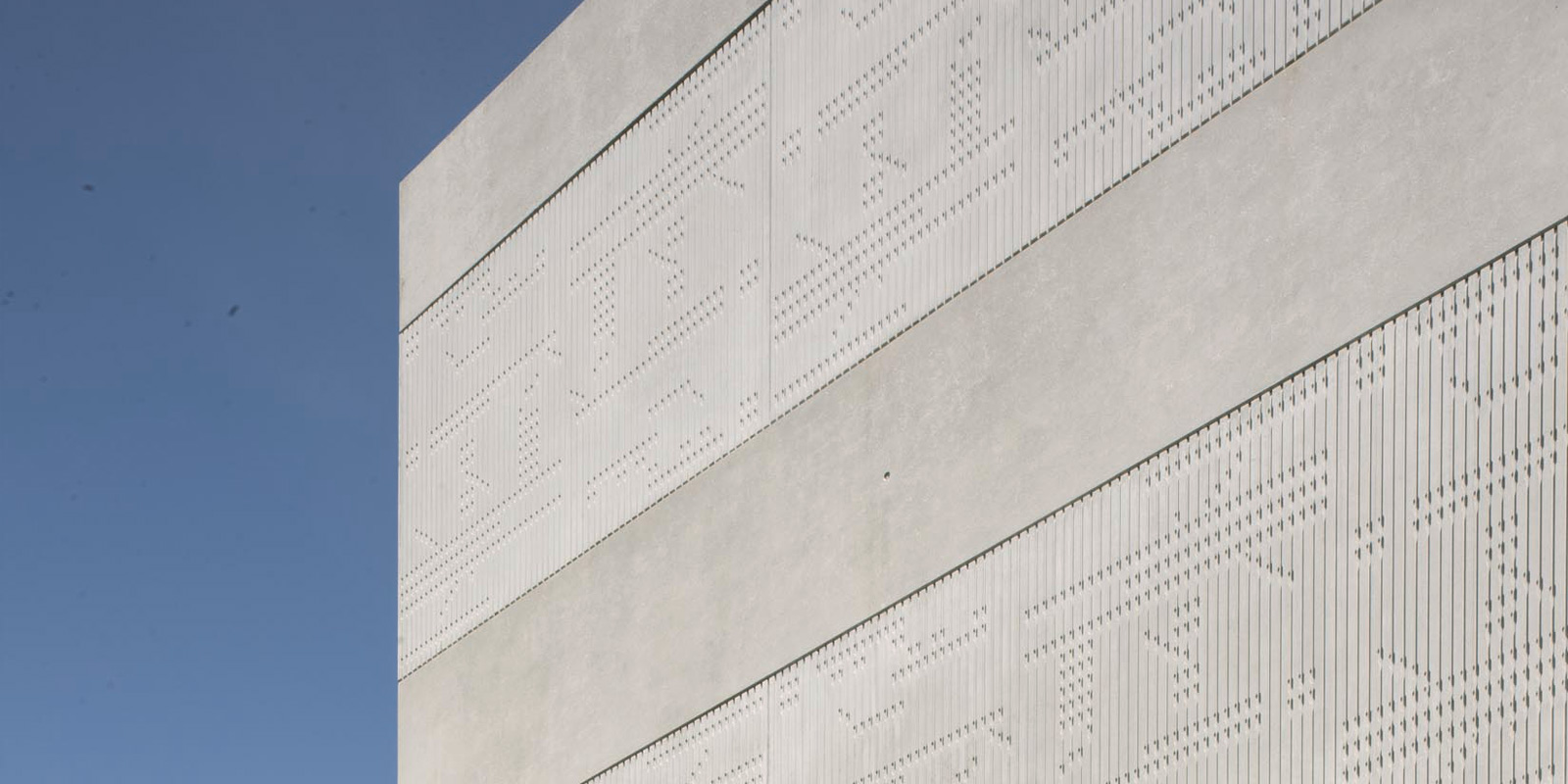
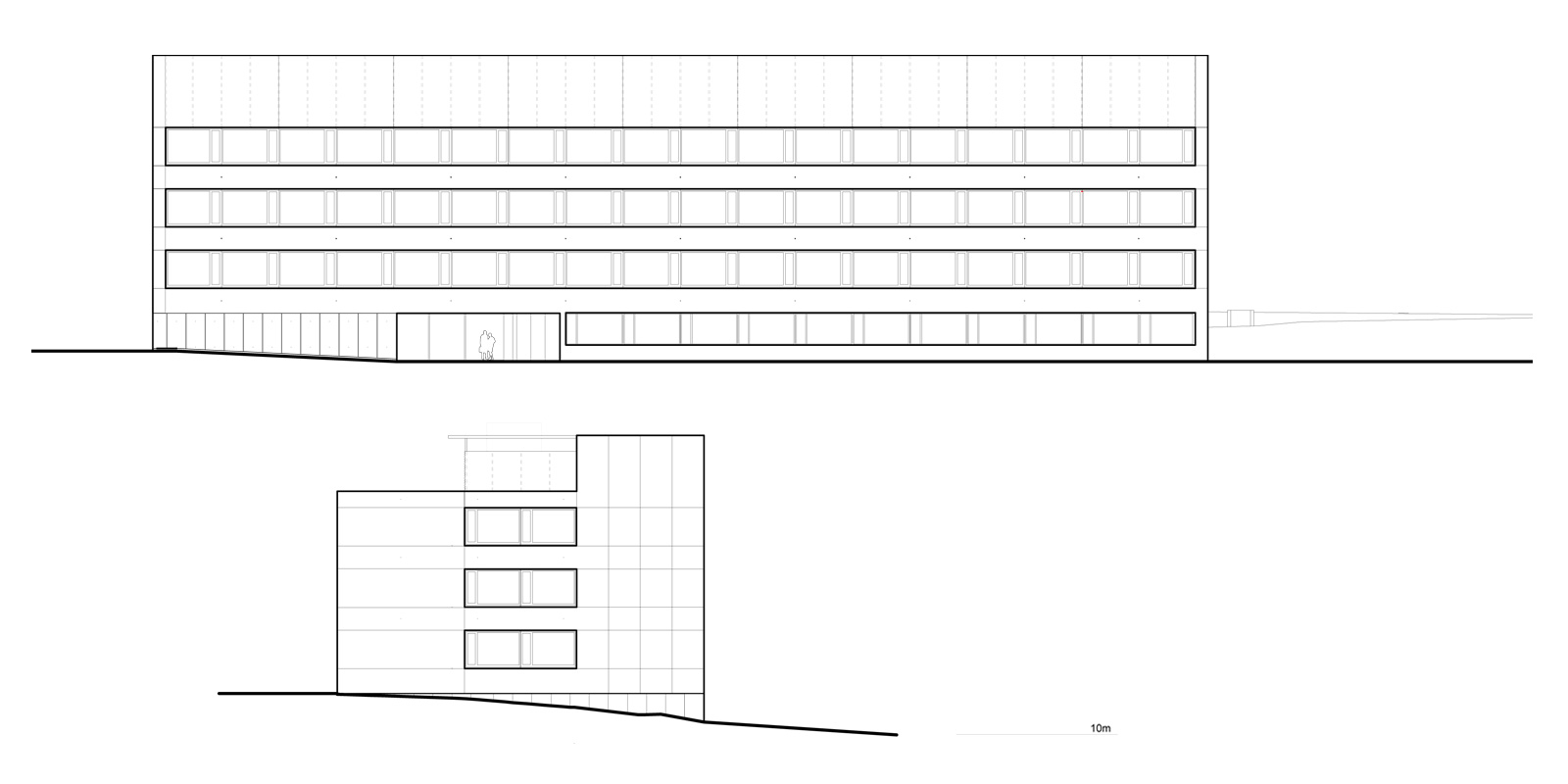
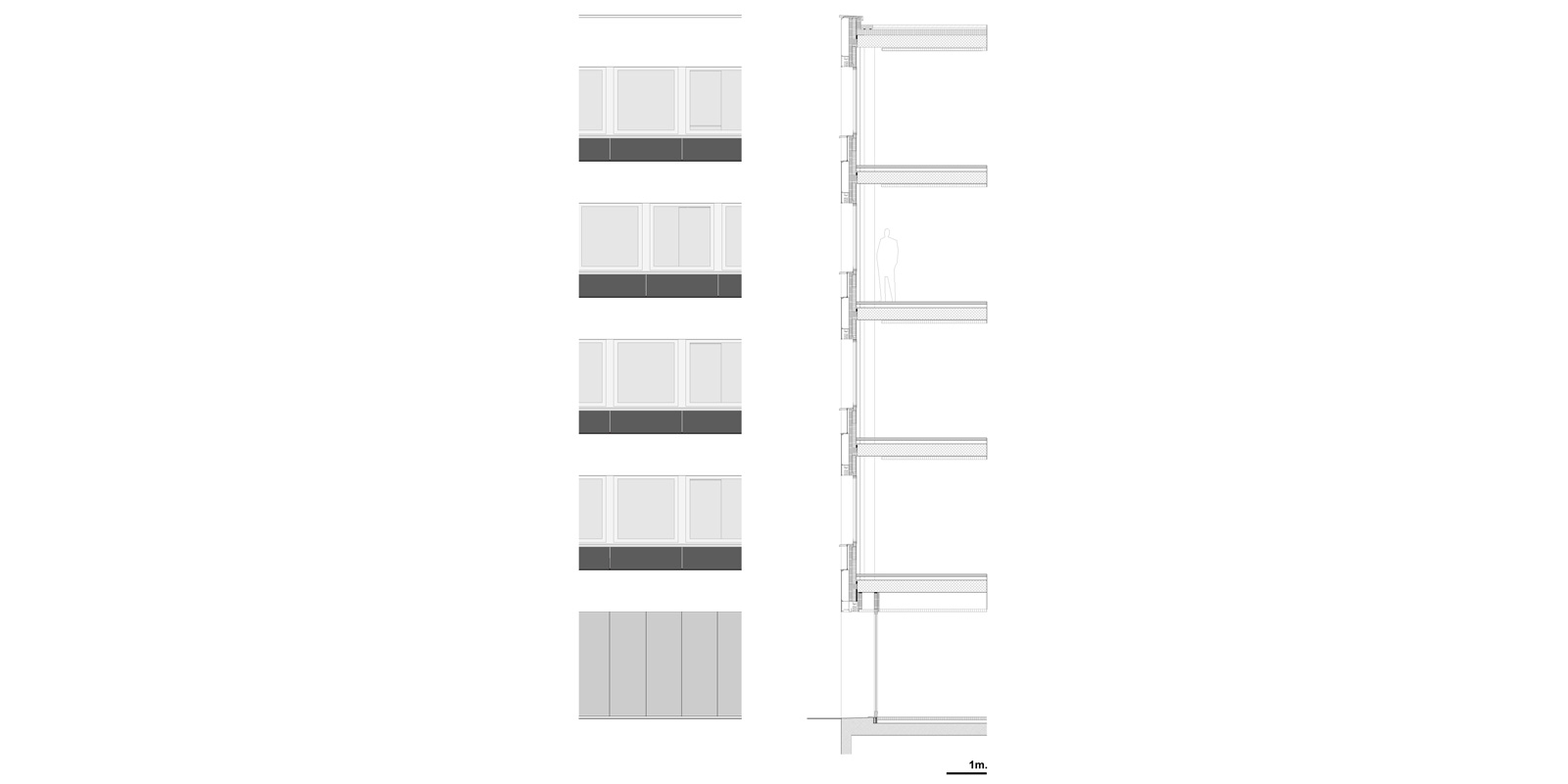
The six administrative buildings are clad in screen-printed glass façades which, through their interplay of reflections and transparency, enhance the fluidity and openness of the outdoor space, whilst consequently softening the perception of built-up density. The two laboratory buildings marking the western boundary of the complex stand out from the others with their exposed concrete façades and natural anodised aluminium joinery and frames.
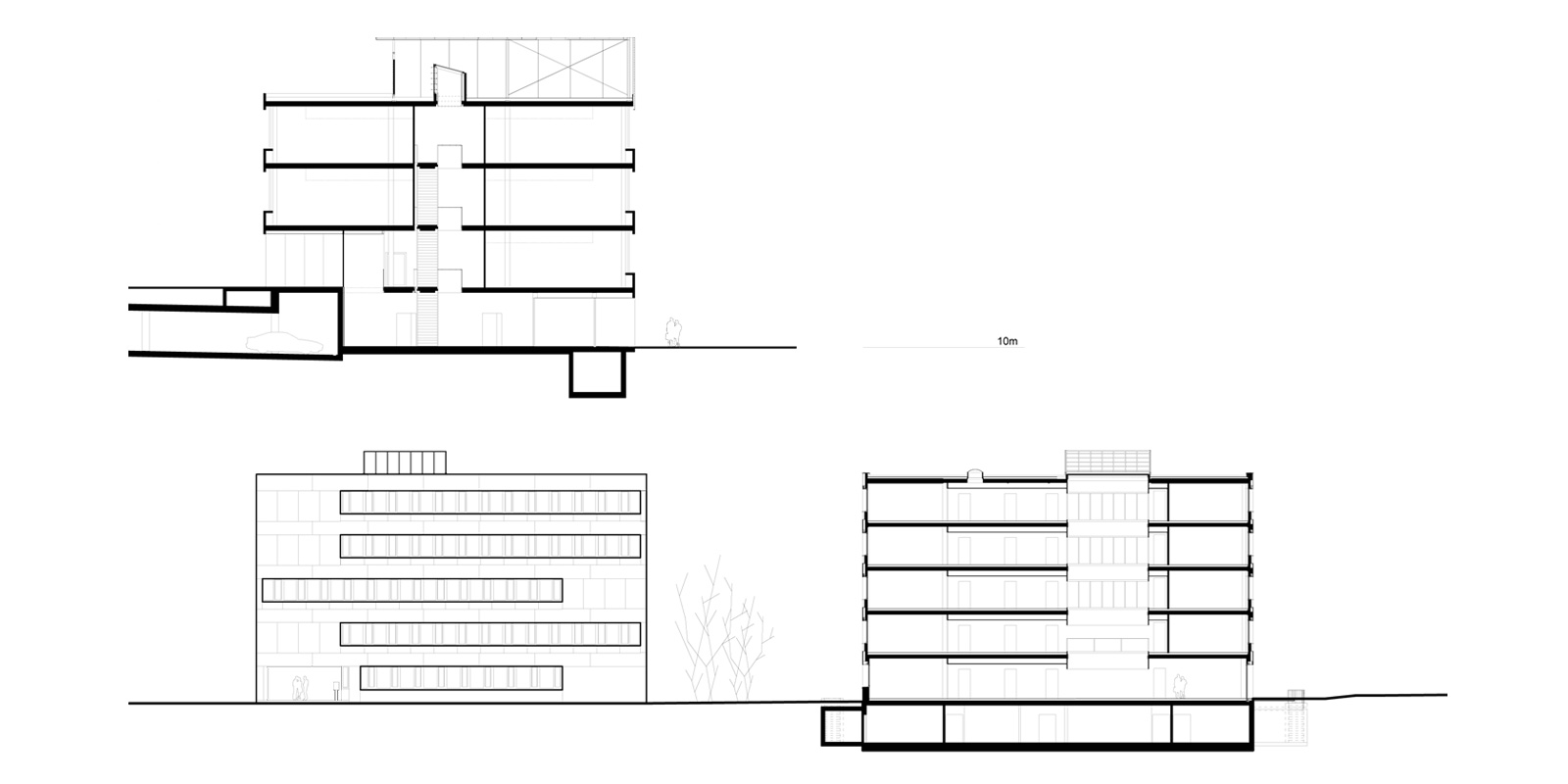
The buildings are spread over five storeys and a basement, and their design meets the requirements of the Minergie standard. Heating and domestic hot water are supplied via a service gallery connecting the buildings to EPFL’s energy production plant.
The site layout prioritises soft mobility: the buildings are accessible
via paths shared by pedestrians and cyclists, from which cars are excluded. The sinuous, organic lines of the landscape design by Atelier du Paysage contrast with the buildings’ geometric rigour.
The bicycle shelters dotted along the route feature an artistic installation by Atelier D. Schlaepfer entitled ‘Auvents’.
At night, the roofs of the shelters light up.
A range of warm, autumnal tones, selected from the surrounding vegetation (birch, Virginia creeper, chestnut, beech and oak), shimmers across the glass roofs as the wind stirs them. The shifting wind is reflected in the oscillation of the light. As they sway, these light roofs become volatile elements.
8 research and laboratory buildings
Adrien Barakat, Antoine Barc, Valentina Cambiasio, Ignacio Dahl Rocha, Bruno Emmer, Pouska Haessig, Yves-Olivier Joseph, Christian Leibbrandt, Gilles Margot, Philippe Marmillod, Eleonora Modolo, Martin Mouzo, Bárbara Moyano Gacitúa, Lionel Peter, Nathanaë
2006 - 2011 · Suisse, Ecublens · Public » Education
his new quarter of the EPFL campus was destined to provide office and laboratory space for companies that are working in conjunction with the school. In contrast to the character of the first phases of campus development in the late 1970s, focused on modular structures linked to an elevated pedestrian walkway, our interventions in the southern part of the campus proposed to rehabilitate the unbuilt natural terrain as a public space for circulation and as a setting for student life. Despite its relatively high density, the project reinforces that idea by distributing eight buildings in a natural landscape setting in such a way as to control the scale, spatial quality, and character of the interstitial public spaces.