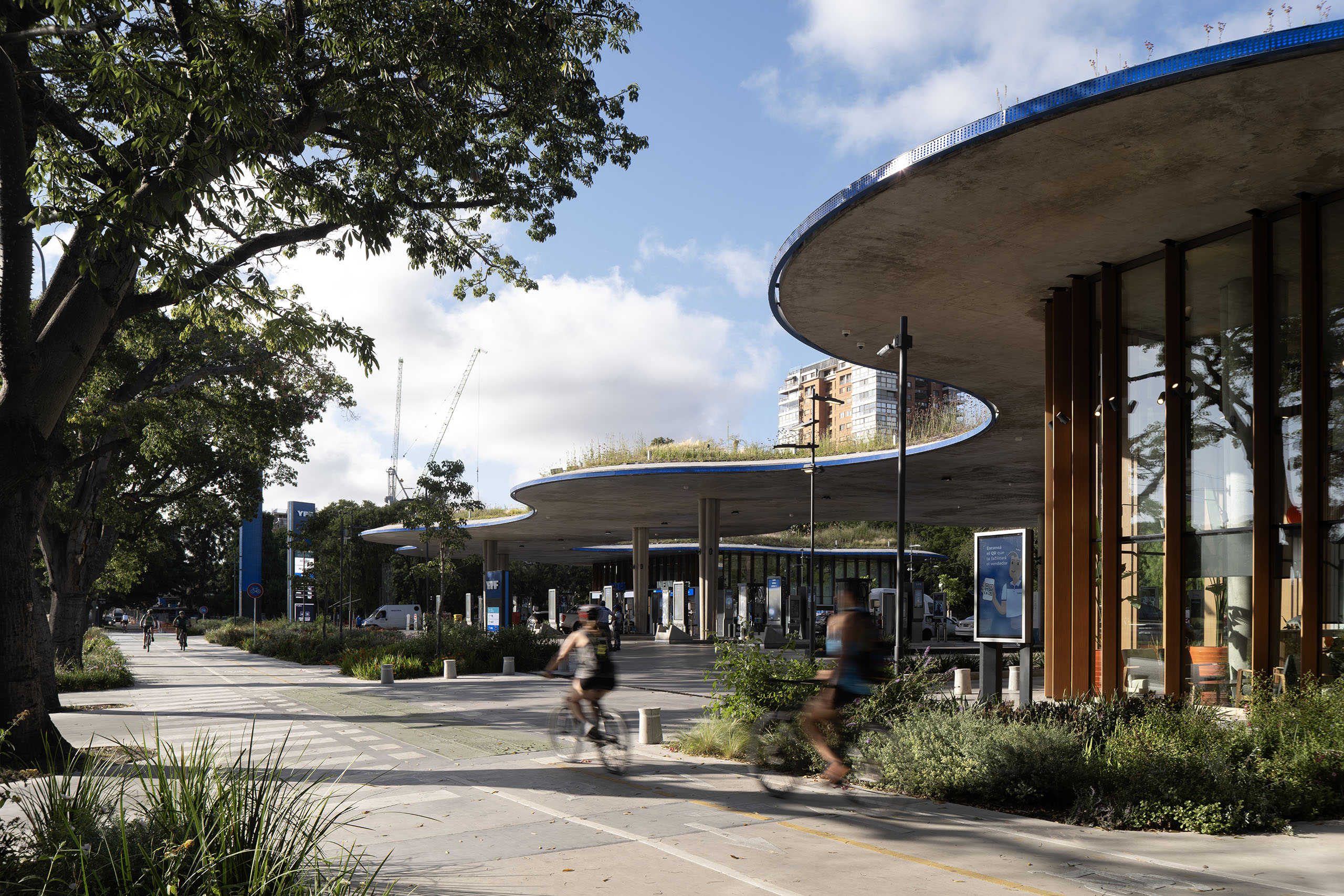
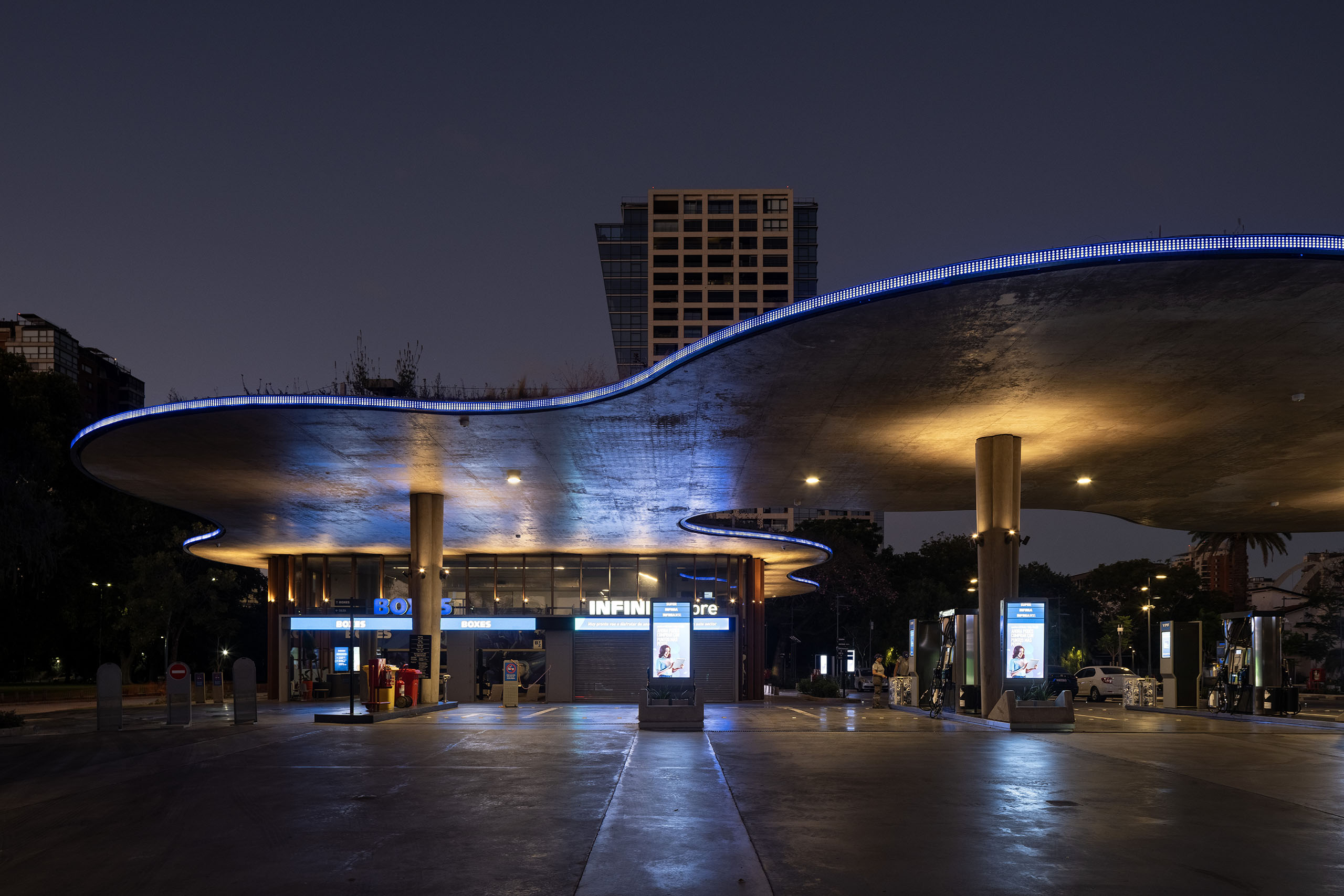
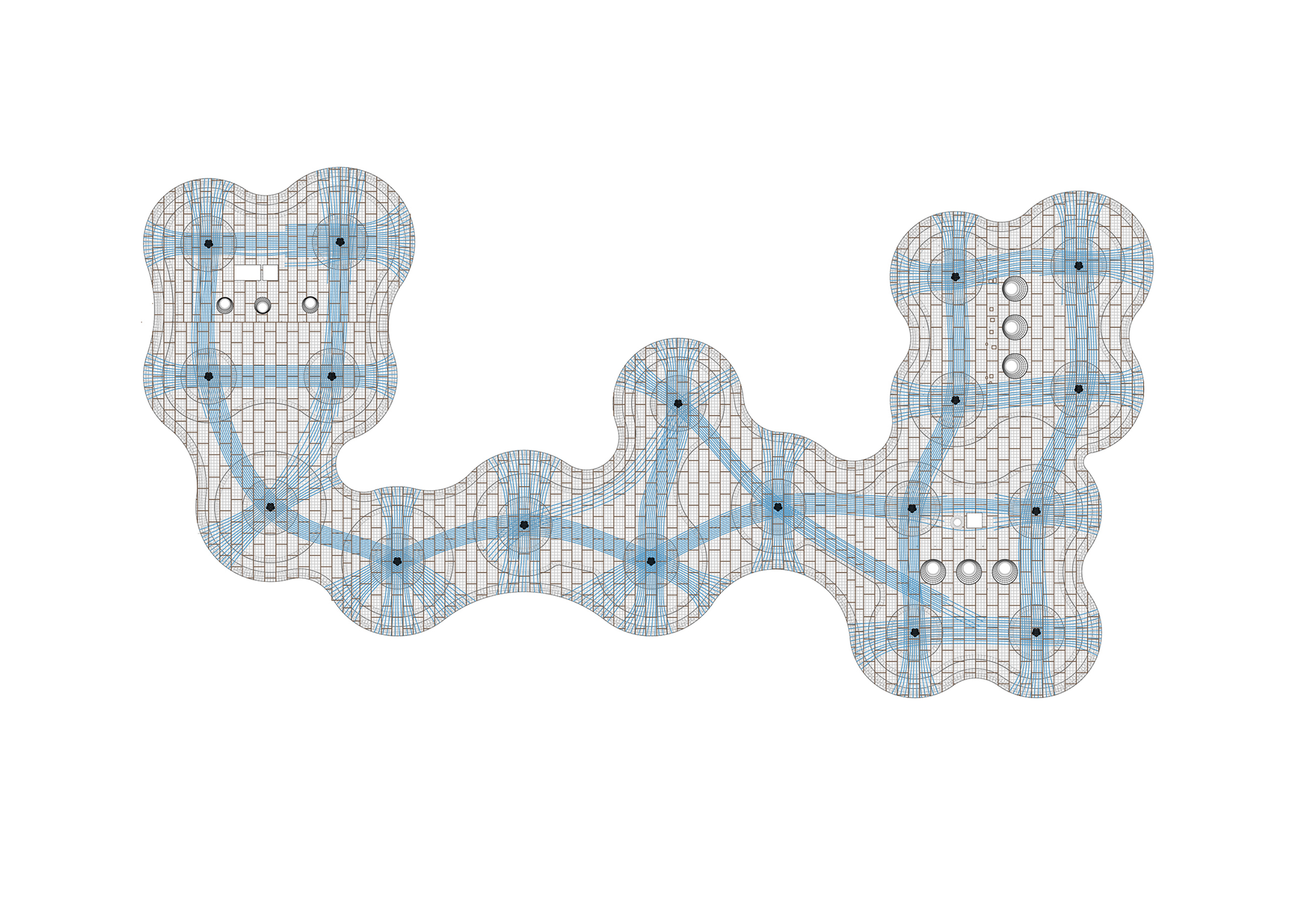
Le projet a remporté le concours organisé par le maître d'ouvrage afin de concevoir la transformation complète d'un pâté de maisons à Buenos Aires. Le règlement du concours exigeait une refonte stratégique du concept de station-service, en complétant les fonctions habituellement destinées au ravitaillement en carburant, à l’assistance mécanique des véhicules et à un espace commercial par une extension des prestations à des utilisateurs très divers, en intégrant de nouvelles technologies et de nouveaux paradigmes de durabilité et d’articulation avec la communauté. Le projet a interprété ce programme en proposant une place dont les services sont organisés en un réseau de nœuds fournissant des infrastructures de soutien tant pour les innombrables activités pratiquées par les piétons, les coureurs et les cyclistes sur le corridor vert public que pour favoriser le lien stratégique entre les tissus urbains intérieurs et le réseau autoroutier menant aux zones suburbaines de la rive nord de la ville.
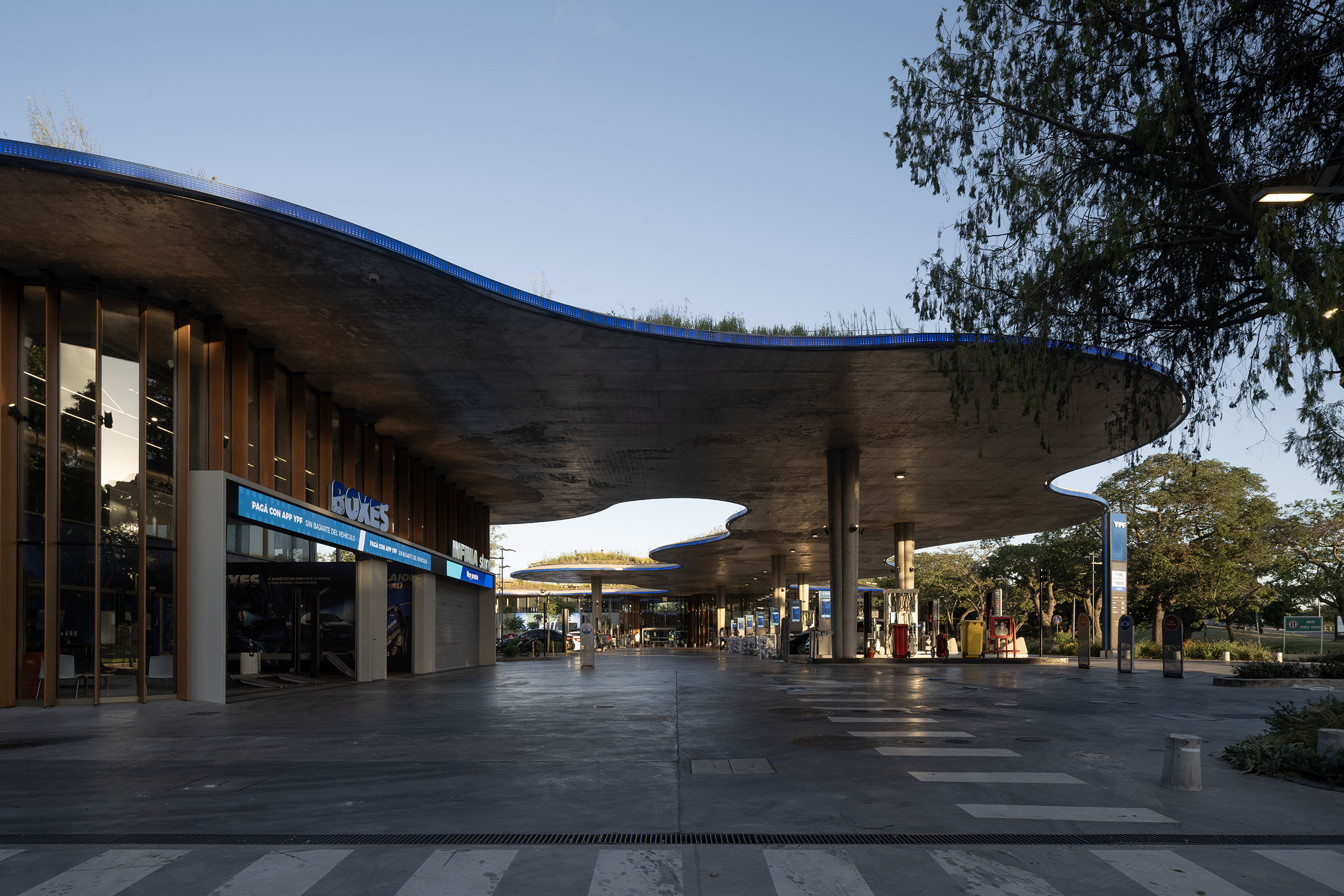
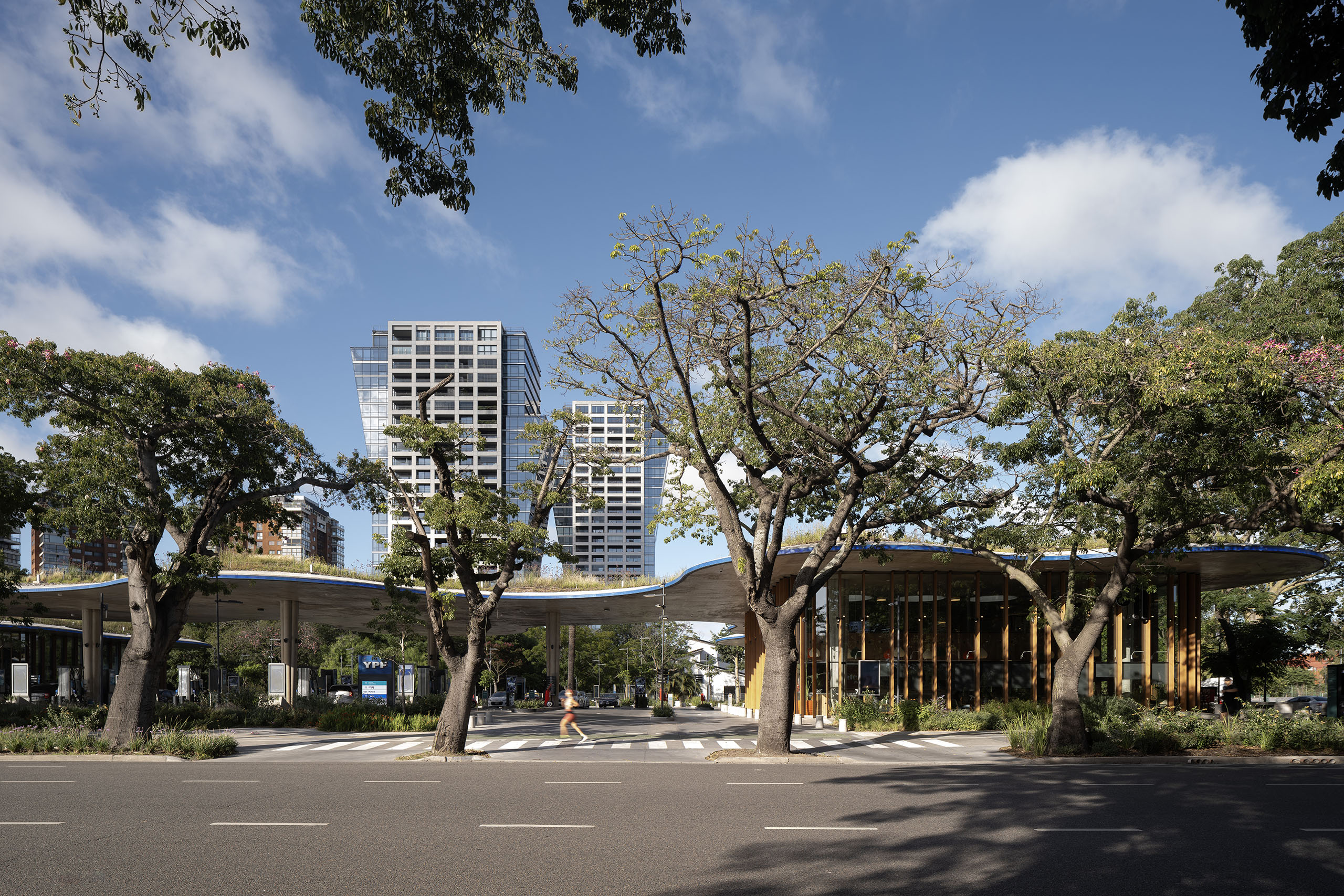
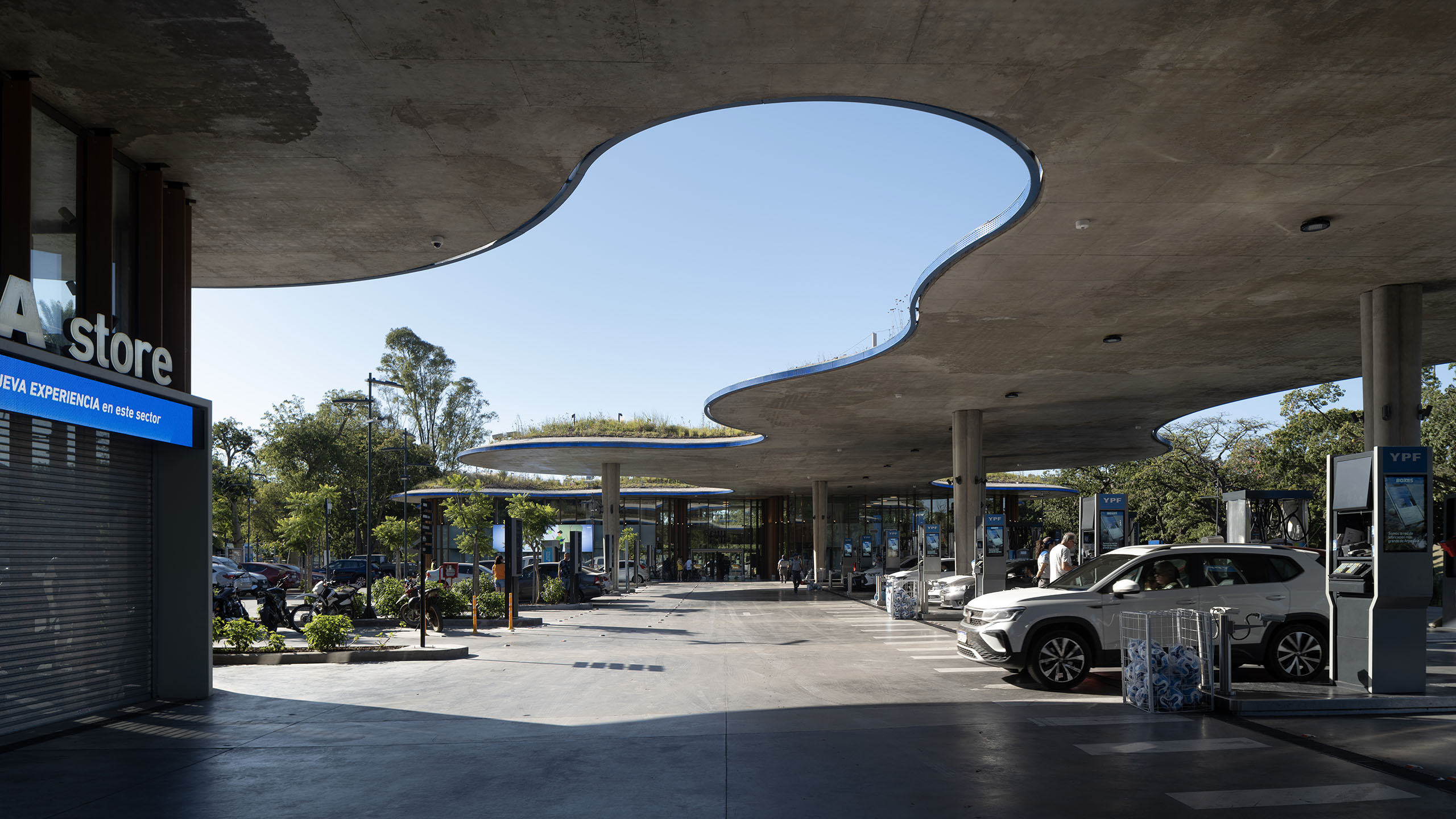
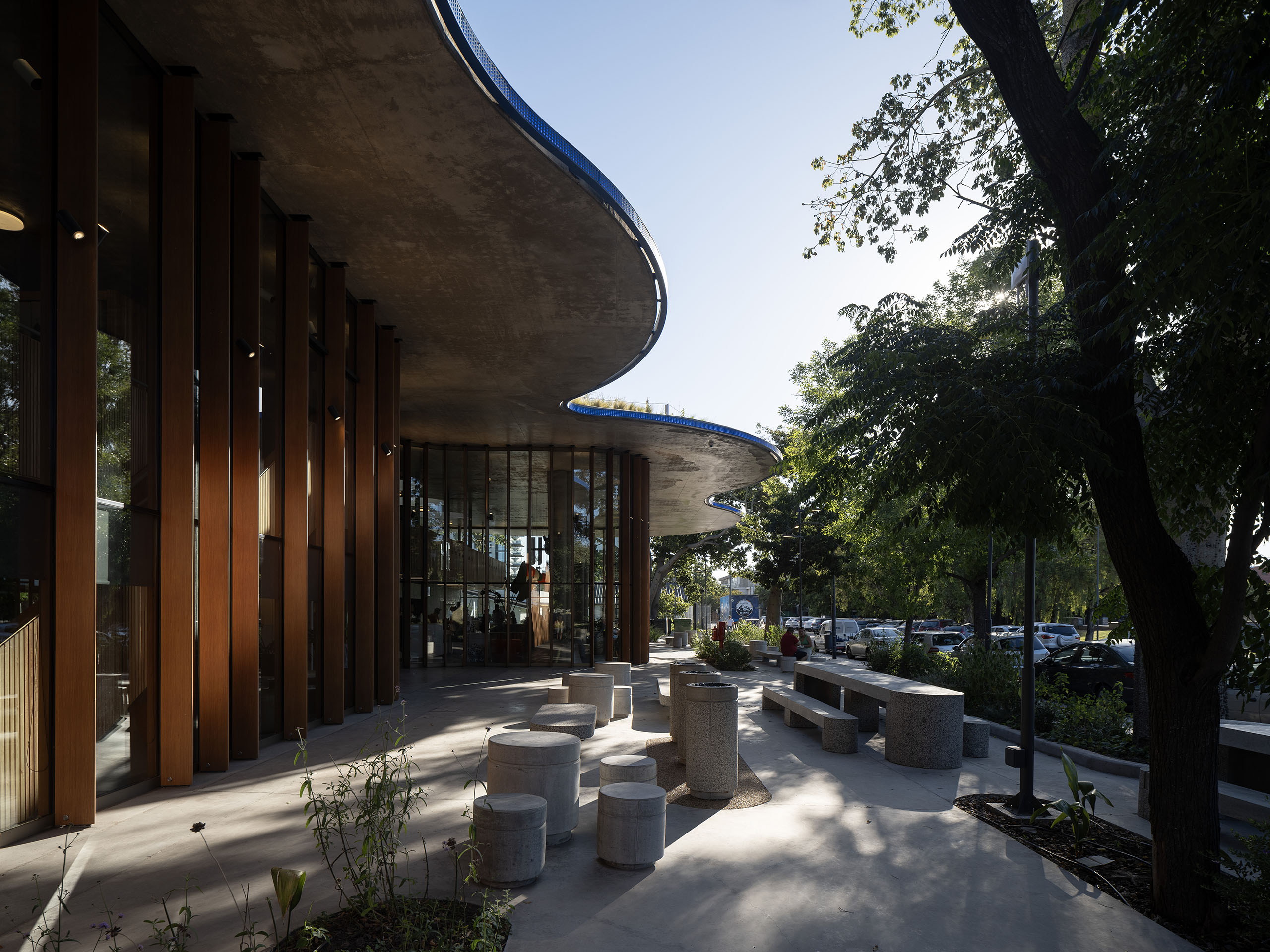
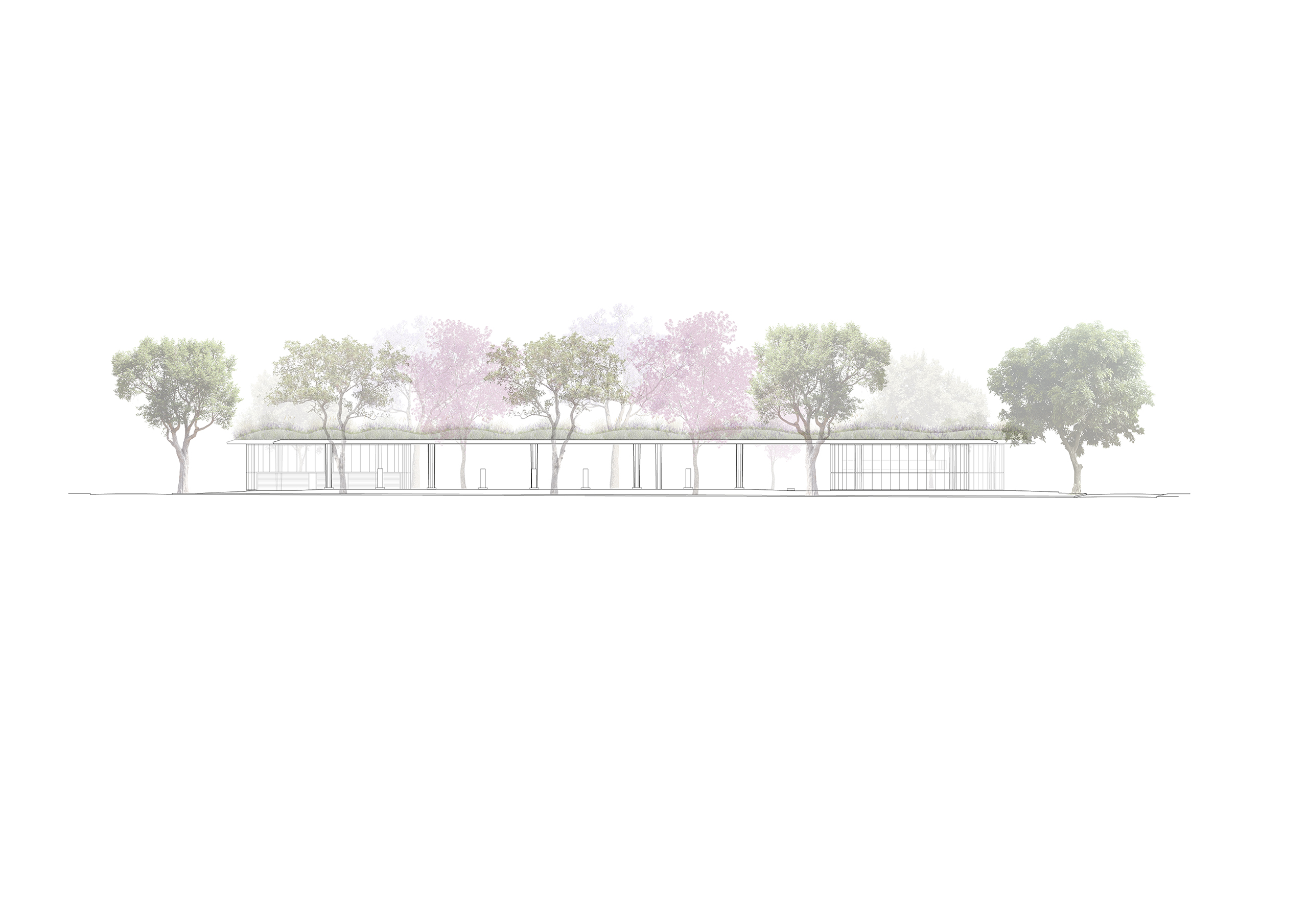
Sur ce terrain très animé se construit une vaste galerie, qui s’intègre à la continuité du couvert arboré des parcs en incluant désormais une grande ombre artificielle, capable d’accueillir une diversité d’équipements qui soutiennent et stimulent de multiples activités à des échelles très variées. Alors que les parcs, la nouvelle place, la galerie et son ombre définissent une organisation stable, fondée sur la qualité de lieu de rencontre et d’approvisionnement, les programmes spécifiques s’articulent selon des logiques conçues pour s’adapter à l’évolution des paradigmes énergétiques et commerciaux. L'ensemble du bâtiment s'intègre au paysage avec une forme singulière mais complémentaire à la séquence d'équipements qui, dès leur conception, animent cet enchaînement de parcs et d'écosystèmes riverains.
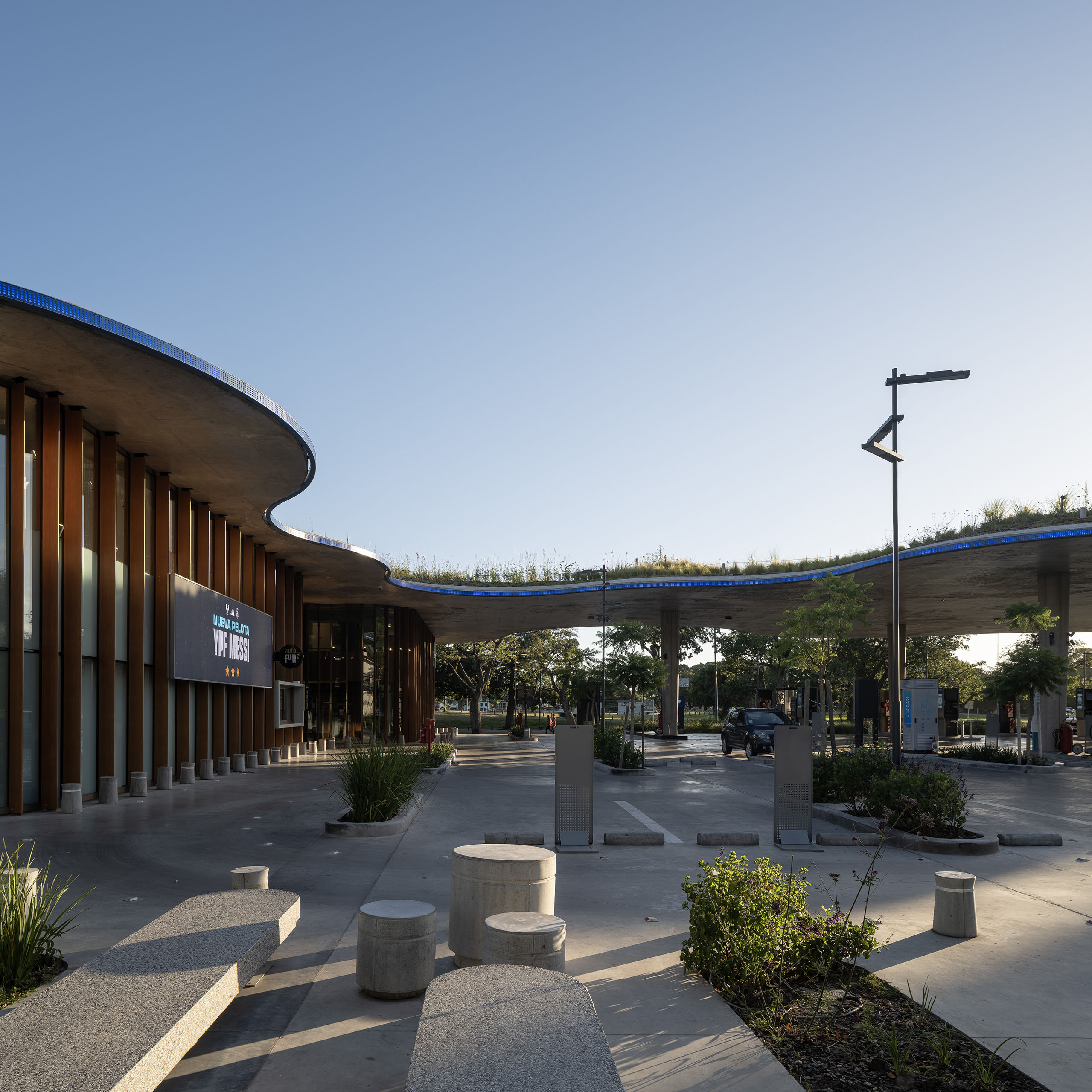
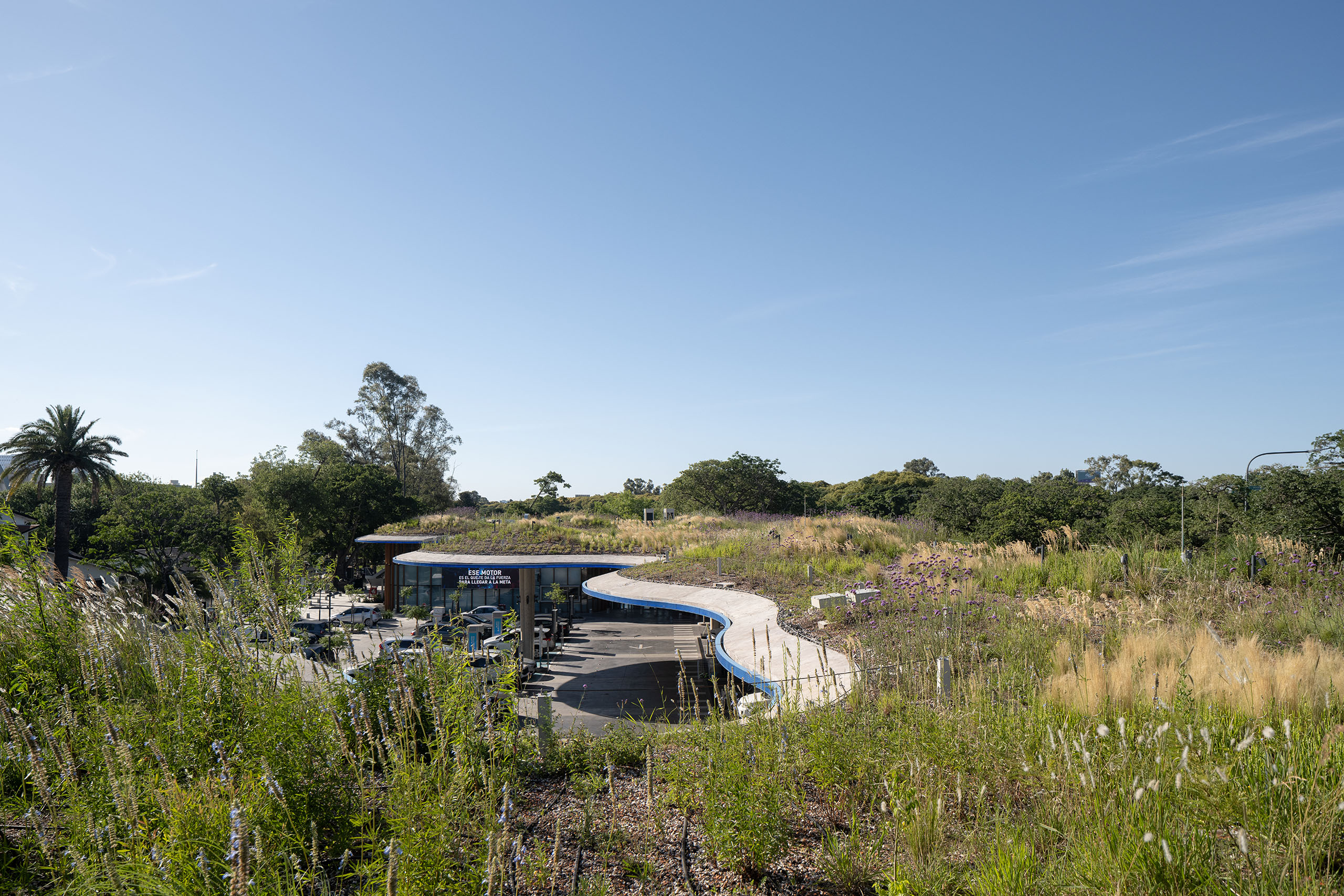
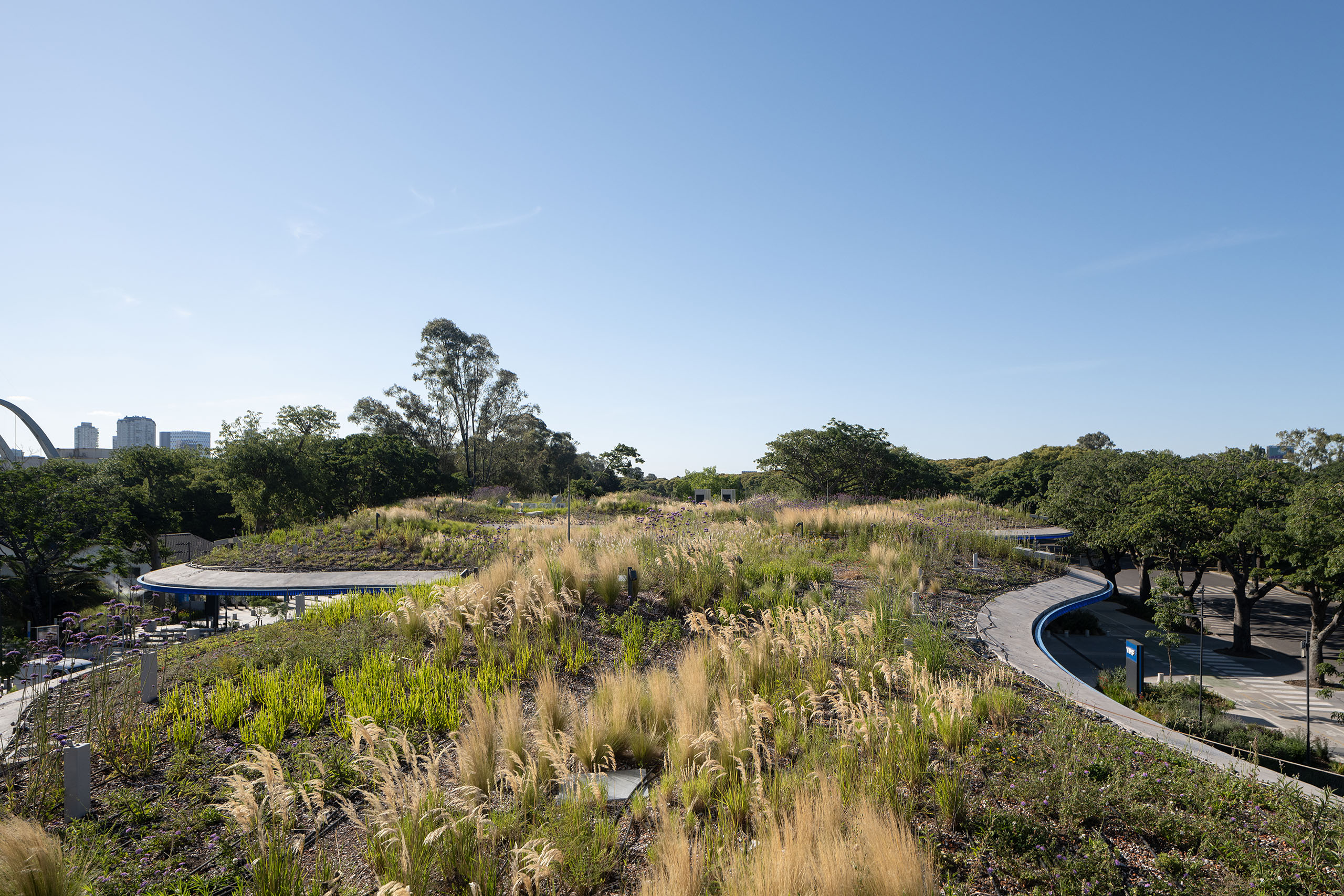
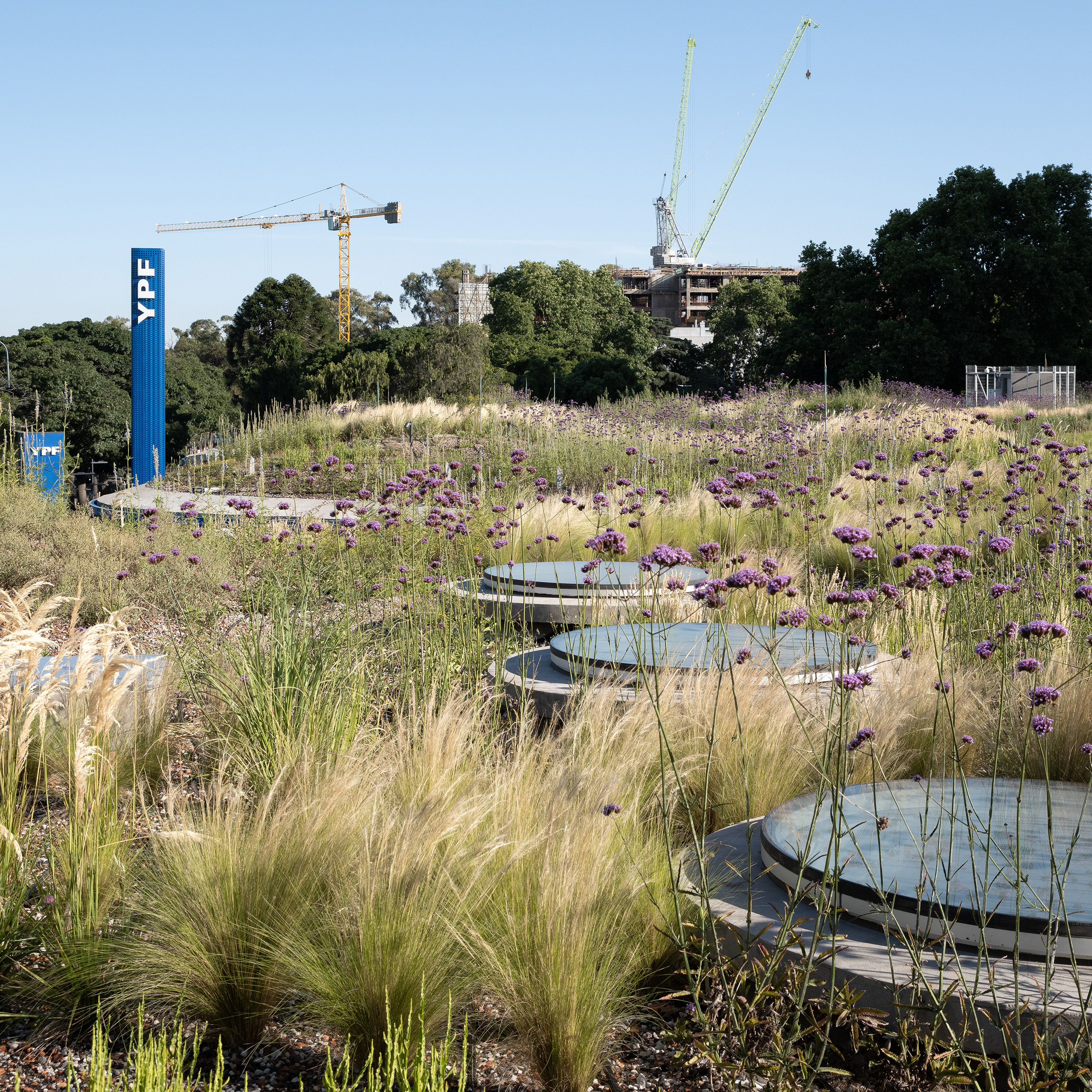
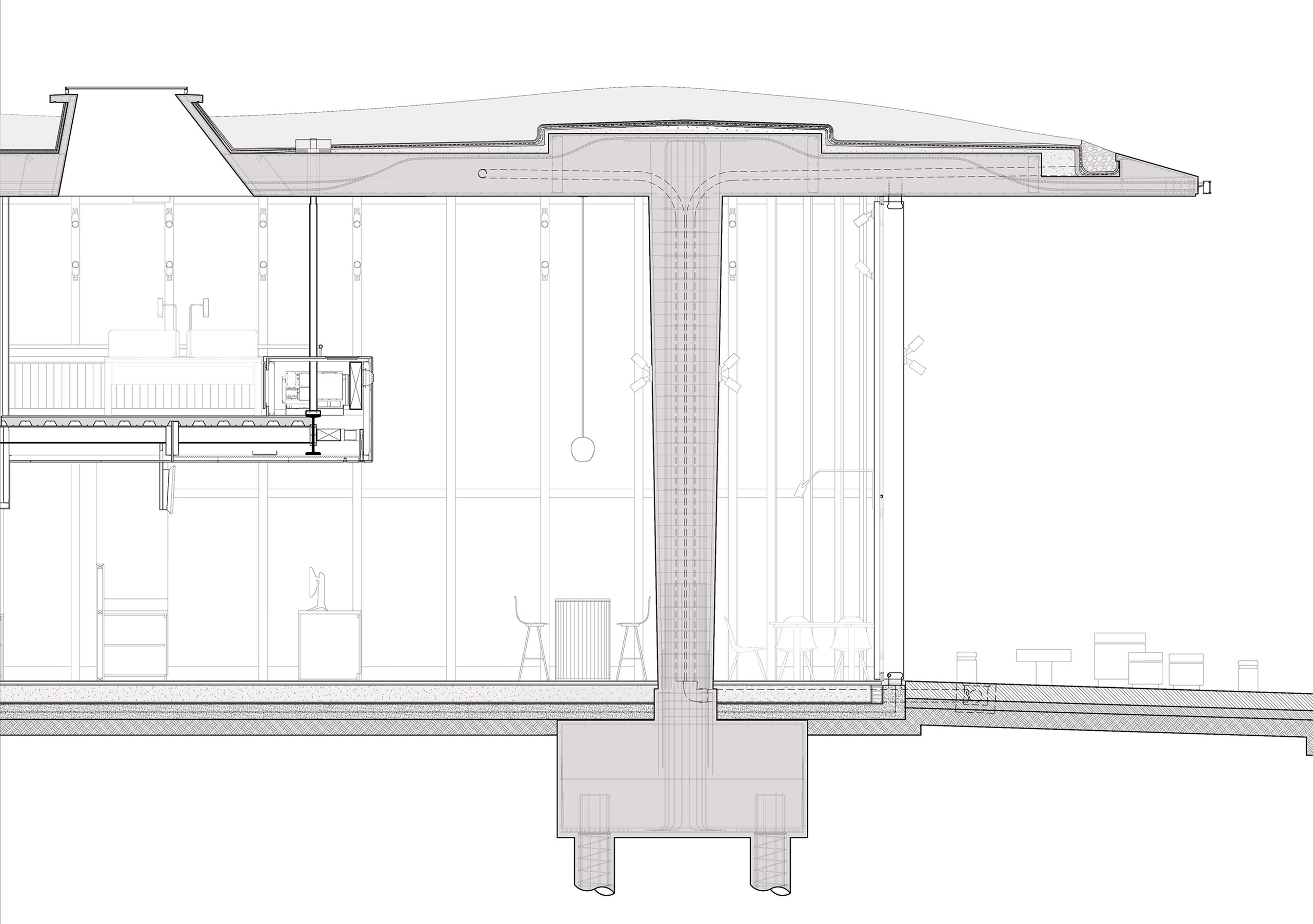
La galerie est une structure en béton à grandes portées qui soutient une toiture végétalisée, conçue comme une zone écologique destinée à réimplanter des communautés végétales spécifiques et propres à l’écorégion de la Pampa et de l’Espinal, qui ont été déplacées par le modèle d’aménagement paysager des XIXe et XXe siècles. Cette initiative consolide une micro-réserve urbaine qui favorise le retour d’espèces animales et végétales en ville, s’intégrant au flux de biodiversité dans un intervalle propice, servant de point intermédiaire entre l’écosystème riverain protégé de Ciudad Universitaria et sa continuité en amont, et la réserve écologique de la zone centrale en aval. Ce paysage autochtone apporte en outre des améliorations substantielles aux vues depuis les immeubles résidentiels voisins et aux manœuvres de décollage et d’atterrissage depuis l’Aeroparque, et compense les effets d’îlot de chaleur des chaussées, également atténués par l’ombre portée.
Les activités prévues s’organisent en plaçant la station-service face à l’avenue Alcorta, concentrant ainsi le flux routier le plus important et ses manœuvres dans une bande encadrée par deux volumes fermés et son prolongement vers la place publique. D’un côté, les services de restauration et les espaces de travail collaboratifs s’étendent vers la rue Juramento et la place voisine.
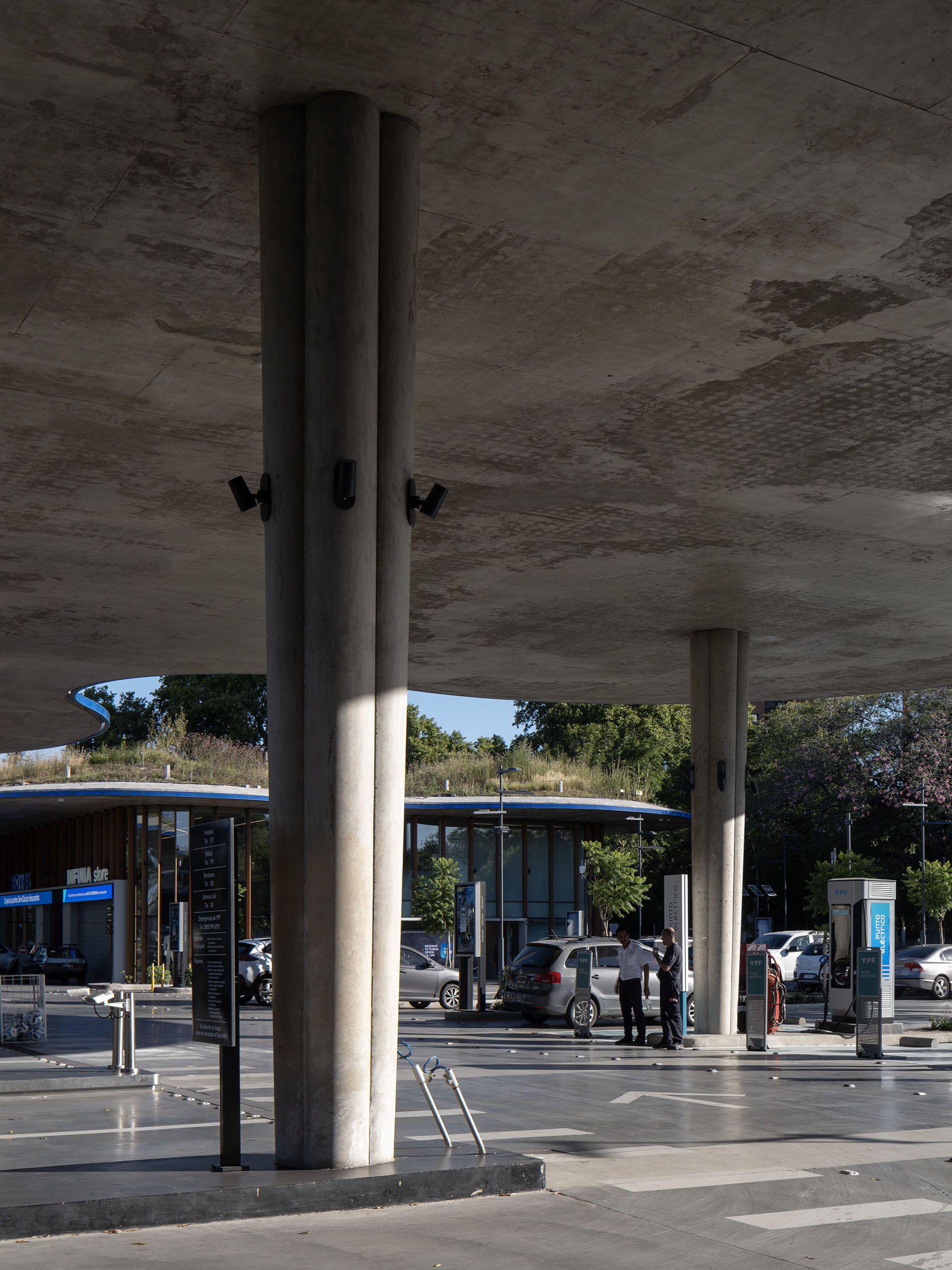
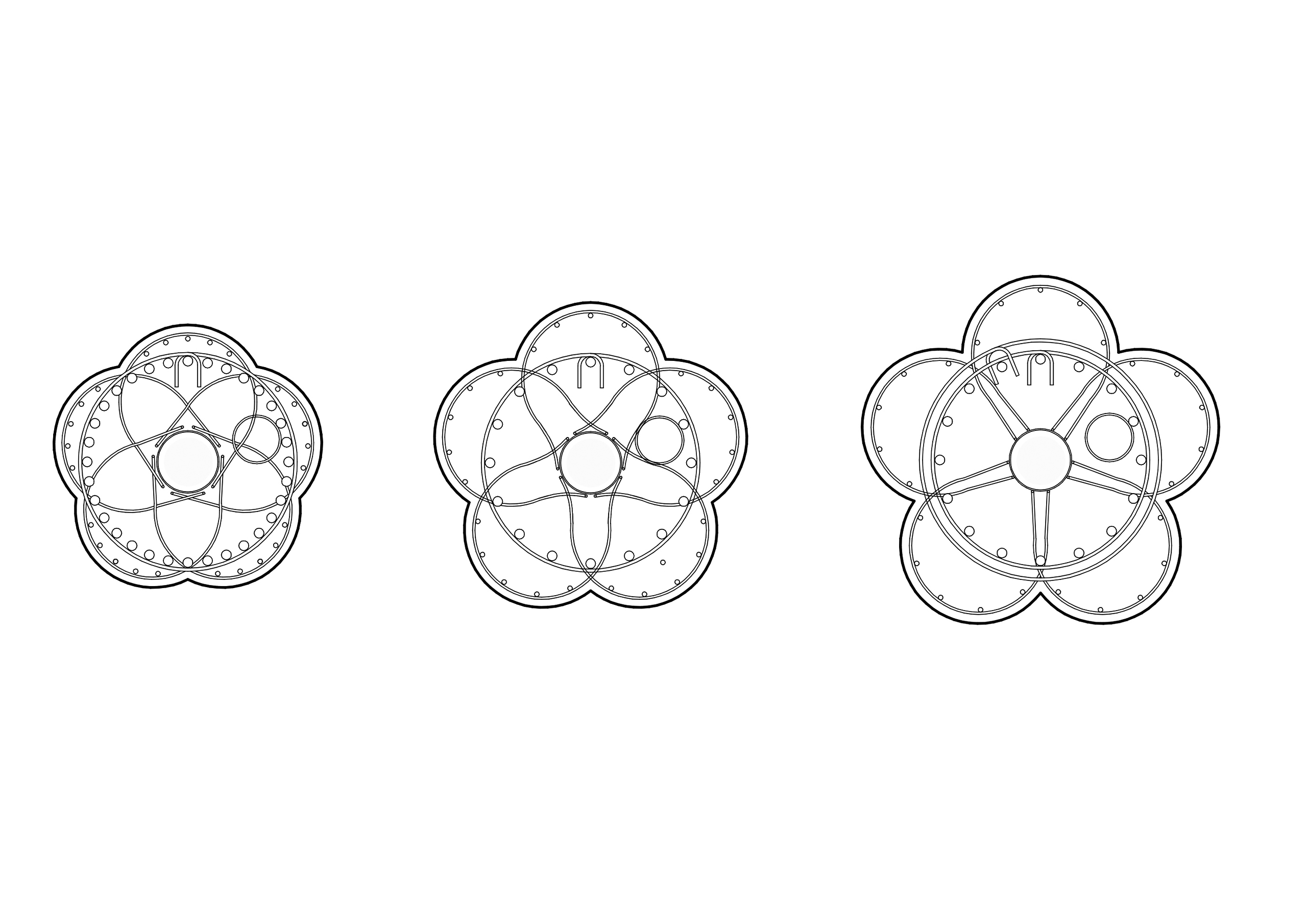
De l’autre côté, les services aux véhicules et l’administration, délimitant la zone de ravitaillement en carburant dans un espace sécurisé donnant sur la rue Echeverría. Sur le côté opposé à l’avenue, un passage ouvert s'éloigne du bruit et offre une zone piétonne sécurisée qui traverse le pâté de maisons en reliant les deux rues latérales, facilitant ainsi la continuité des parcs et apportant de nombreux services spécifiques à cette promenade (fontaines pour les personnes et les animaux de compagnie, aires de repos, points de réparation et de gonflage de vélos, douches et vestiaires, expositions, bornes de recharge pour appareils personnels, tables pour manger en plein air, etc.). Cette organisation générale, qui gère stratégiquement les proximités et les distances entre les usages, les intègre en même temps dans un espace public unifié défini par un sol continu, supportant des parterres, l’éclairage et les équipements. C’est là que sont implantées les colonnes en béton, chacune capable de soutenir un module circulaire composé d’un chapiteau et d’une dalle. Leur disposition variable permet de les rapprocher jusqu’à les intégrer pour obtenir stabilité et rigidité, ou de les espacer de manière appropriée pour modeler les espaces couverts, semi-couverts et découverts de cette place dédiée aux mobilités partagées à faible vitesse, avec des priorités sélectives qui s’appliquent localement, guidées par des cordons, des bornes ou des parterres végétaux. Le nouveau système botanique de ce site combine la récupération, la transplantation et l’intégration d’arbres, proposant ainsi une continuité avec le projet historique de Thays pour le parc Tres de Febrero, en y ajoutant des essences de la région du Chaco argentin à la floraison échelonnée et dynamique.
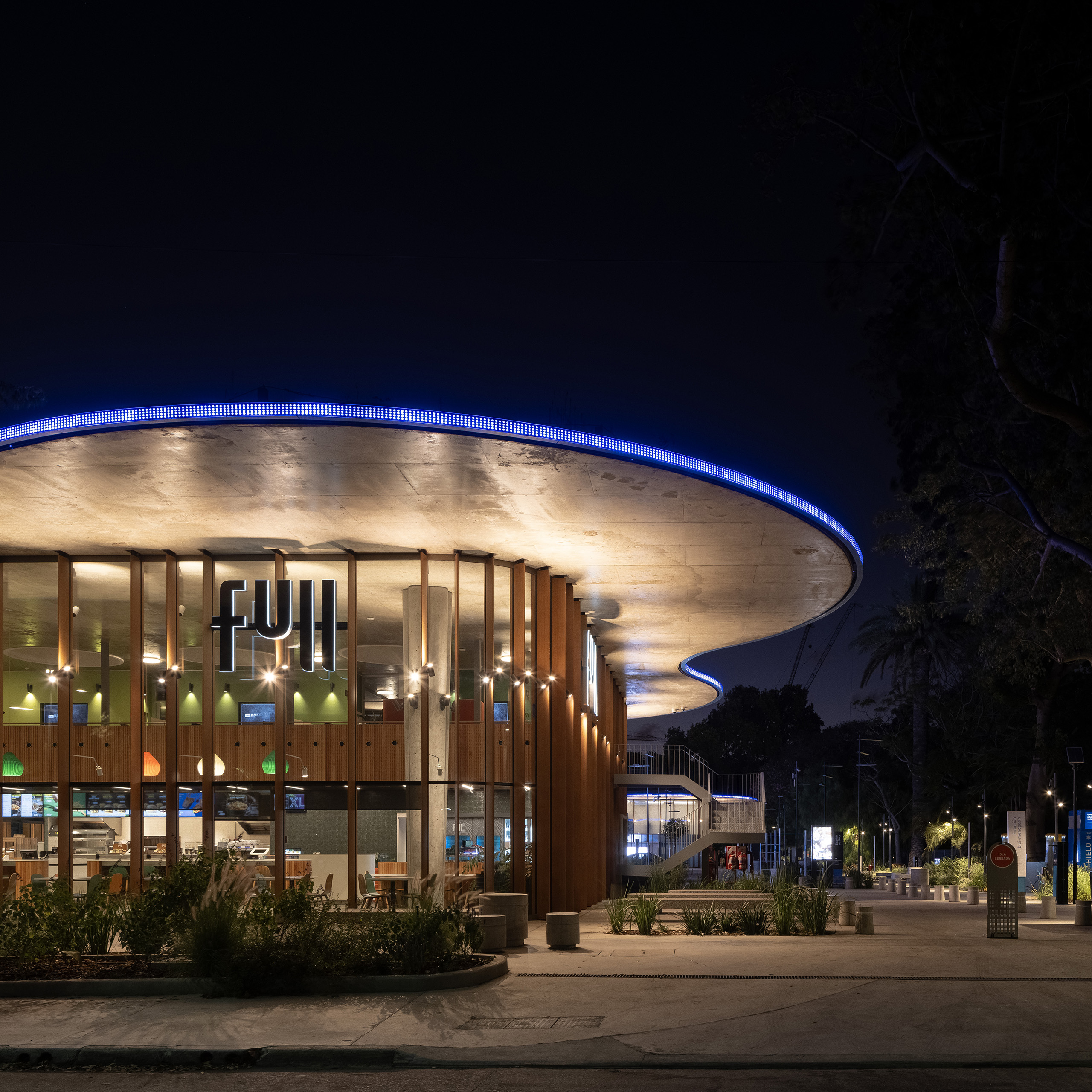
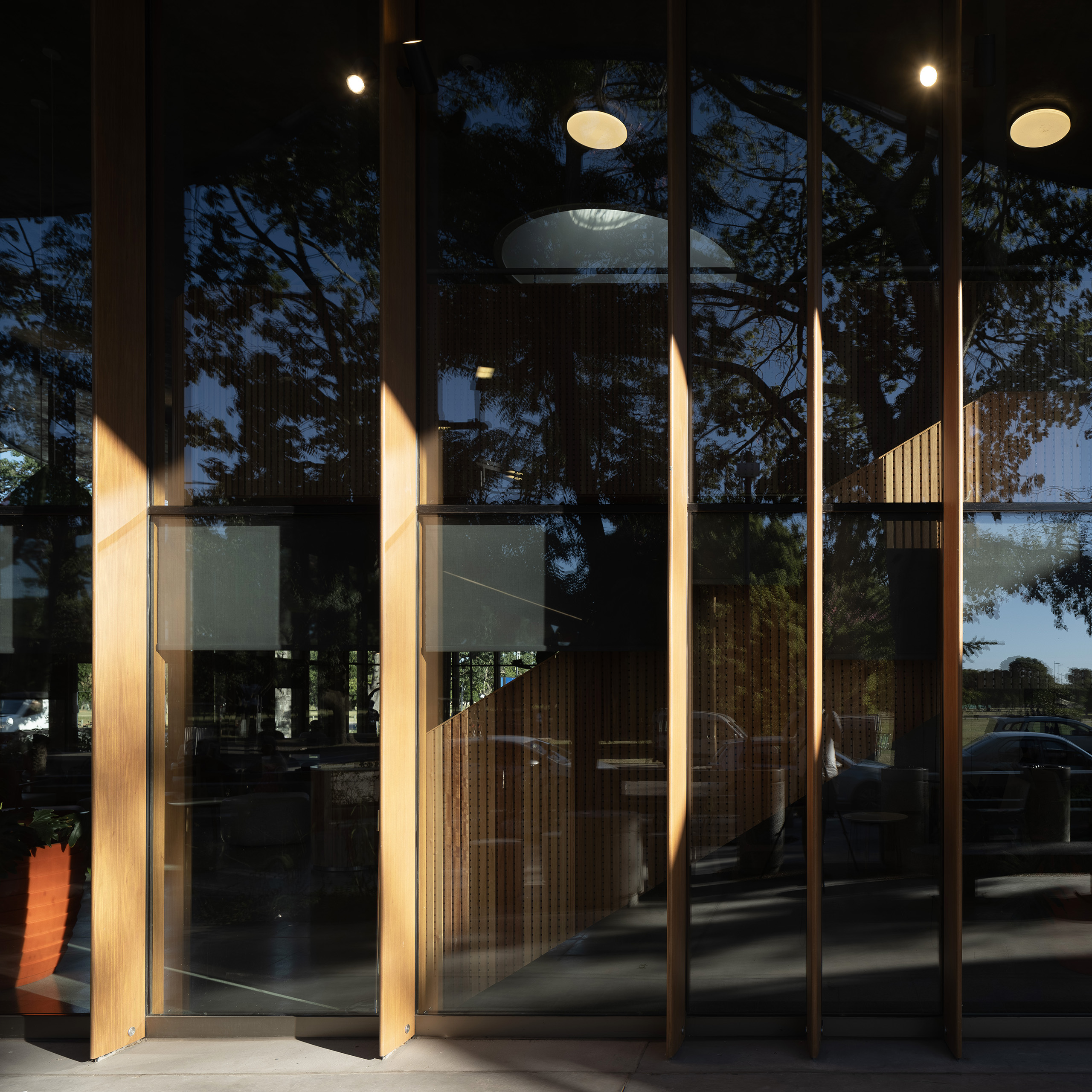
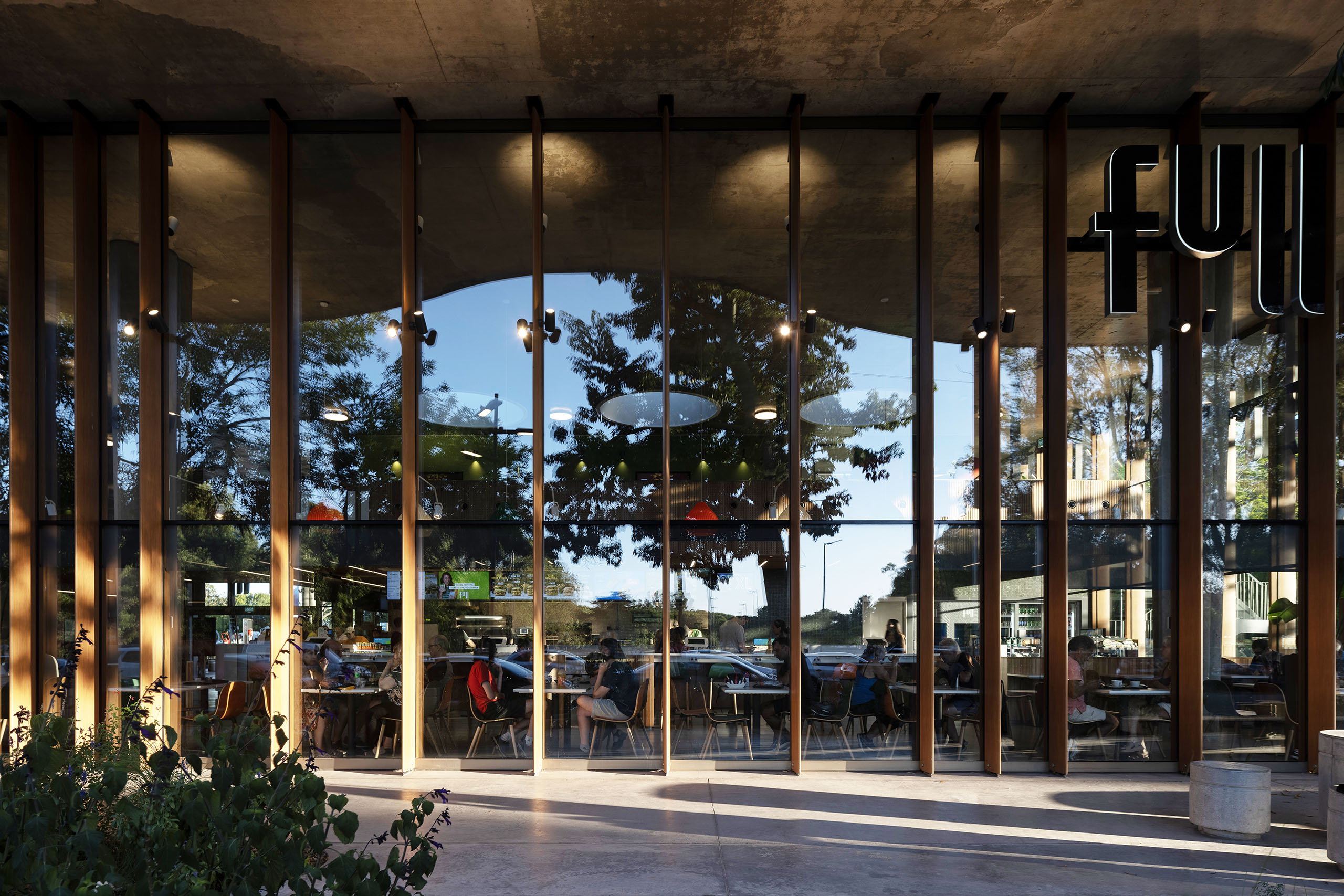
Les programmes fermés se composent de deux volumes de menuiseries modulaires transparentes, translucides ou opaques, qui entourent les espaces en formant des façades planes aux arêtes convexes entourant des colonnes. Leurs variations intègrent dans un système très continu les différents degrés de confort thermique, acoustique et visuel adaptés à chaque situation. L’espace défini entre l’enveloppe et le bord de la toiture varie également pour créer des zones semi-couvertes et découvertes où se situent des extensions qui dynamisent toutes les façades et dotent la station-place d’activités intenses bien réparties.
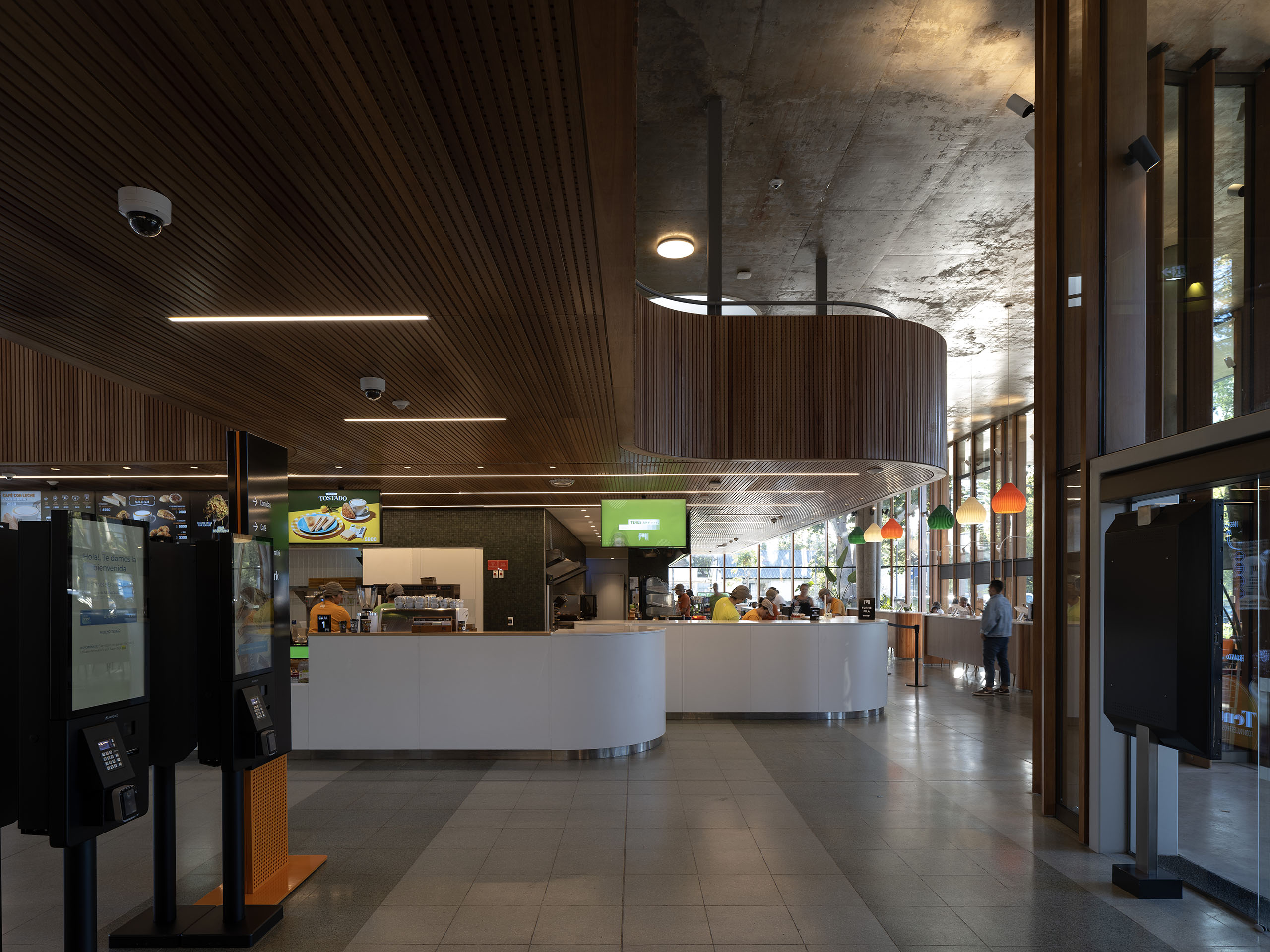
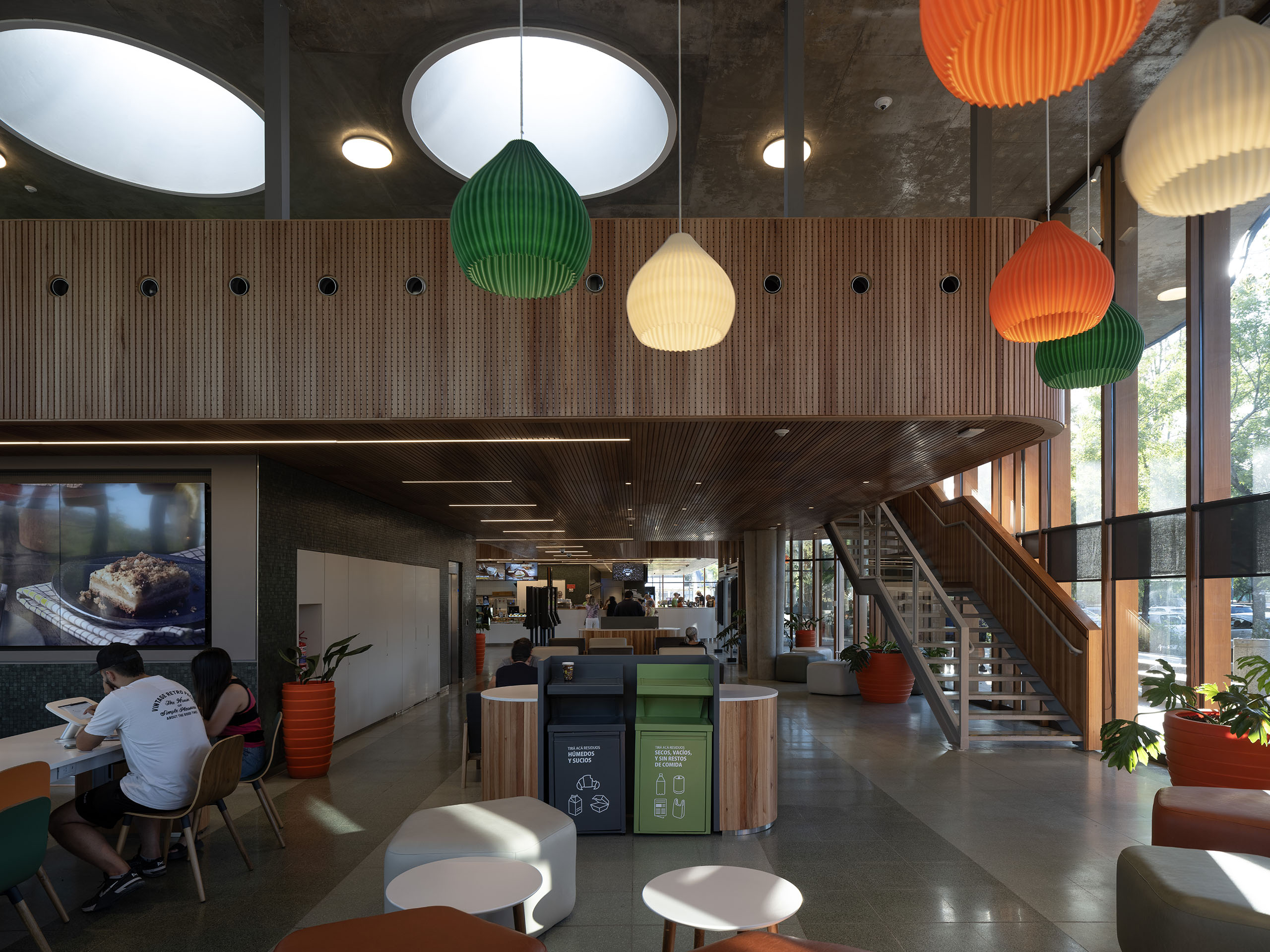
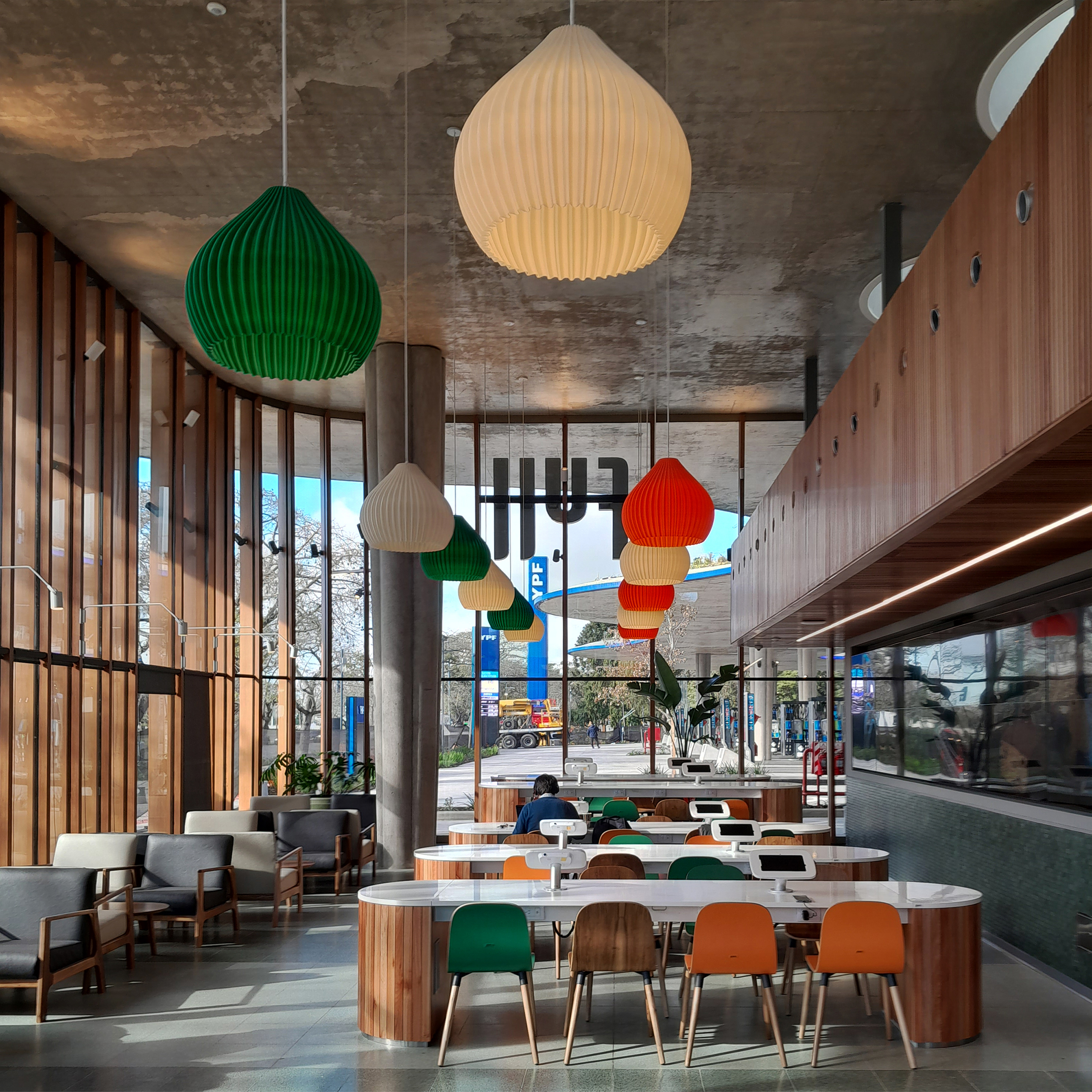
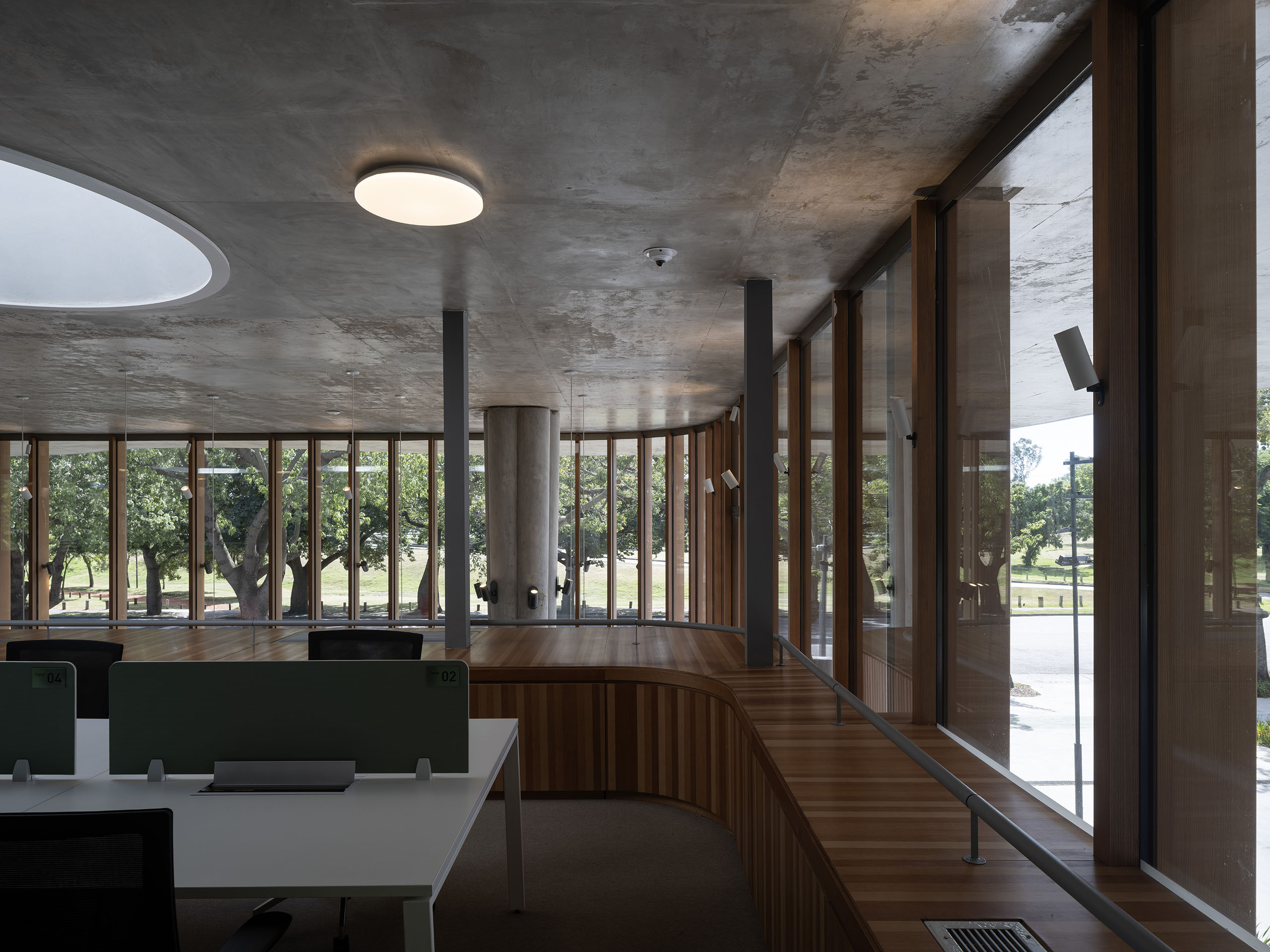
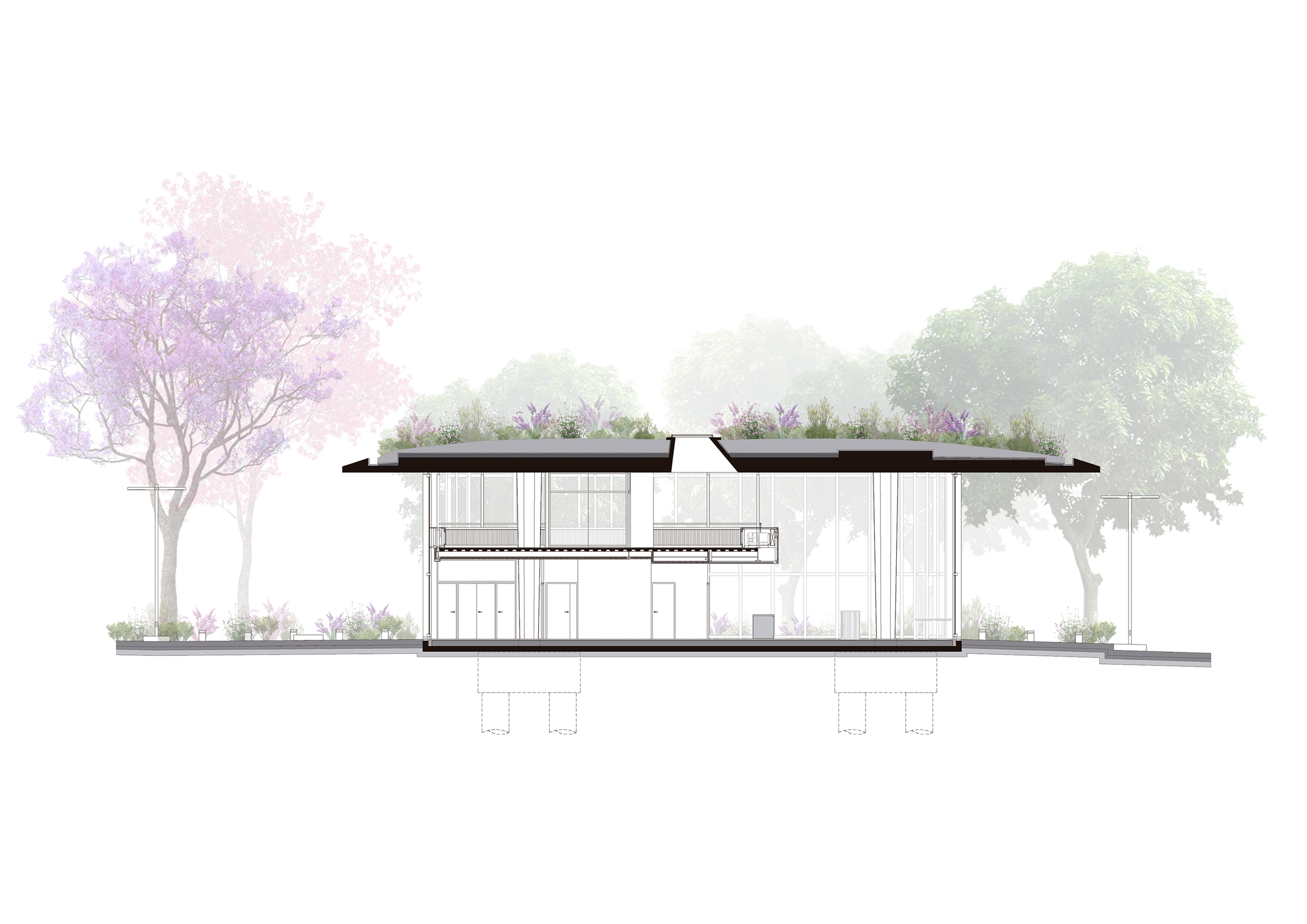
L'espace dédié à la restauration s'organise autour d'une cuisine ouverte, conçue pour susciter l'intérêt et rendre transparents tous les processus de préparation, avec une façade d'échange entre production et consommation donnant sur une salle à double hauteur. Ce vaste espace intérieur s’intègre par le biais d’un hall offrant une zone plus vaste et variée, avec des tables collectives et des coins salon équipés de fauteuils et de tables basses entourant un noyau de services, et relié par un escalier aux espaces de travail collaboratifs situés à l’étage supérieur. La mezzanine est une plate-forme composée d’un dallage en tôle d’acier et de poutres métalliques, suspendue par des tendeurs à la structure primaire en béton, entourée de façades basses en bois qui intègrent les systèmes de climatisation et de ventilation mécanique et se prolongent en dessous sous forme de plafonds insonorisants. Sur ce support s’organisent des espaces de travail informels et certains services, y compris quelques salles de réunion dotées d’aménagements plus contrôlés.
De même, le volume abritant les services aux véhicules et les zones administratives comprend une mezzanine métallique suspendue, qui s’efface sur un côté pour
laisser un espace de double hauteur à l’atelier mécanique, conçu comme une façade ouverte et intégrée en accord avec la technicisation croissante de ce service. Sur les deux mezzanines s’ouvrent des lucarnes moulées qui apportent de la lumière naturelle au centre des volumes fermés.
La stratégie de climatisation, de ventilation, de gestion de l'eau et les technologies de construction du projet visent de manière globale et stratégique à améliorer les conditions de qualité urbaine et environnementale grâce à une conception à la fois innovante et durable.
Ignacio Dahl Rocha, Facundo Morando, Roberto Lombardi, Rodrigo Muro, Nicole Michel, Sofía Vivacqua, Juan Benítez, Candela de Bortoli, María Santarelli, Sofía Galdós, Agustín Azar, Matías Brun, Gala Traversa, Rocío Pagés, Bárbara Oestereicher, Franco Bisso, Tomás Pérez Amenta, Facundo Burgos, Tomás Kenny, Florencia Kim, Juan Carlos Franchi, Juan Shimazu, Lucía Cortegoso, Sofía Lowe, Valeria Tawara, Lorenzo Rascovan, Guadalupe Castro, Sibila Stein, F. Canavese, M. Rodríguez Frank, Salvador Velesquen
2019 - 2023 · Argentine, Buenos Aires · Public » Commerces
Le projet commence par un concours lancé par YPF pour réinterpréter stratégiquement le concept de station-service, en élargissant les fonctions habituelles (remplissage de carburant, assistance mécanique et commerce complémentaire) avec de nouveaux paradigmes de durabilité environnementale, de communication et d'articulation avec la communauté.
Il est situé dans un bloc singulier de la ville de Buenos Aires, en continuité avec les parcs publics proches de la côte du Río de la Plata, et forme une place avec des services organisés en un réseau de nœuds qui soutiennent à la fois les activités réalisées par marcheurs, coureurs, cyclistes sur le corridor vert public, comme support du lien véhiculaire stratégique entre les tissus intérieurs de la ville et le réseau autoroutier qui relie la zone métropolitaine. Sur ce terrain très actif, est construite une vaste galerie qui s'intègre dans la continuité des arbres des parcs, incluant désormais l'ombre artificielle d'un système de colonnes et de dalles en béton armé à grandes portées, combinées pour abriter une diversité d'équipements, et soutenir une couverture végétale conçue comme une parcelle écologique qui replante des communautés végétales indigènes déplacées par le modèle d'aménagement paysager du 19e siècle.
Les programmes fermés sont constitués de deux volumes de menuiseries modulaires transparentes, translucides et opaques, qui entourent les espaces double ou simple hauteur, avec des mezzanines métalliques suspendues par des tendeurs au toit.