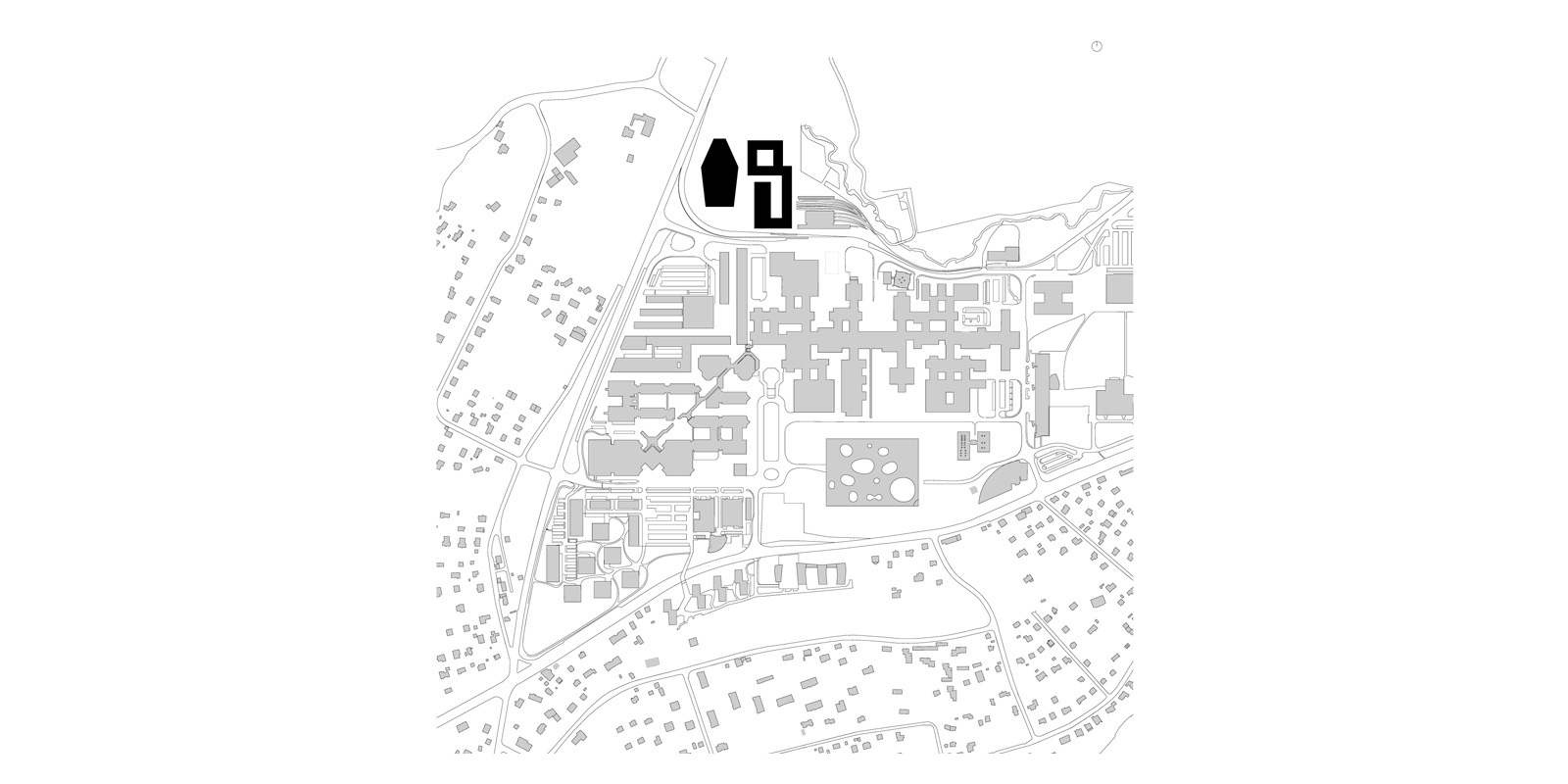
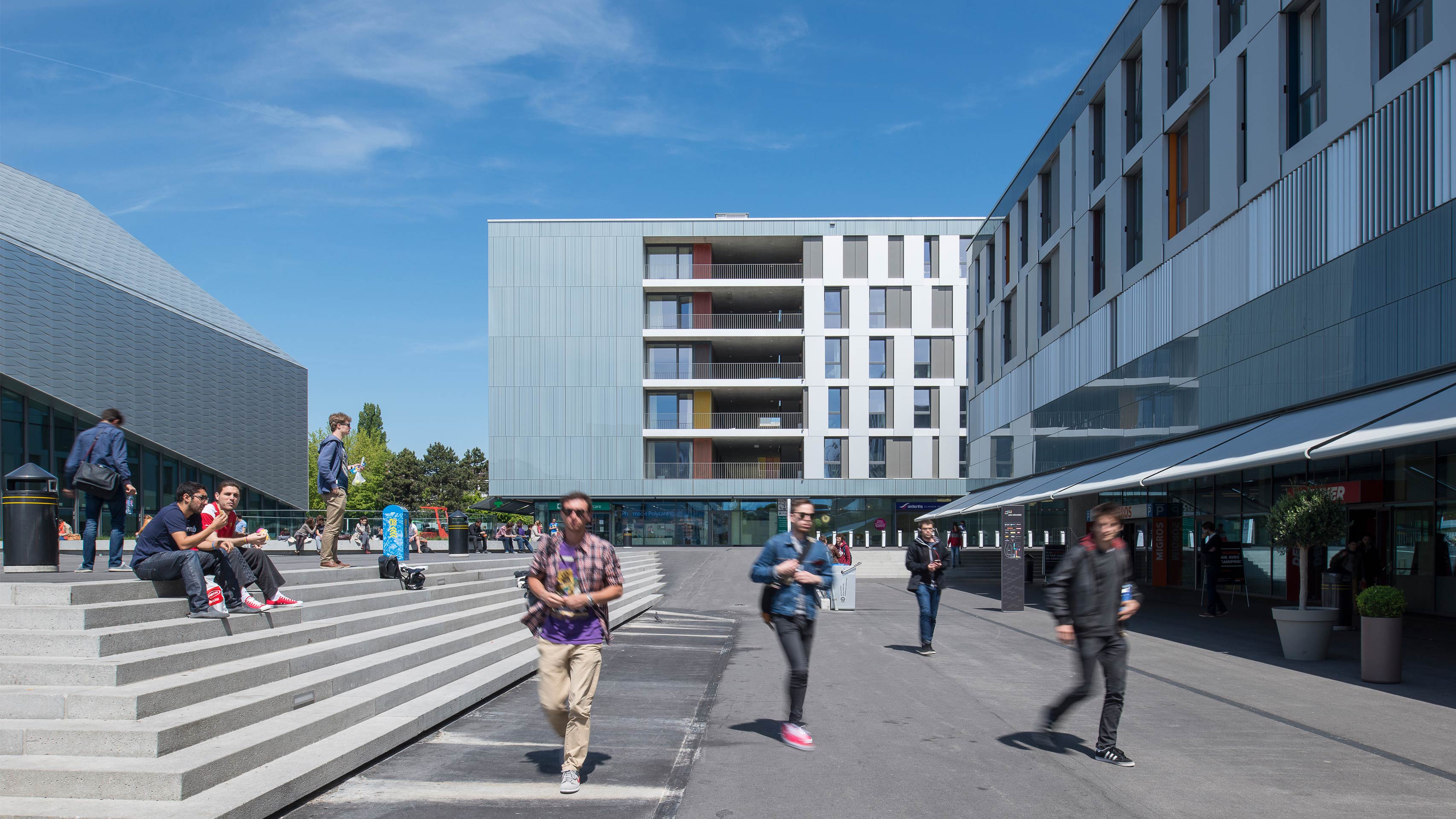
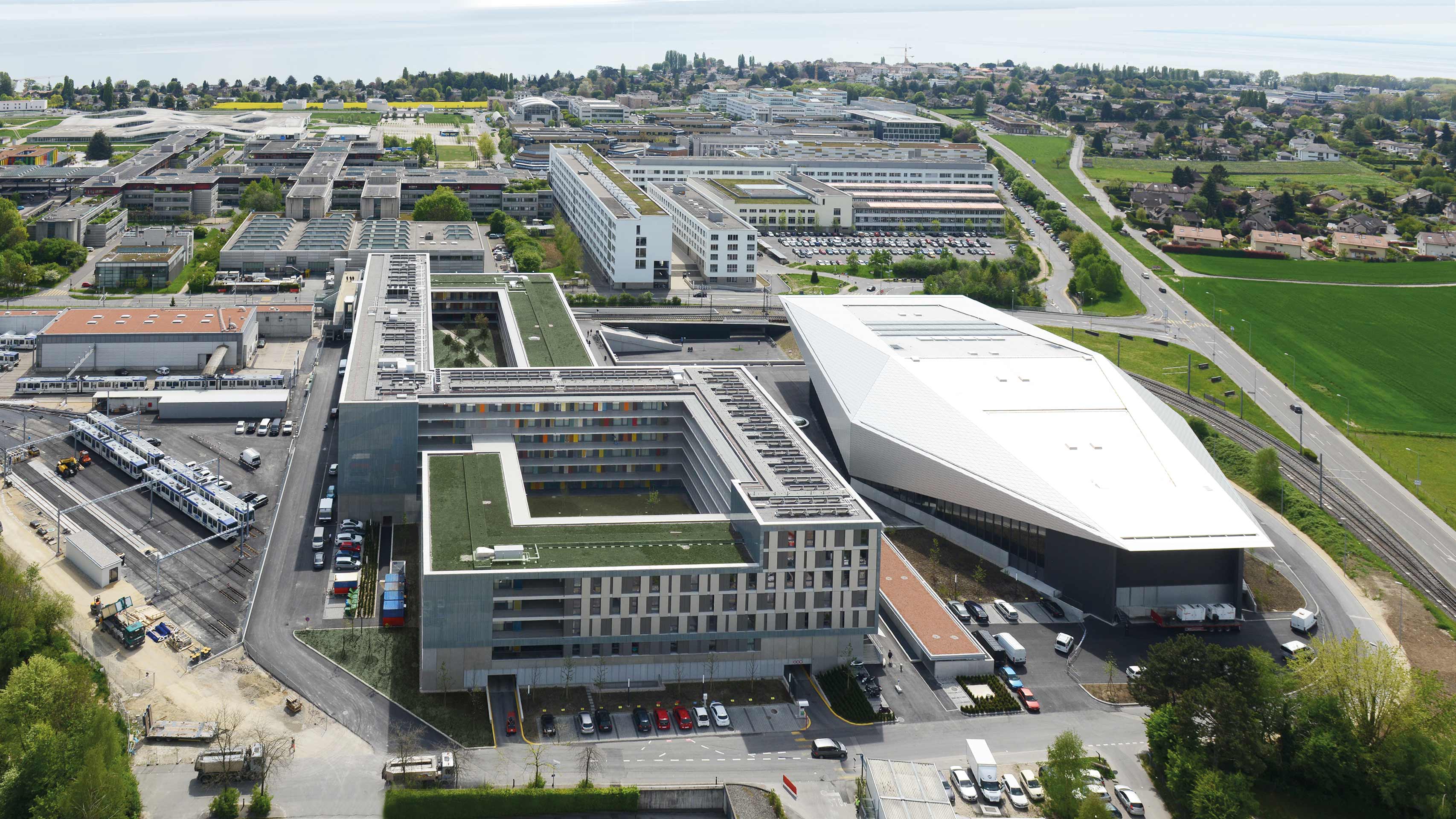
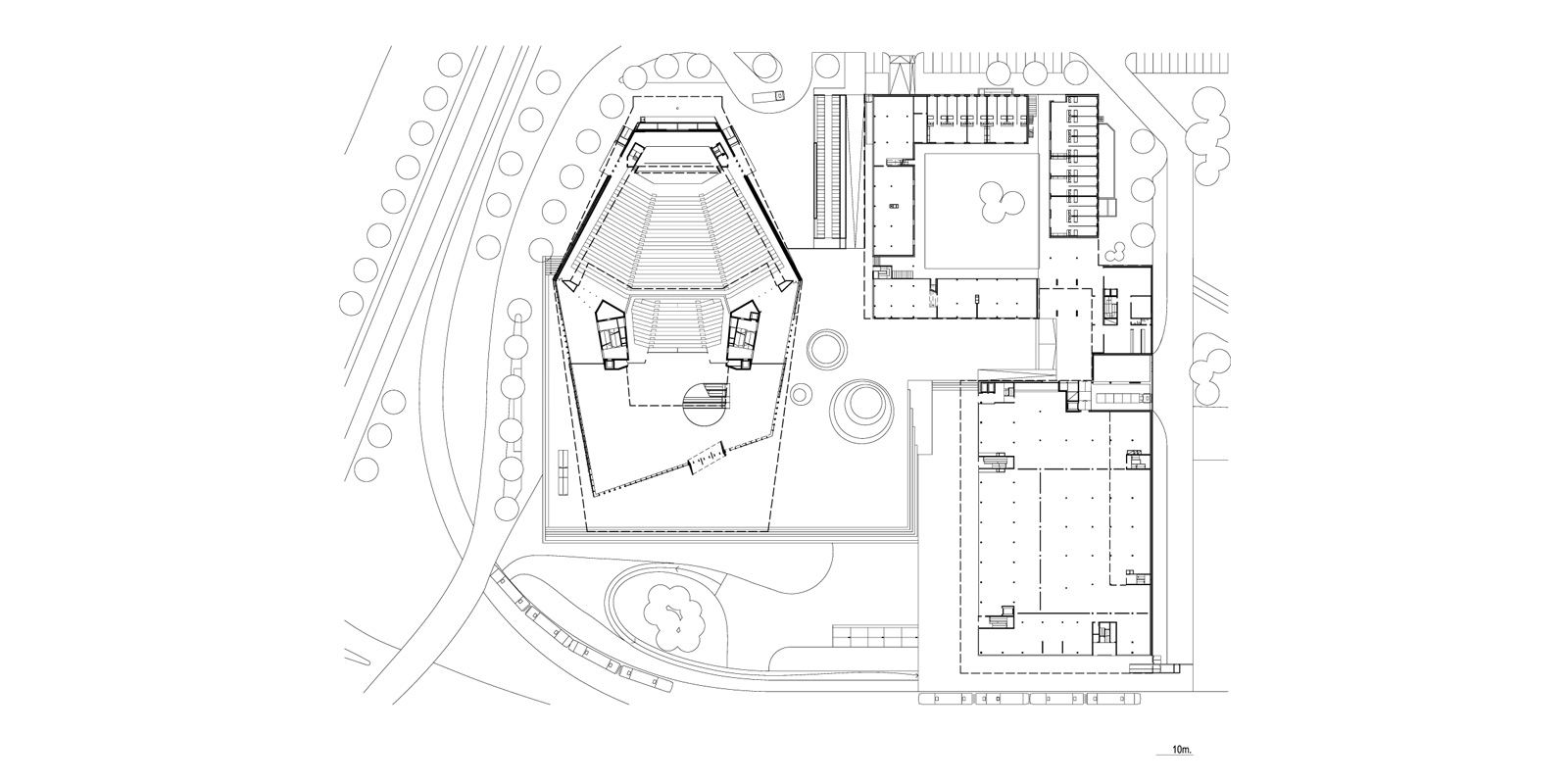
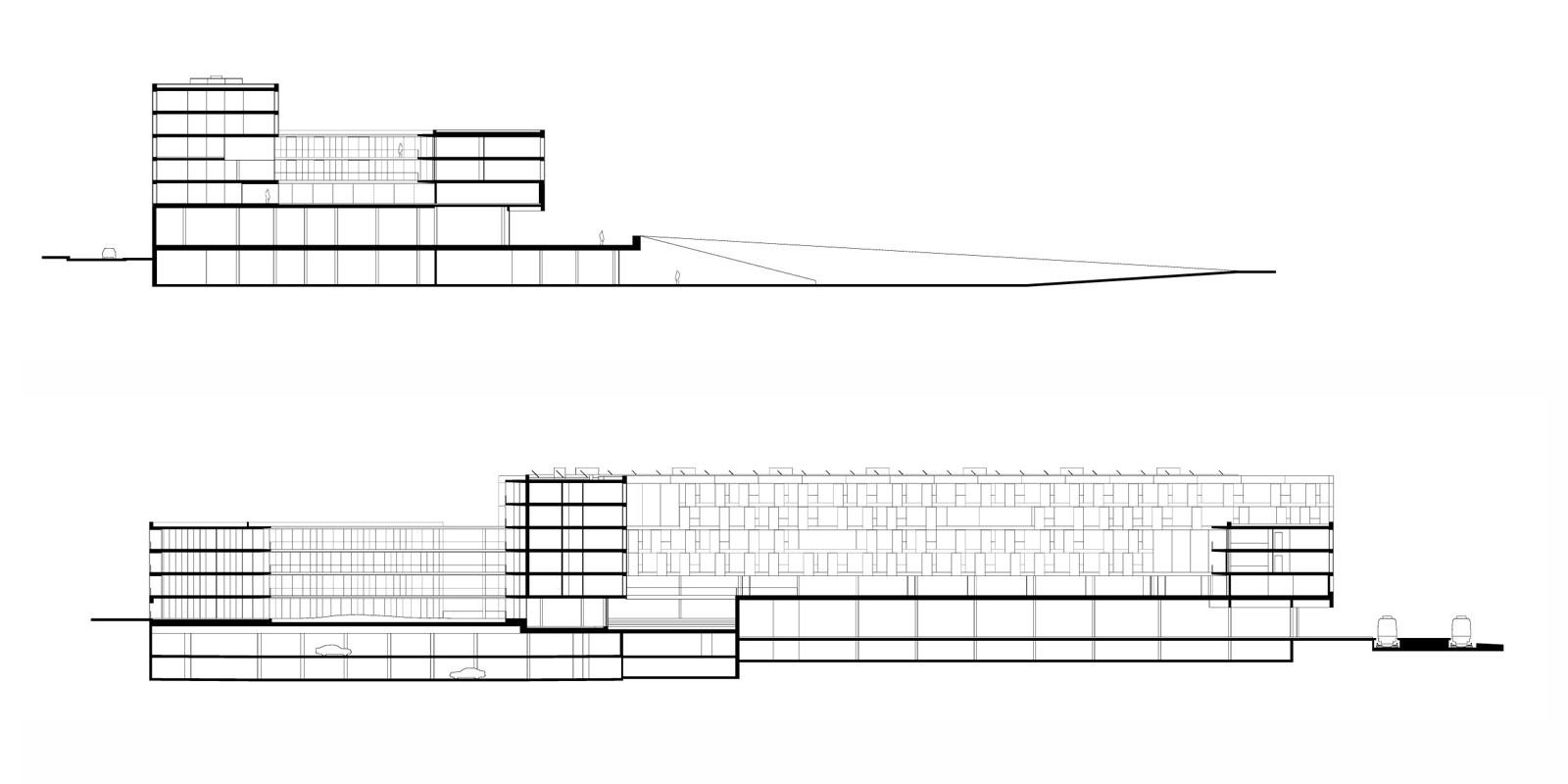
Located on the edge of the campus of the Swiss Federal Institute of Technology in Lausanne (EPFL), in the municipality of Ecublens, the Quartier Nord is home to infrastructure that is essential to the university's reputation. Directly linked to the M1 metro station connecting Lausanne to Renens, the complex includes a convention centre that can accommodate up to 3,000 people: the SwissTech Convention Centre, a student accommodation building with a capacity of 516 beds, a hotel, administrative and service areas, restaurants and shops, as well as a 275-space car park. The complex is organised around a large square towards which the public spaces of the convention centre and shops converge, reinforcing the public character of the neighbourhood.
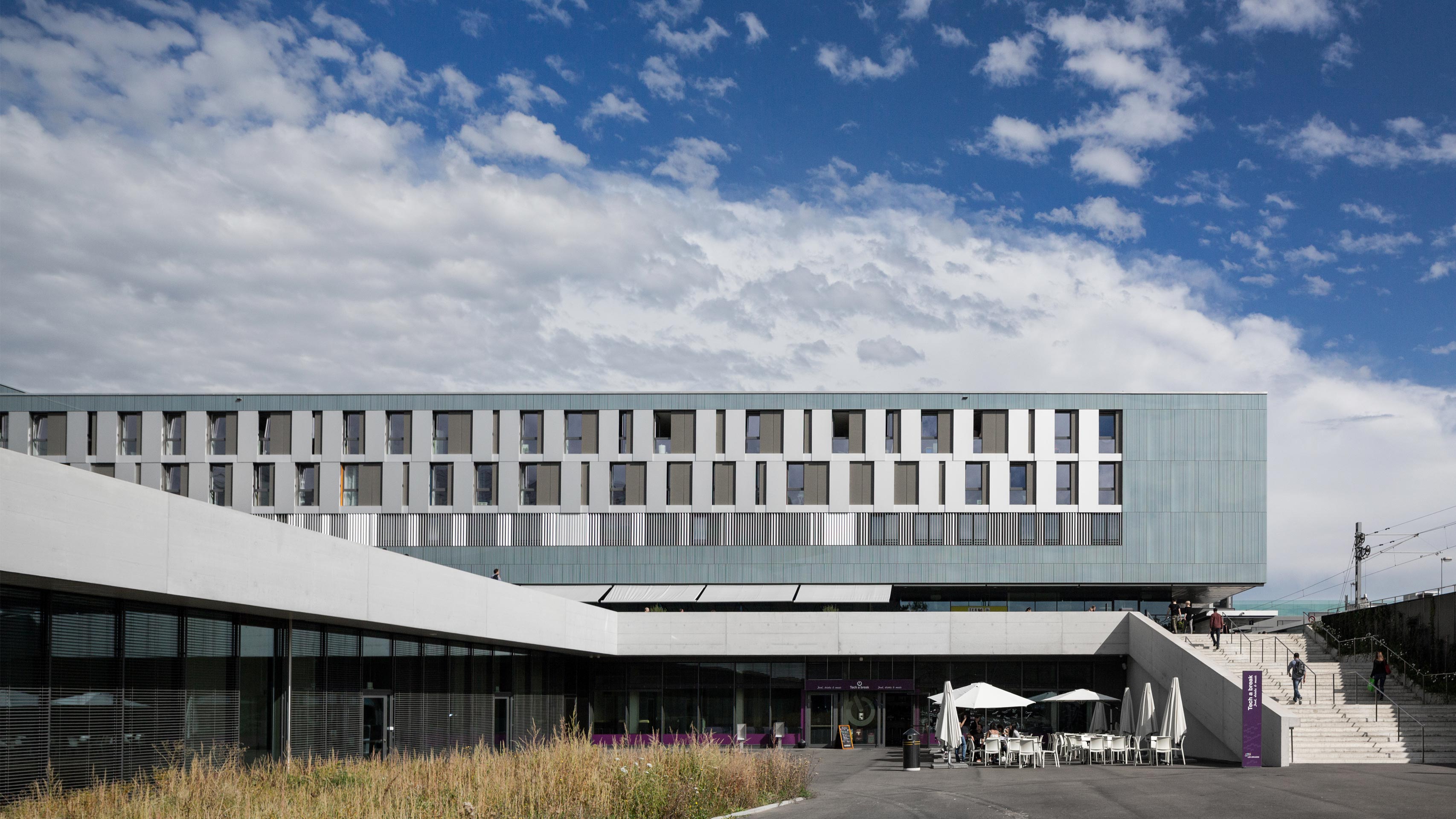
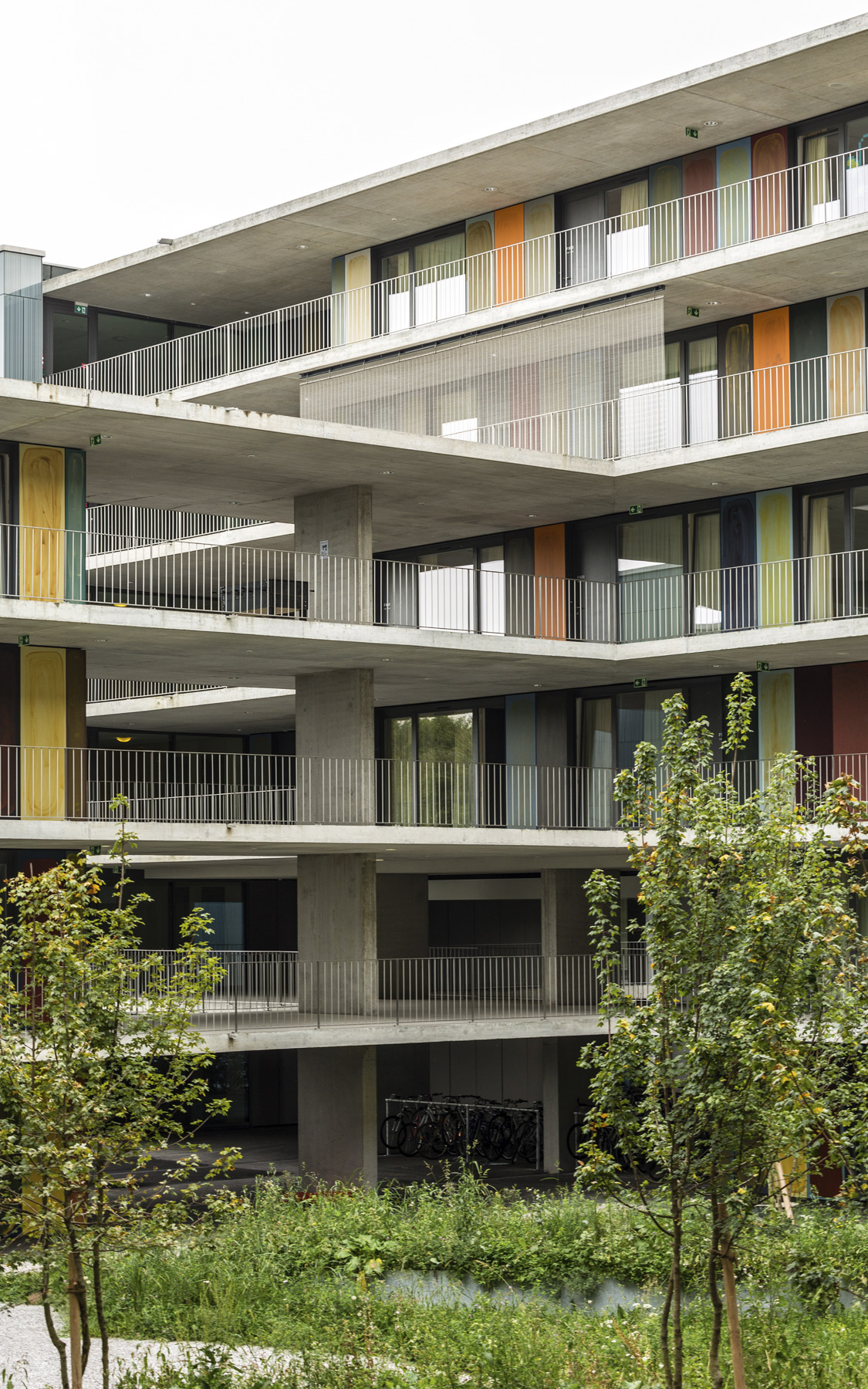
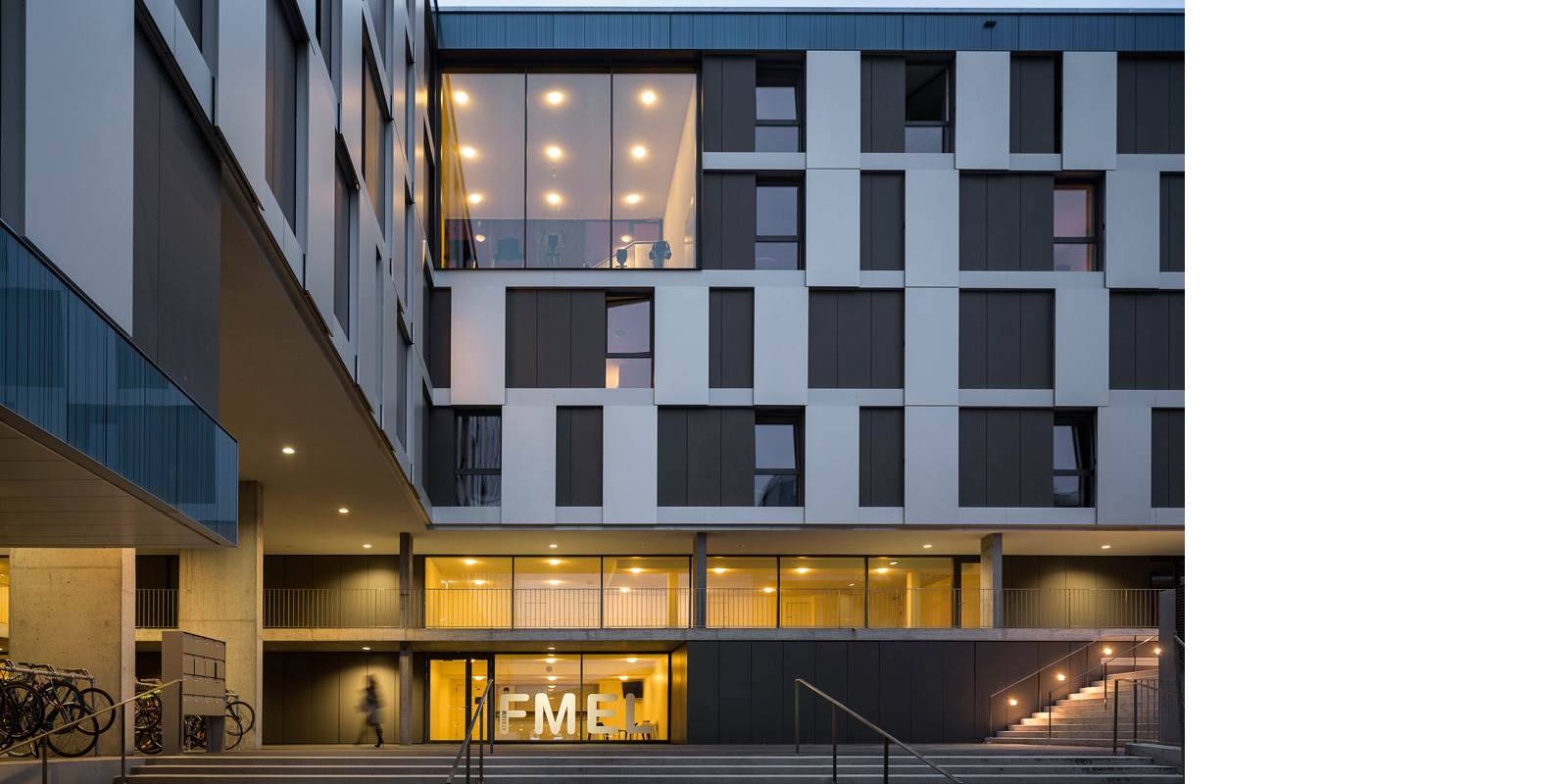
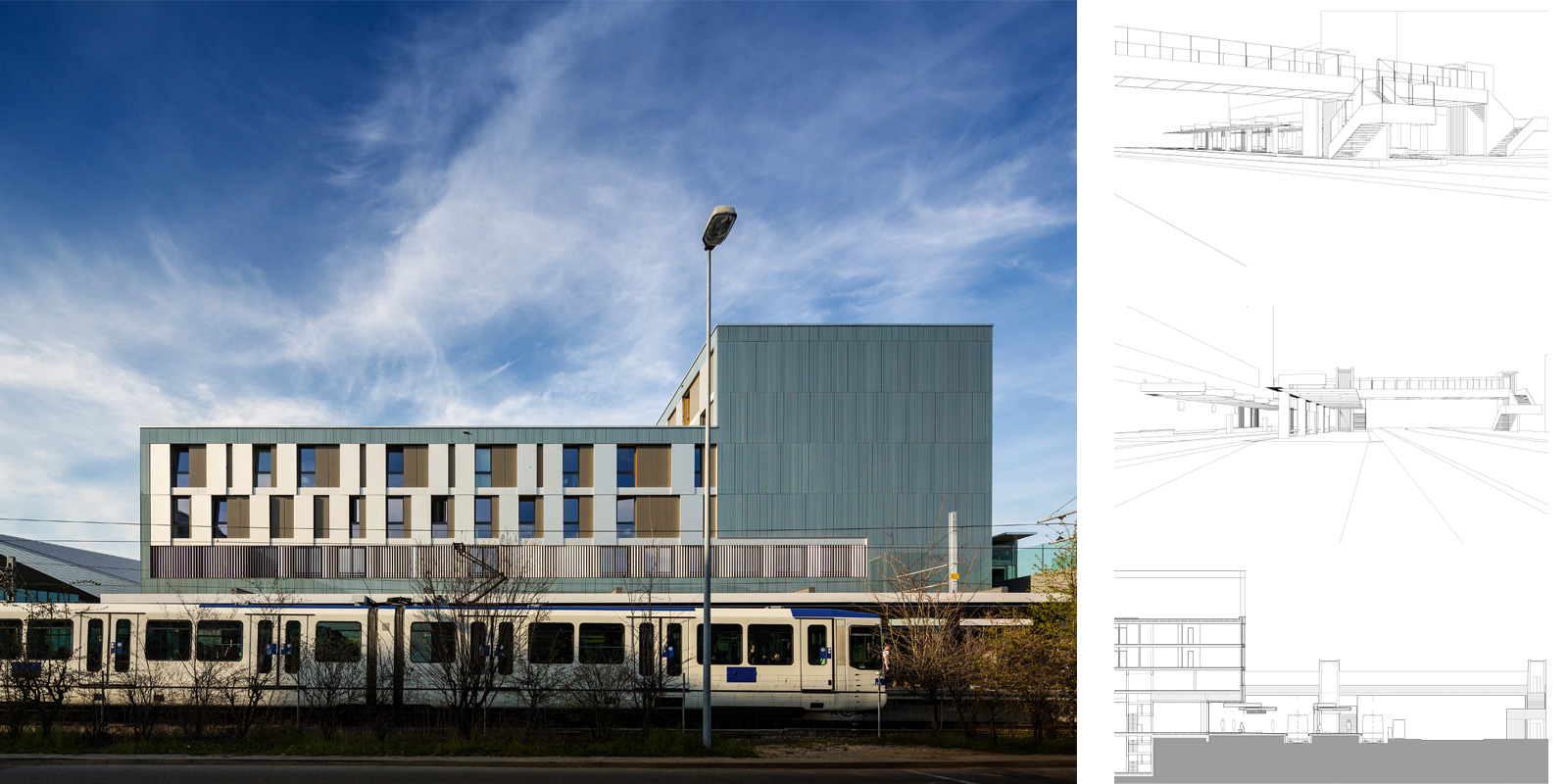
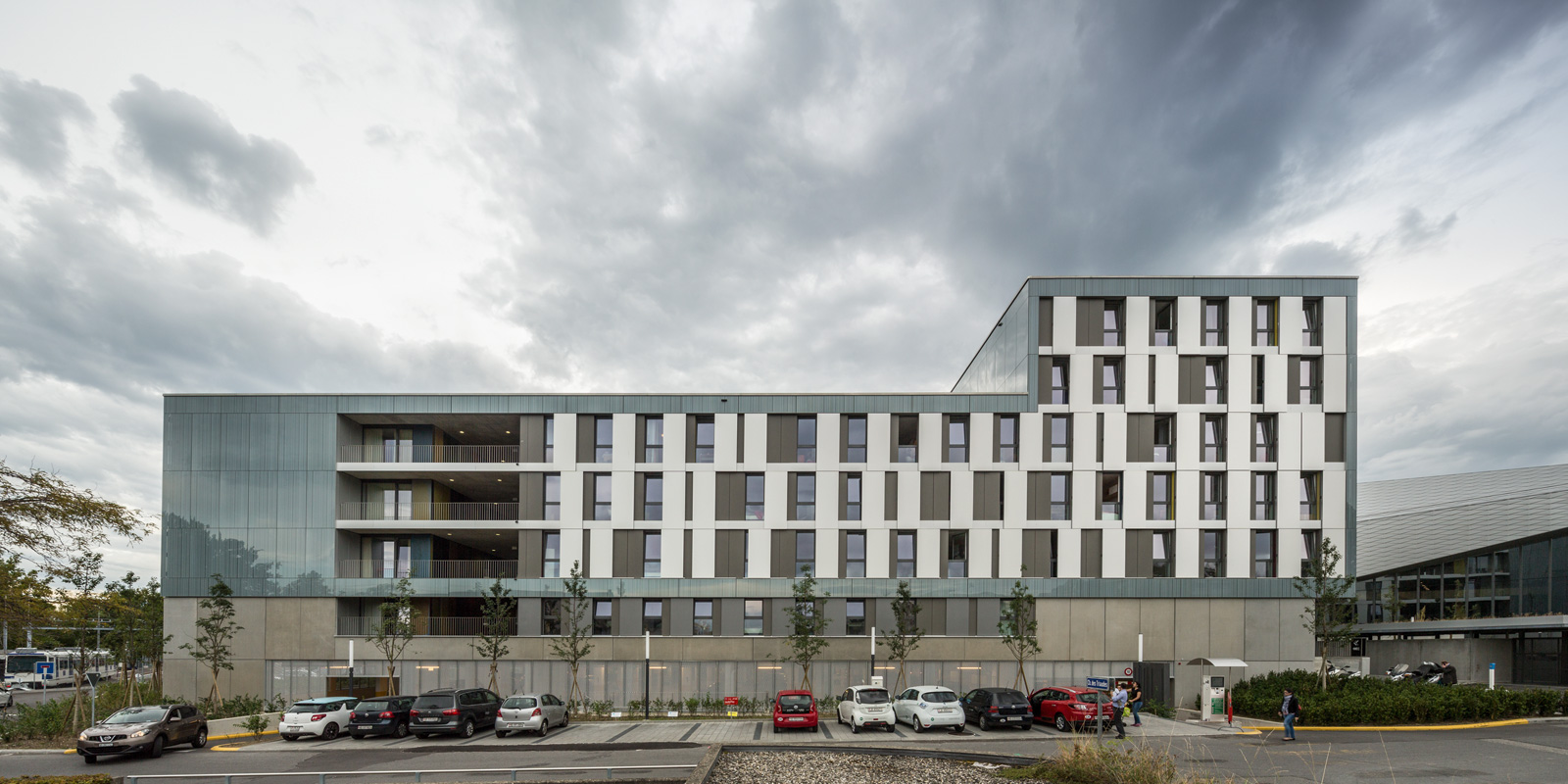
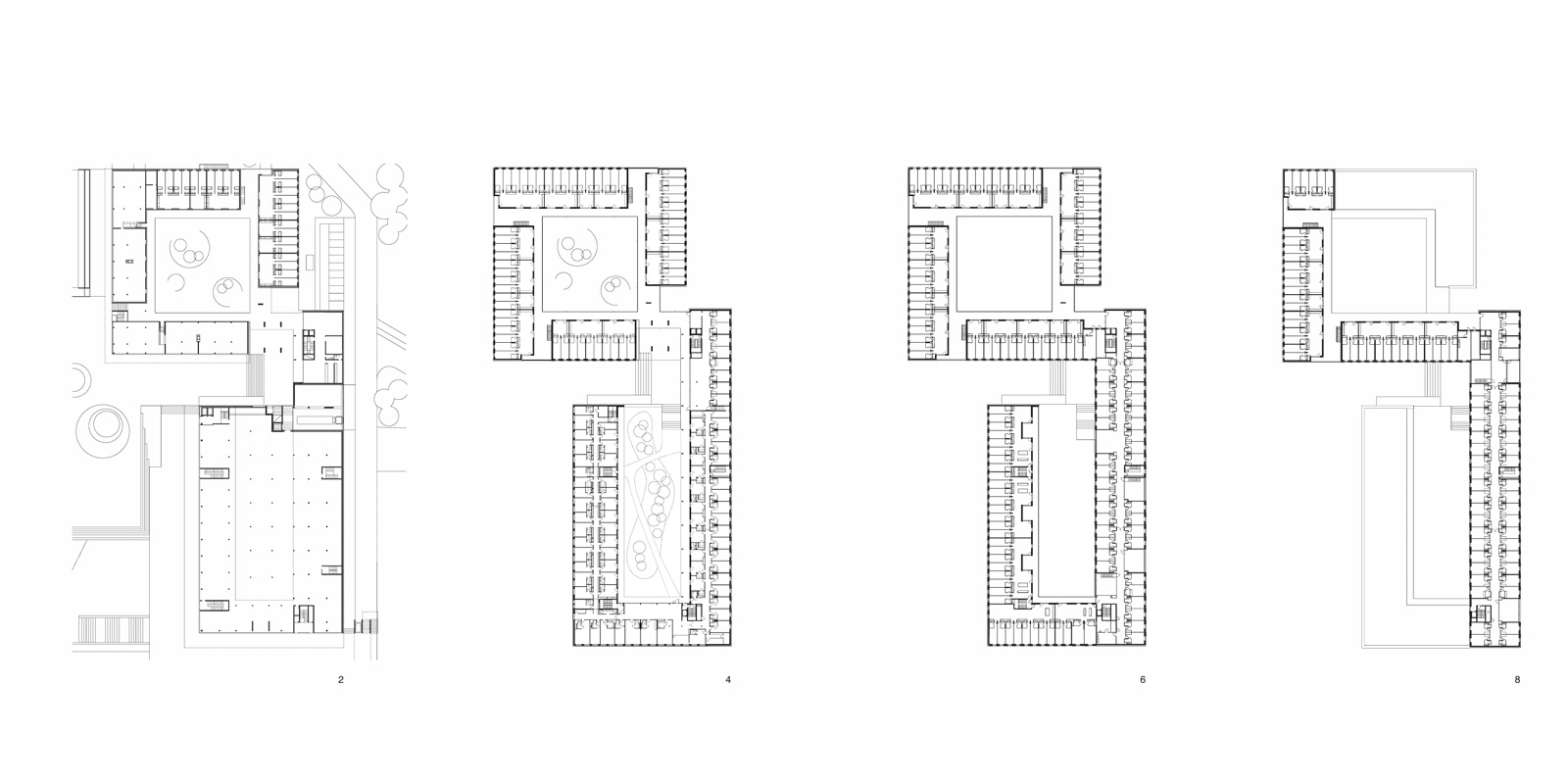
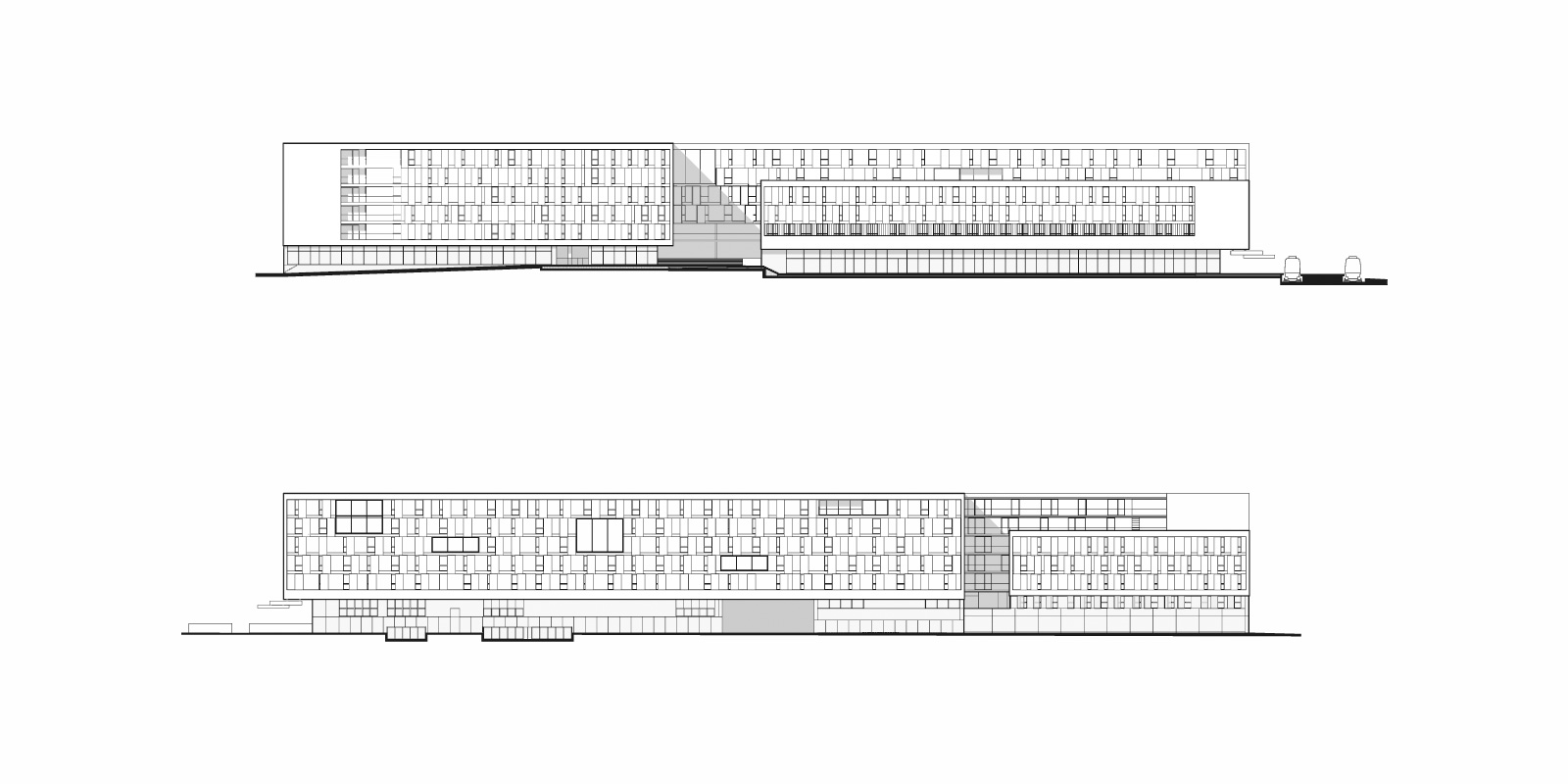
The student accommodation building stands to the east of the large square and extends southwards to the metro station. The shops and restaurants are housed in a covered gallery, above which are the hotel and student accommodation. The building, whose scale is softened by a series of articulations and variations in the height of the different volumes, is arranged around two courtyards.
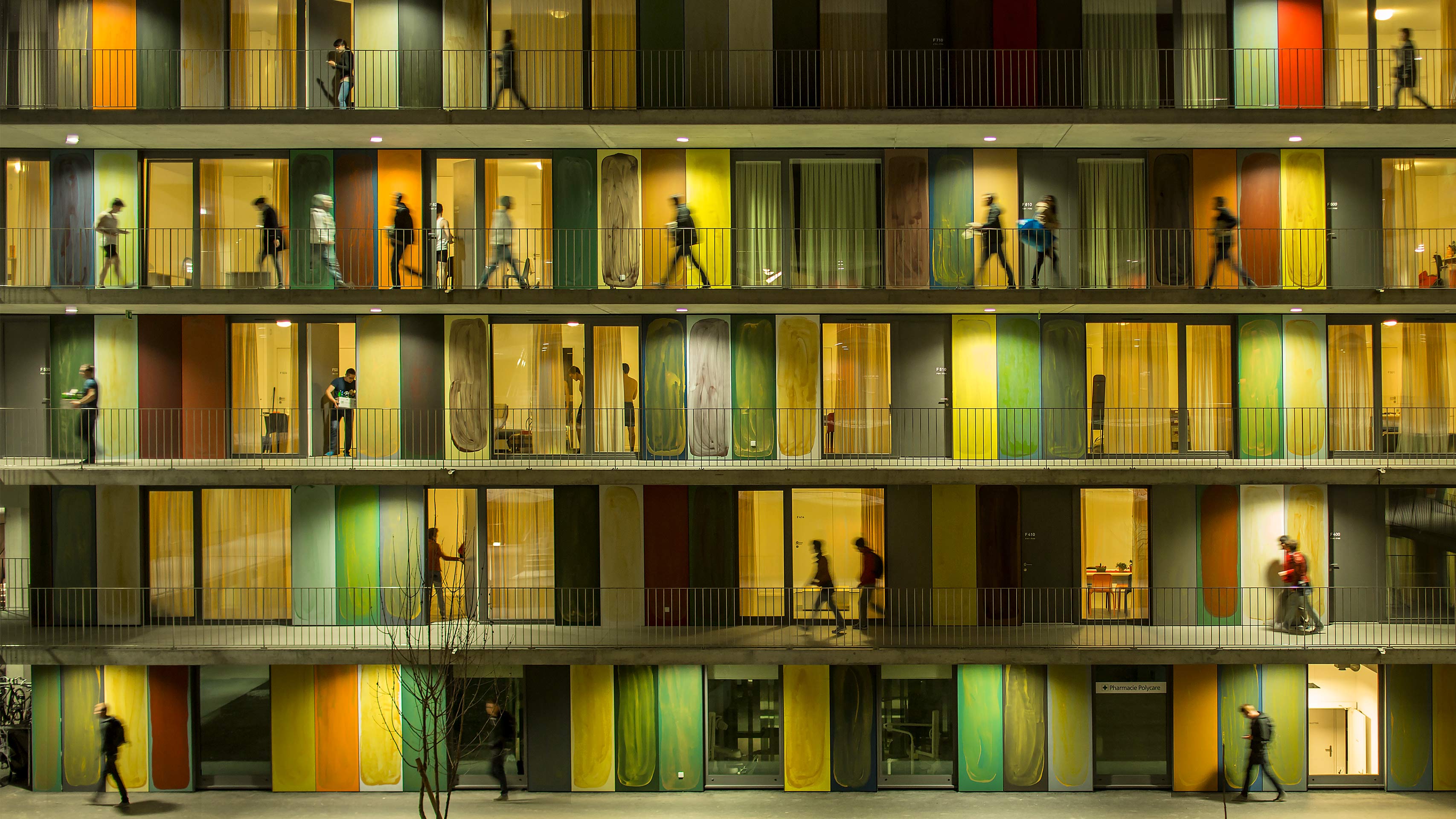
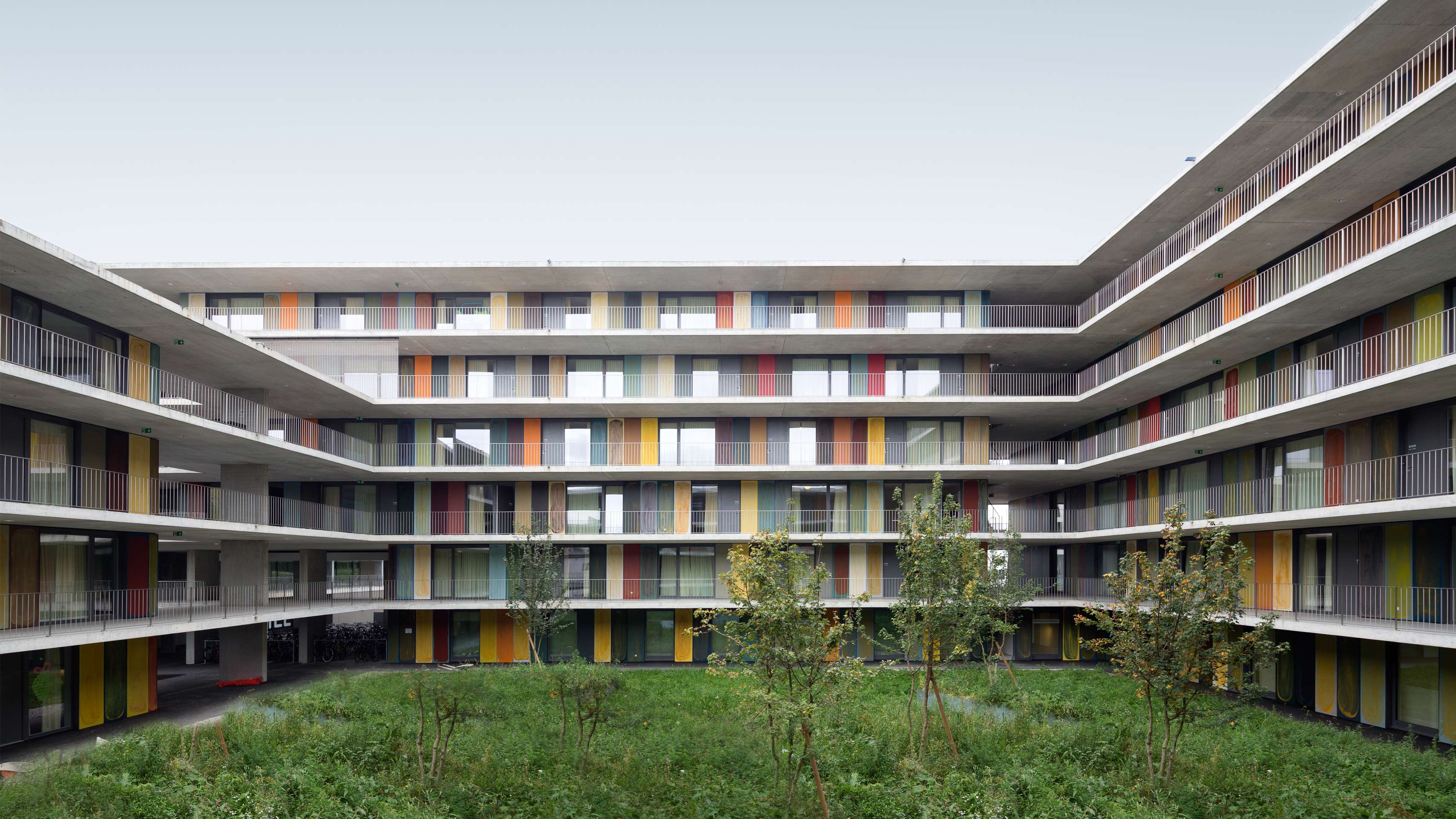
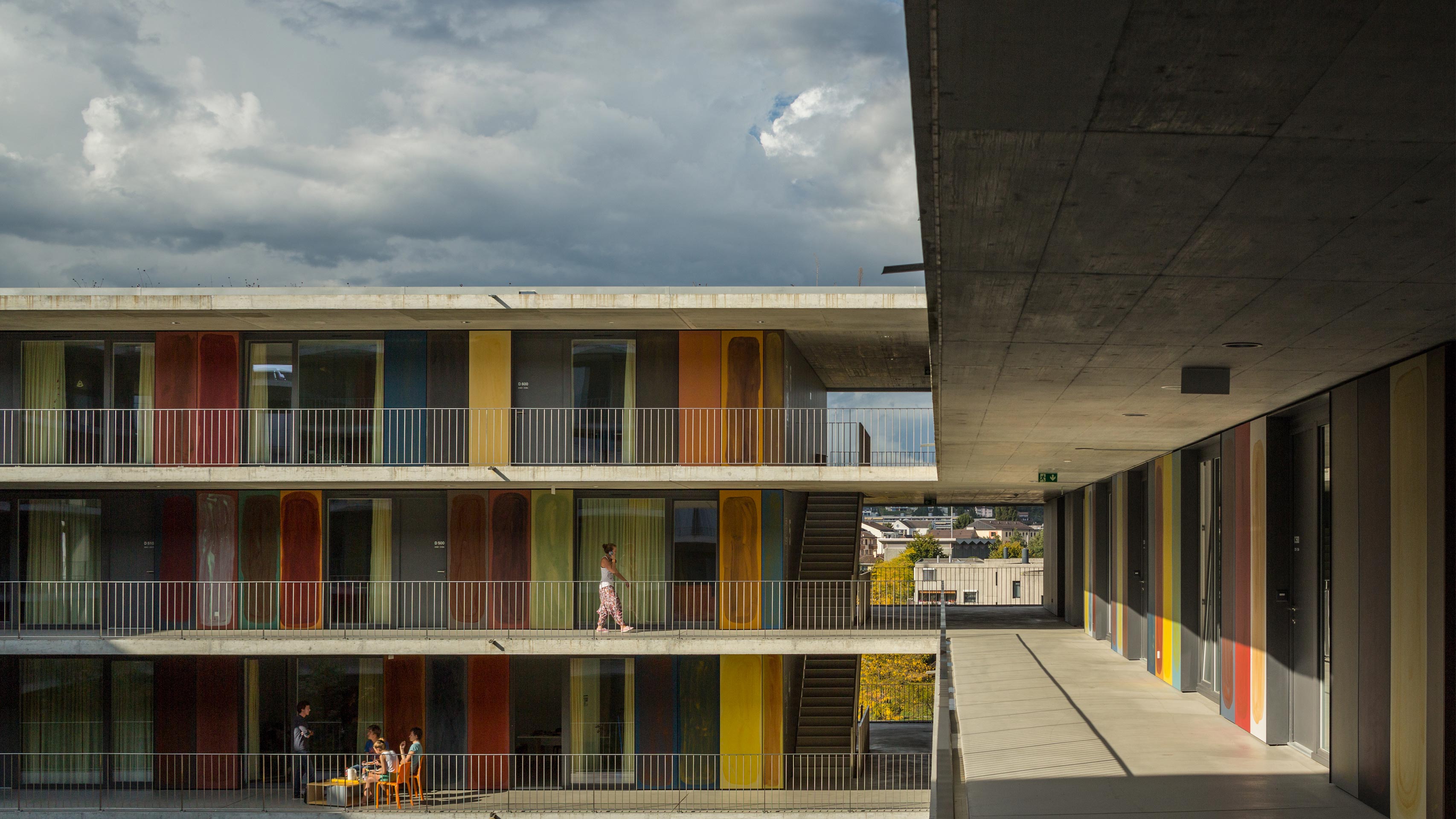
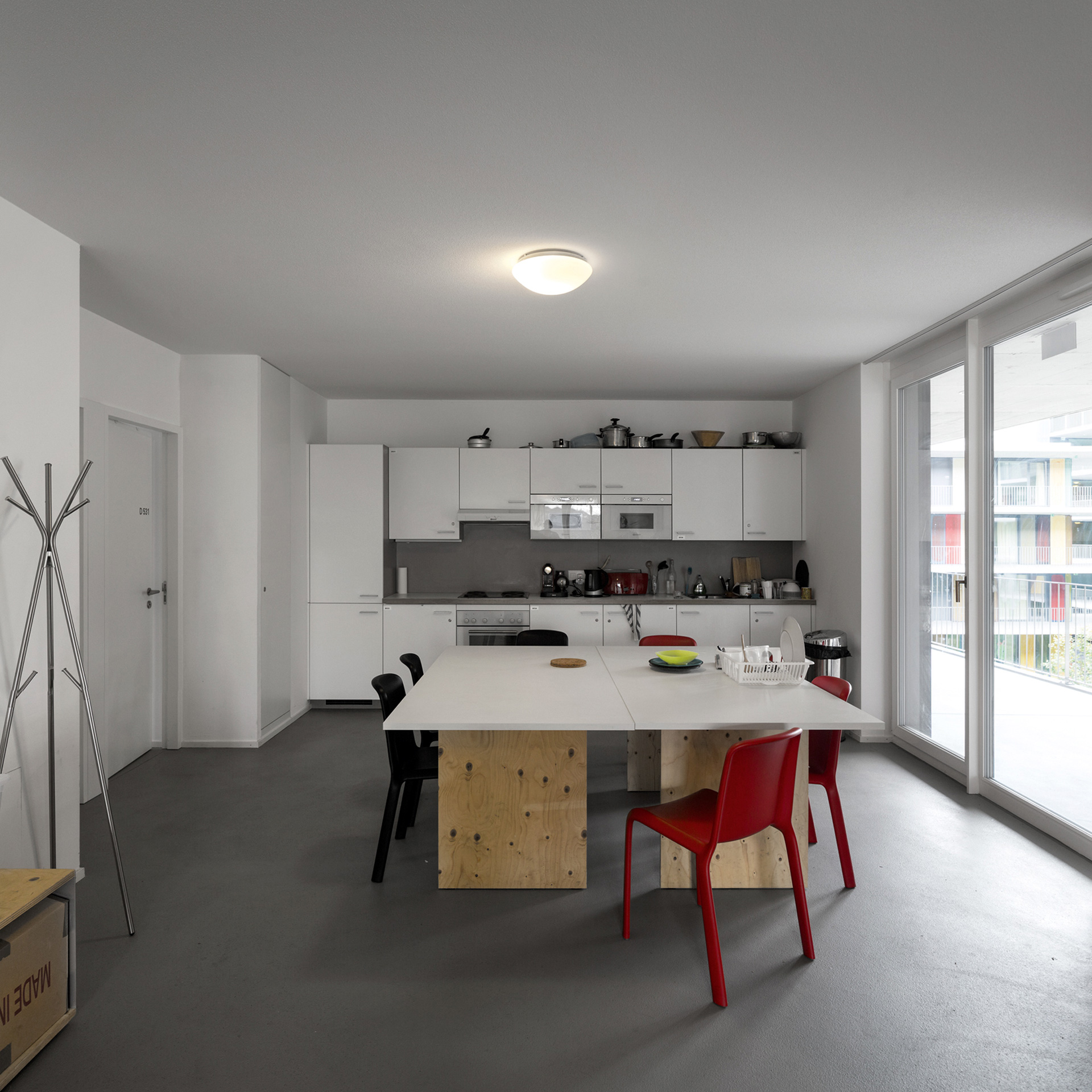
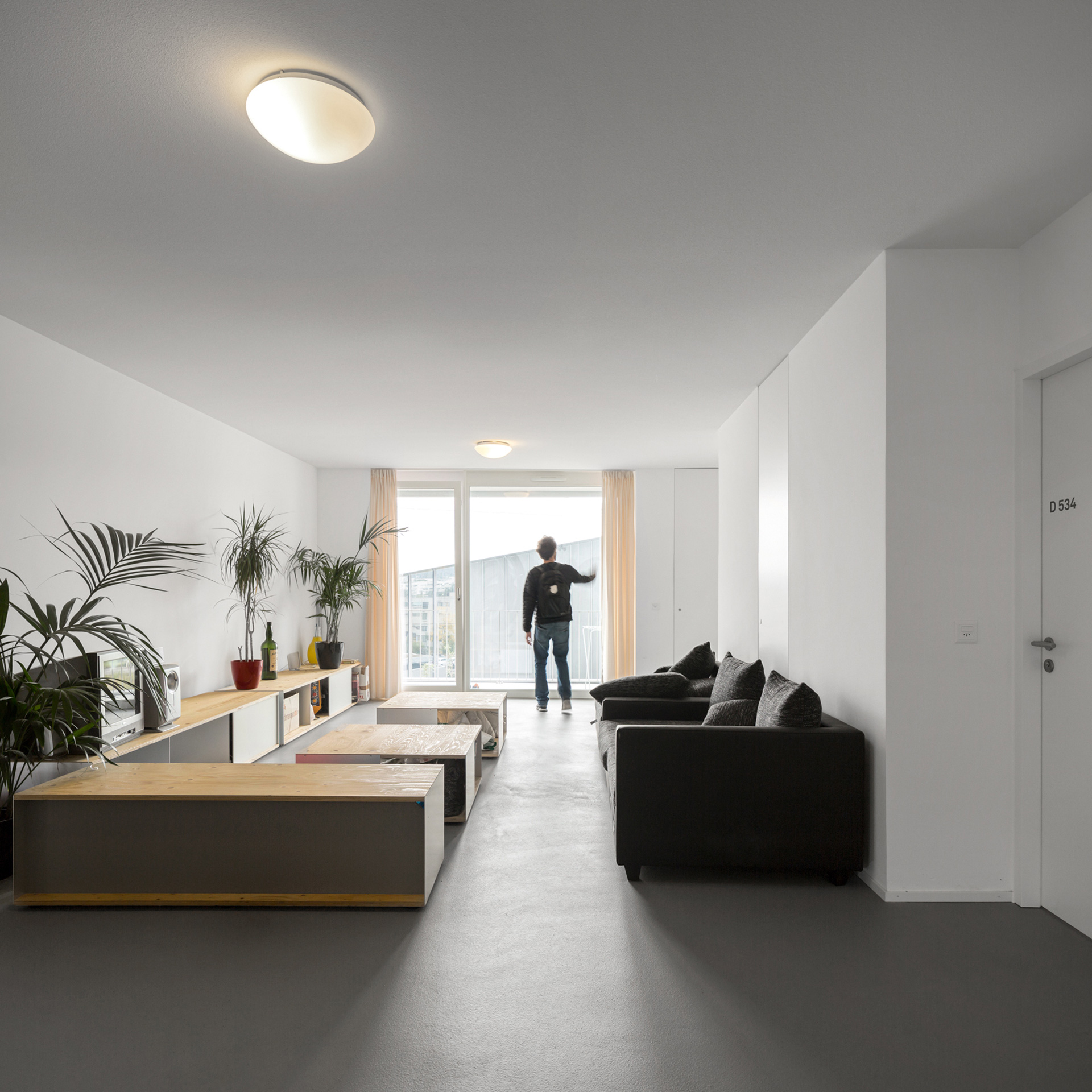
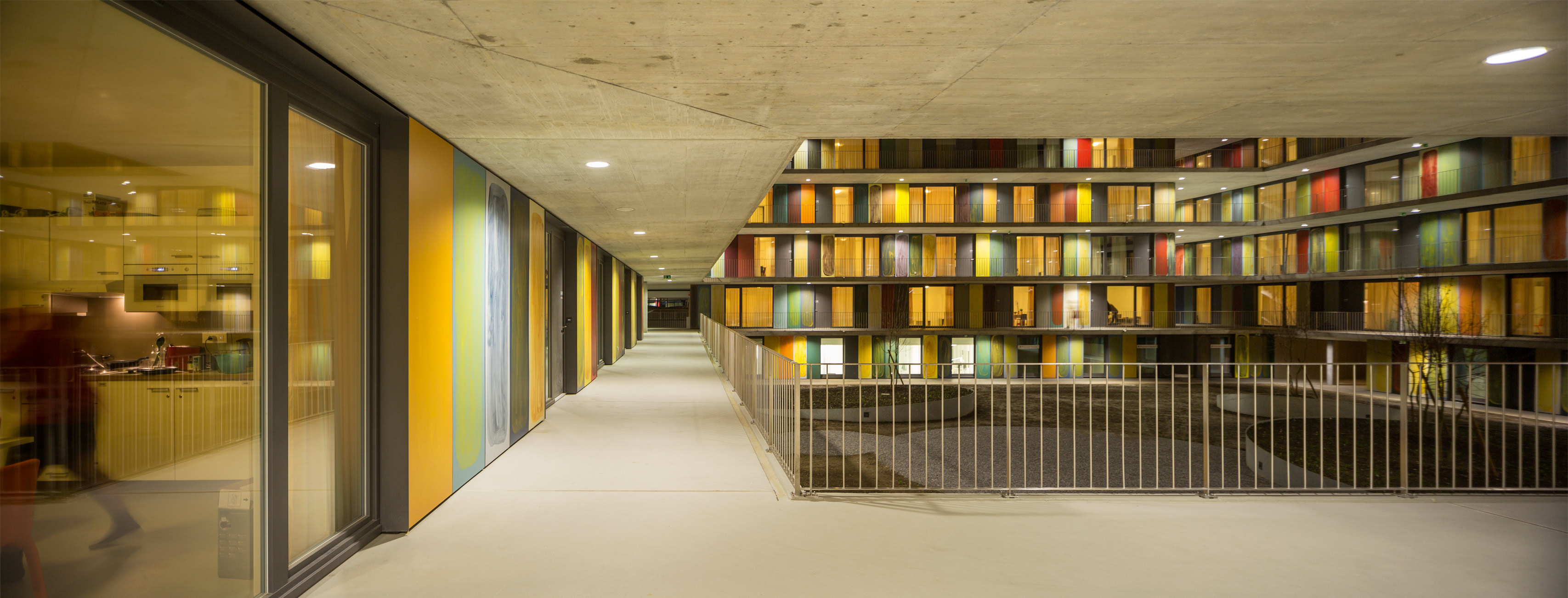
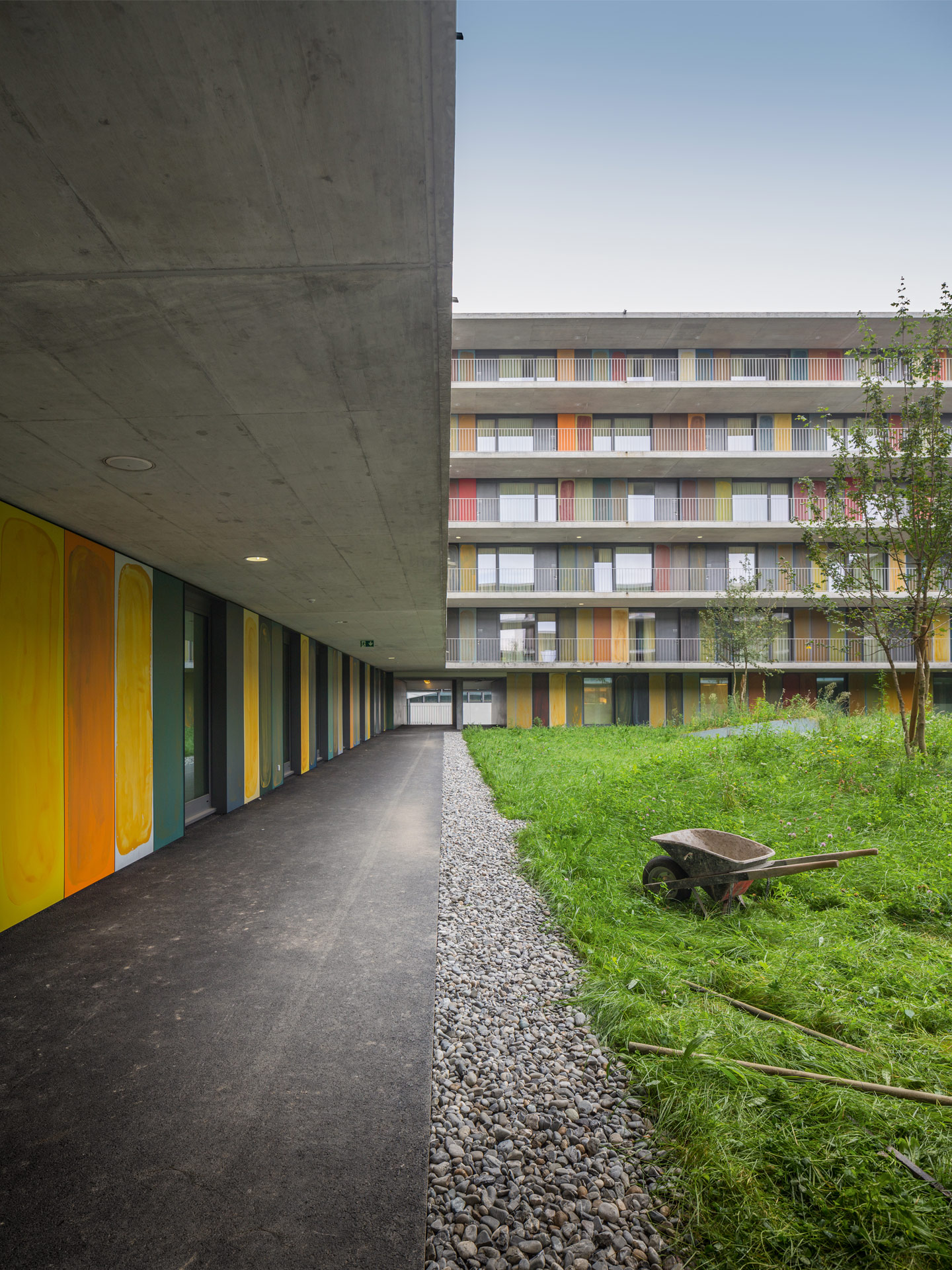
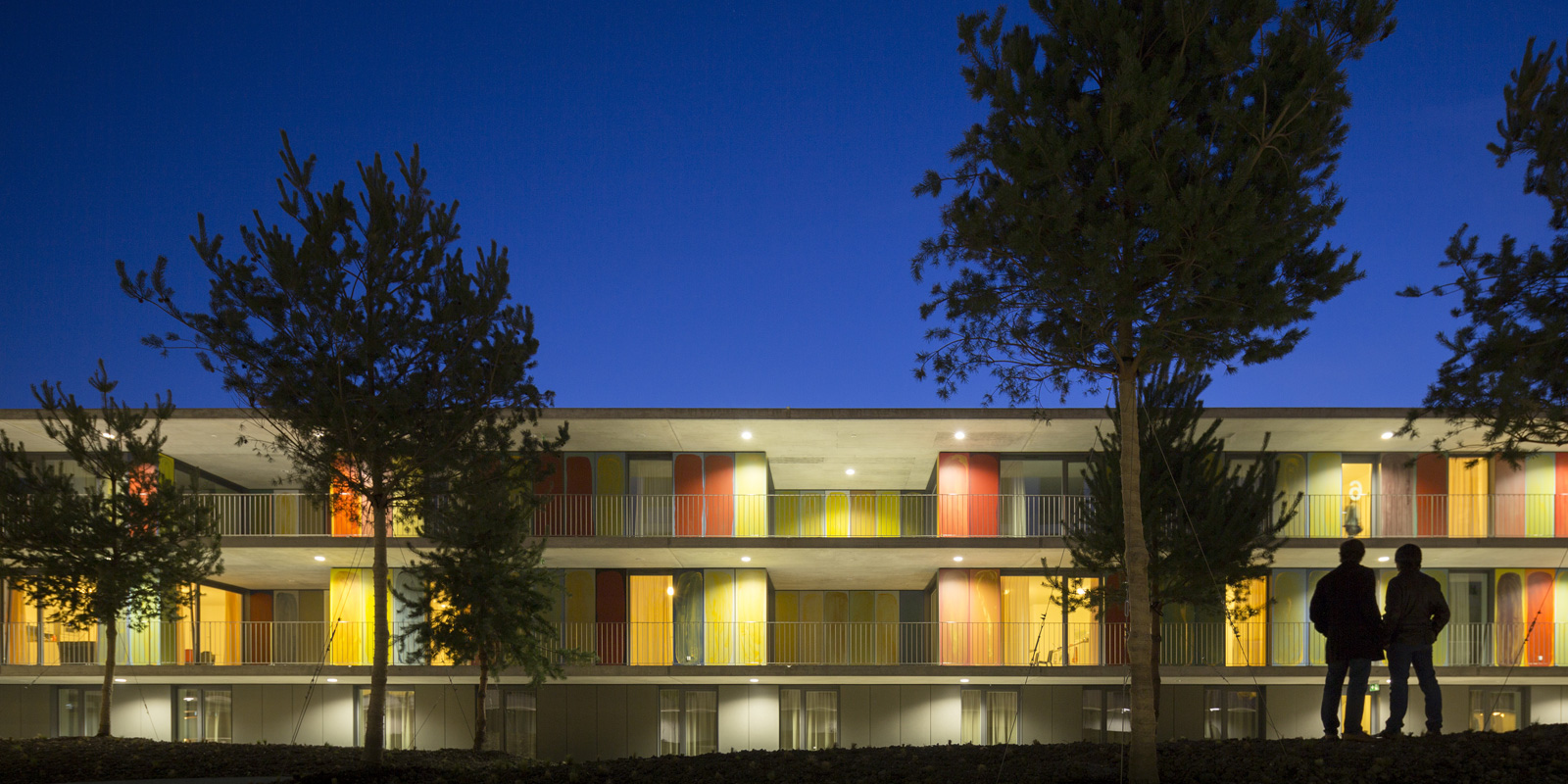
A system of walkways surrounds the courtyards and serves the 88 shared flats, which comprise a total of 336 rooms, providing access to the flats' common areas, namely the living rooms and kitchens. These semi-private living spaces lead to the individual bedrooms located on the outer perimeter, each with a private bathroom. At the ends of the walkways, large openings offer views of the square. They also bring additional natural light into the courtyards.
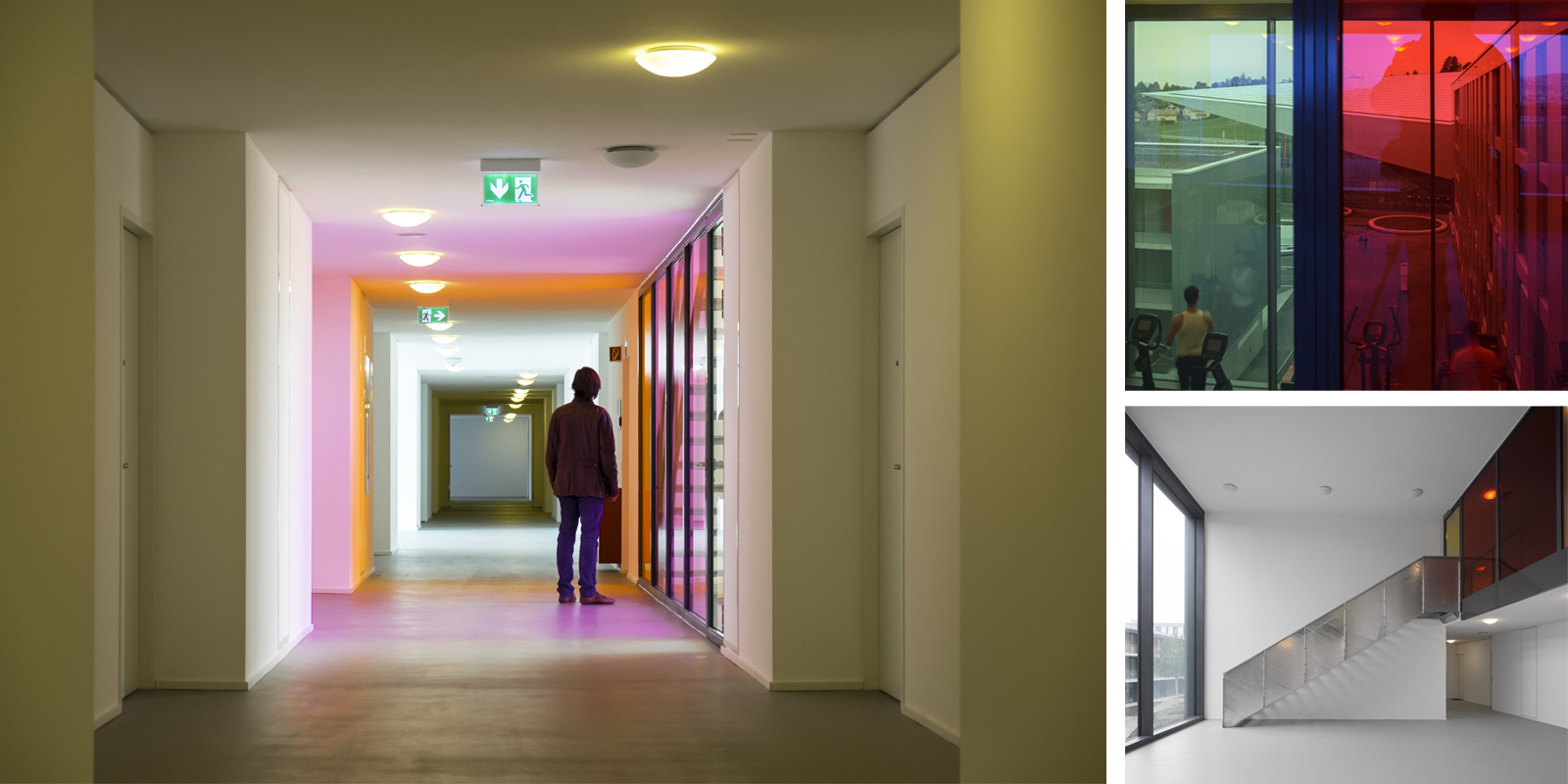
The 180 studios are located in an east-west facing building and are distributed along a central corridor punctuated by landings. These allow for the incorporation of common areas, bring in natural light, and provide landmarks specific to each floor along the 110-metre-long corridors. The landings, some of which are double-height, others consisting of terraces, are connected by staircases that create an alternative and lively route within the building.
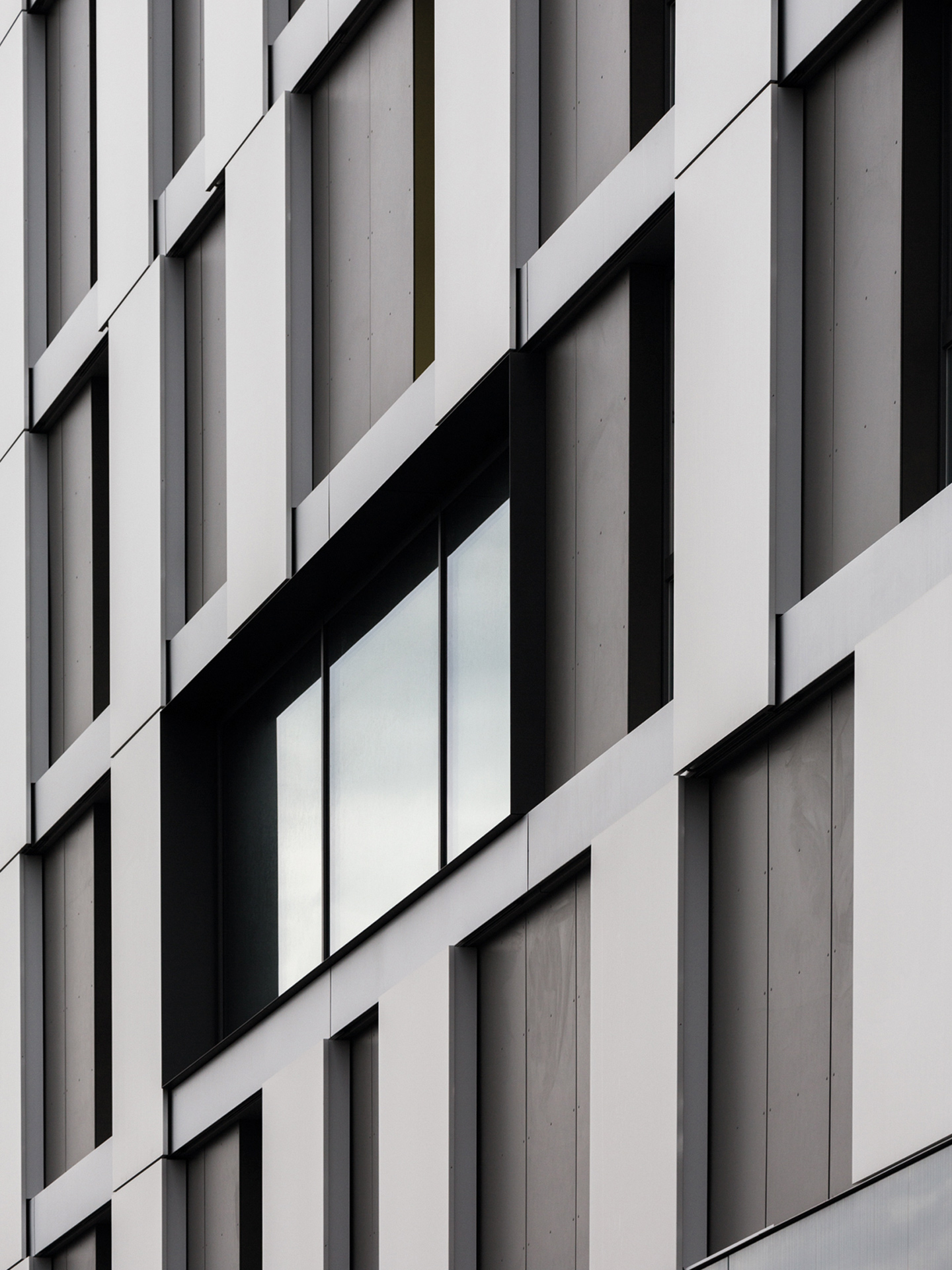
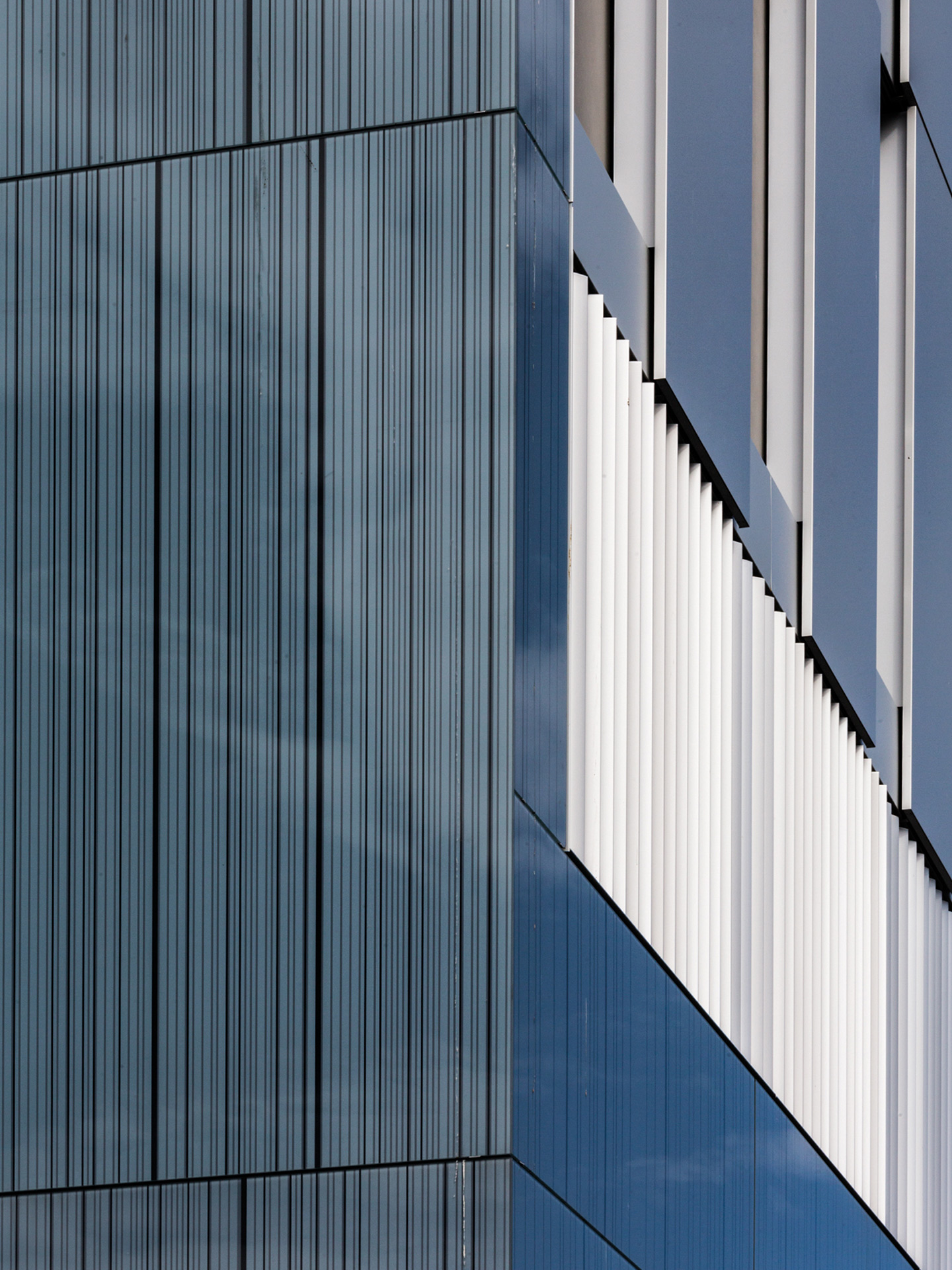
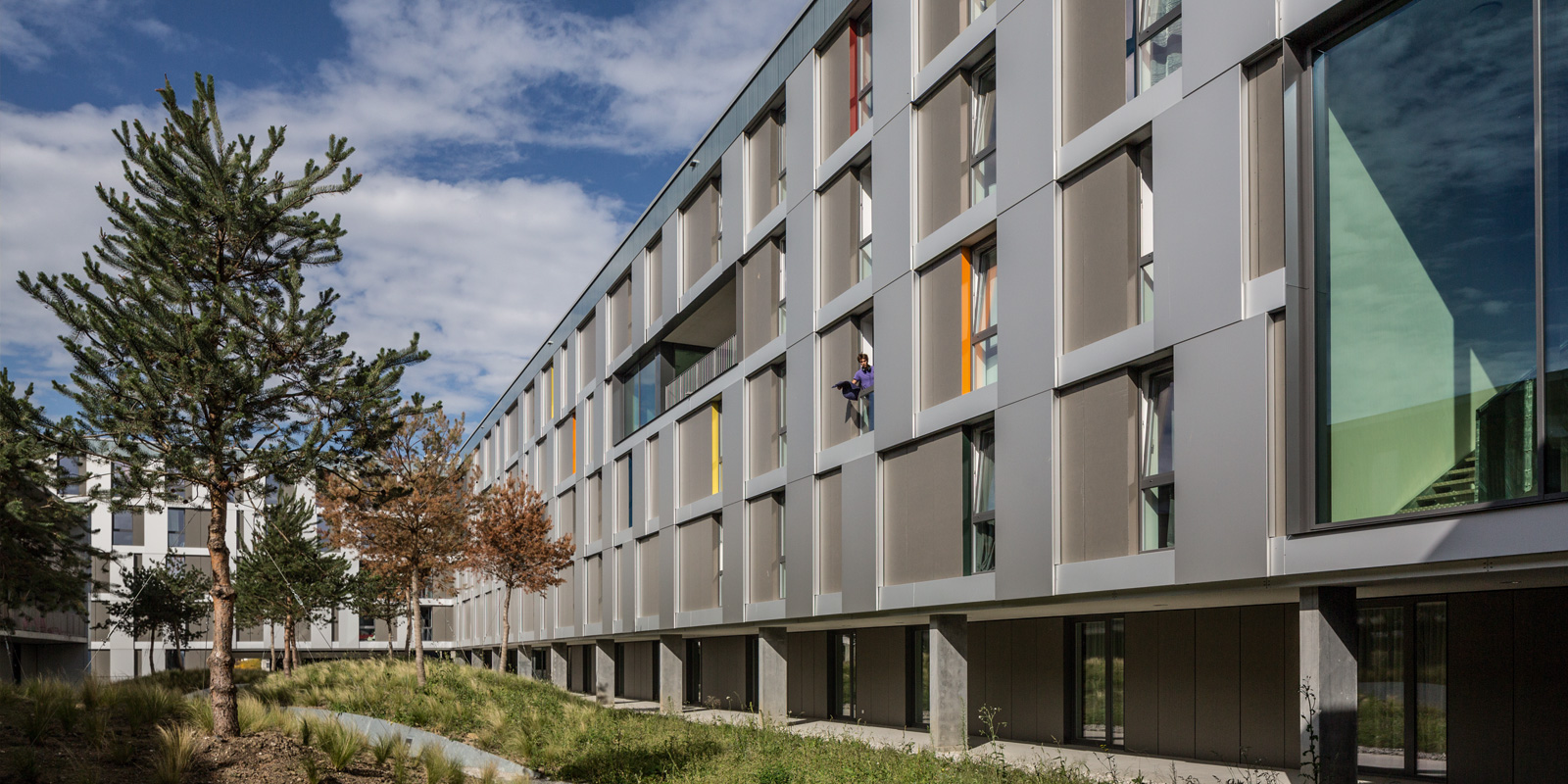
The building's exterior façades, with their screen-printed glass cladding and anodised aluminium shutters, maintain a clear dialogue with the SwissTech Convention Centre, while the colourful window frames anticipate the festive atmosphere of the inner courtyards.
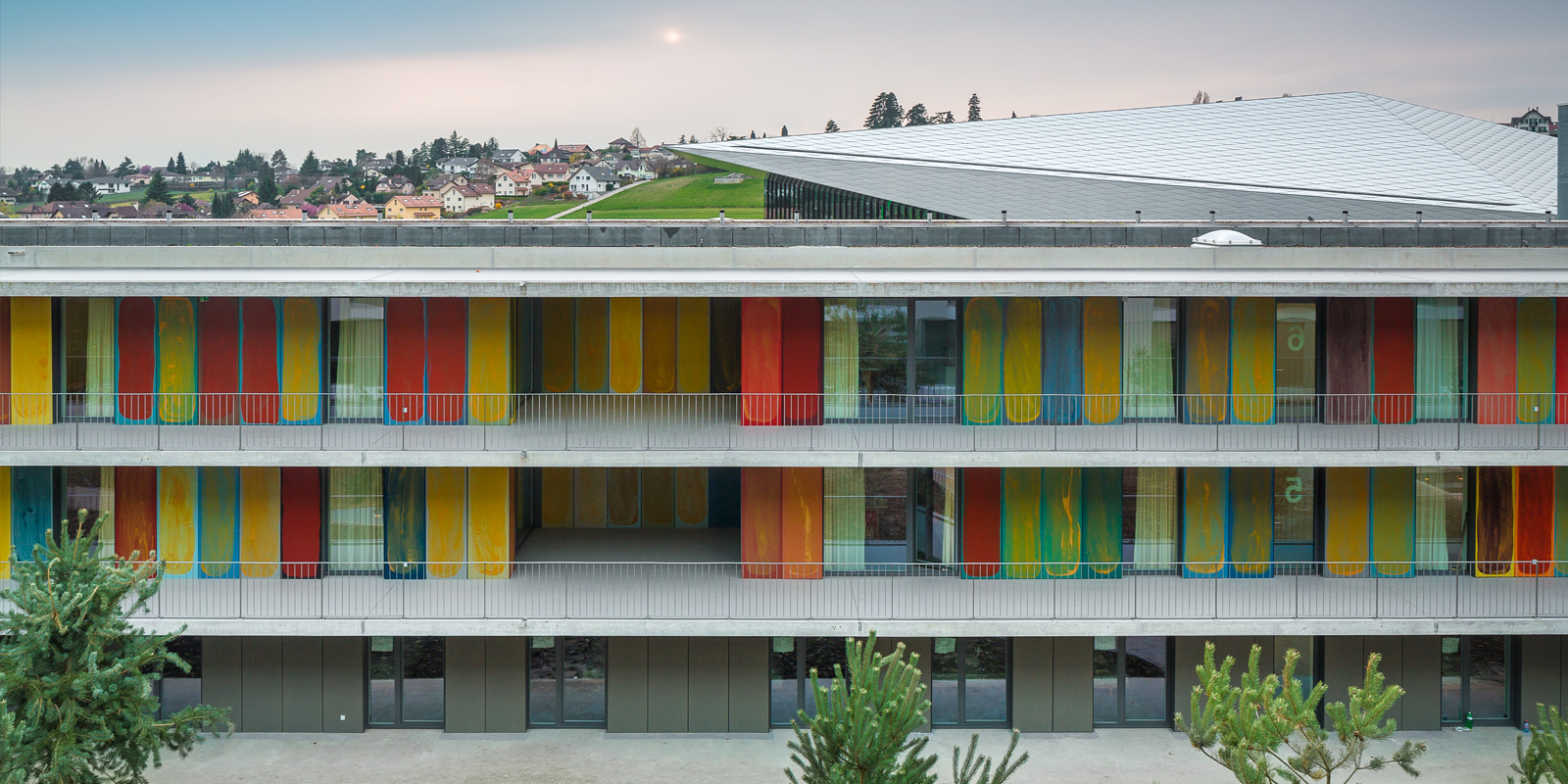
The interior façades of the walkways are clad with 800 fibre cement panels hand-painted by artist Catherine Bolle. This artistic intervention, entitled Le Chromoscope, aims to create an atmosphere that is both intimate and lively in the walkways, designed as living and social spaces for students.
516 bedrooms : 172 studios and 80 apartments with 2, 4, 6 or 8 rooms
Nicolas Adrien, Antoine Barc, Laurent Berset, Mauro Branco, Teresa Cots, Hilario Dahl Rocha, Ignacio Dahl Rocha, Claudia Dell'Ariccia, Rita Erb, Christophe Gachnang, Michel Gribi, Michel Grilá, Aitor Juanbetz, Baris Kansu, Maria Losana Vela, Philippe Marm
2008 - 2015 · Suisse, Ecublens · Housing » Grouped
On the eastern edge of the site, student housing and commercial and service areas provide a clear border on the public plaza. Extending to the south to include the Metro station, shops and restaurants are sheltered by a covered gallery with the hotel and student lodgings above. The large scale of the building is mediated through a series of articulations and variations in height of the different volumes that make up the complex. Only the central bodies of the building are carried up to level eight at the top. The outer facades clad in serigraphed glass and aluminium louvers maintain a clear dialogue with the convention center, the coloured window jambs anticipate the exuberance of the inner courtyard. The shared apartments are arranged around the access galleries. Semi-private living spaces in turn lead to the individual bedrooms, each with it’s own private bathroom. All the bedrooms are located on the outer perimeter, with the living spaces opening directly onto the access galleries surrounding the courtyard. This interior courtyard elevation is entirely clad in individually hand painted, fibre-cement panels transformed by artist Catherine Bolle into Le Chromoscope.