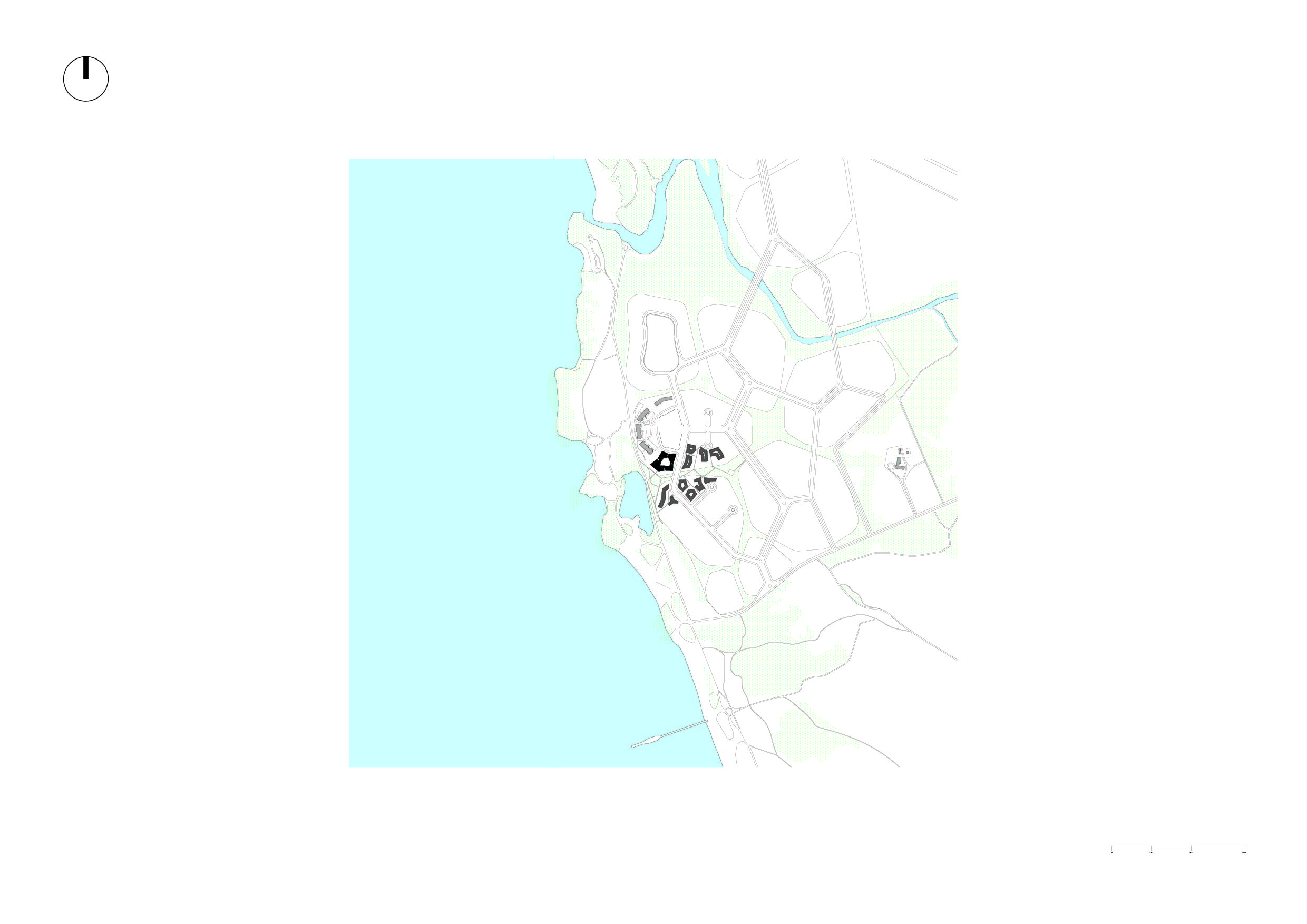
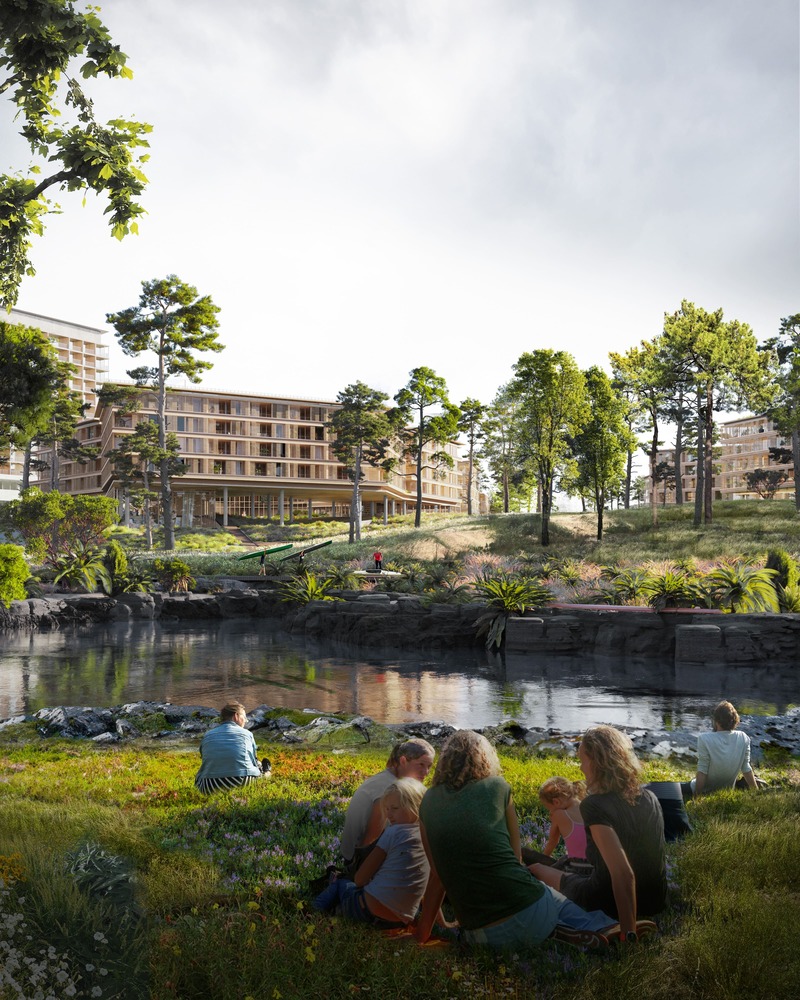
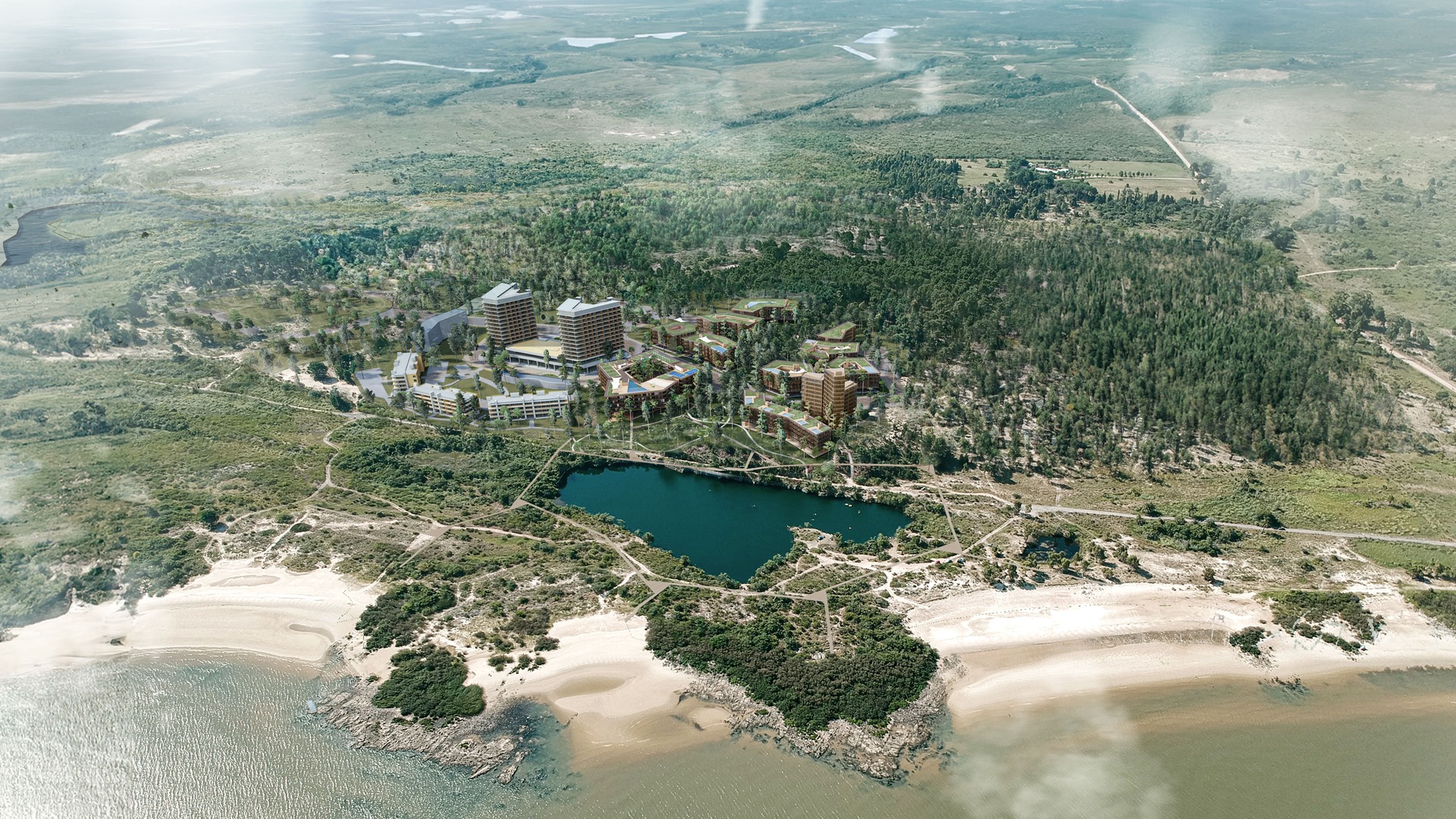
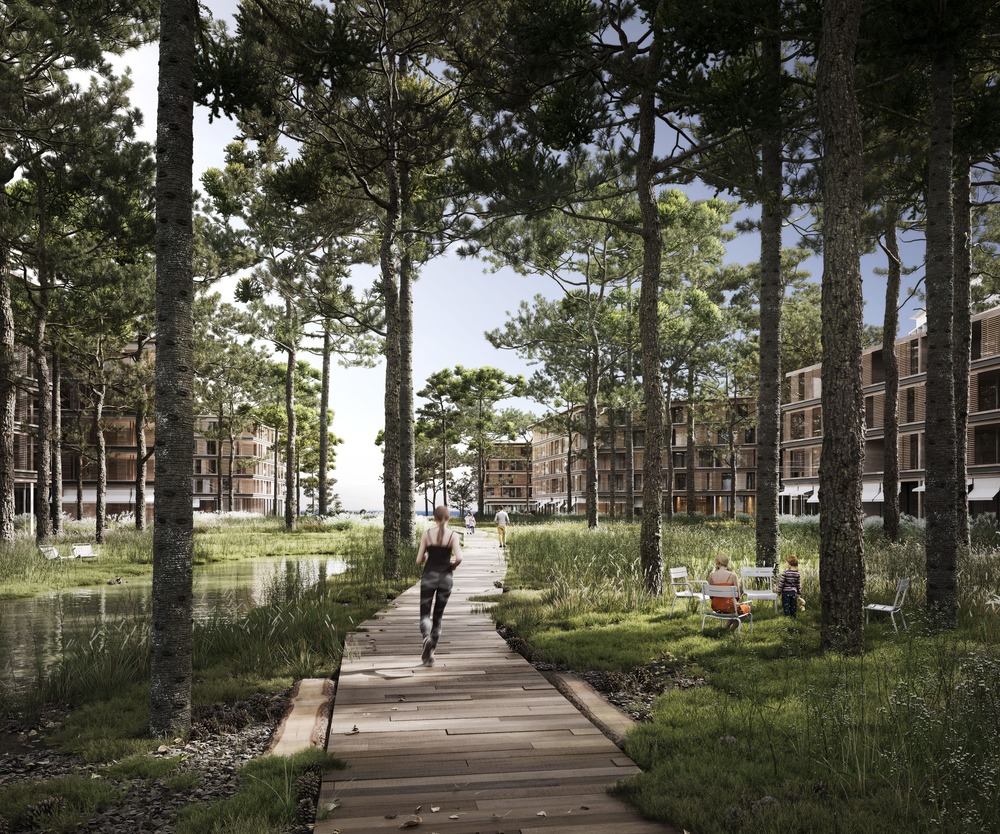
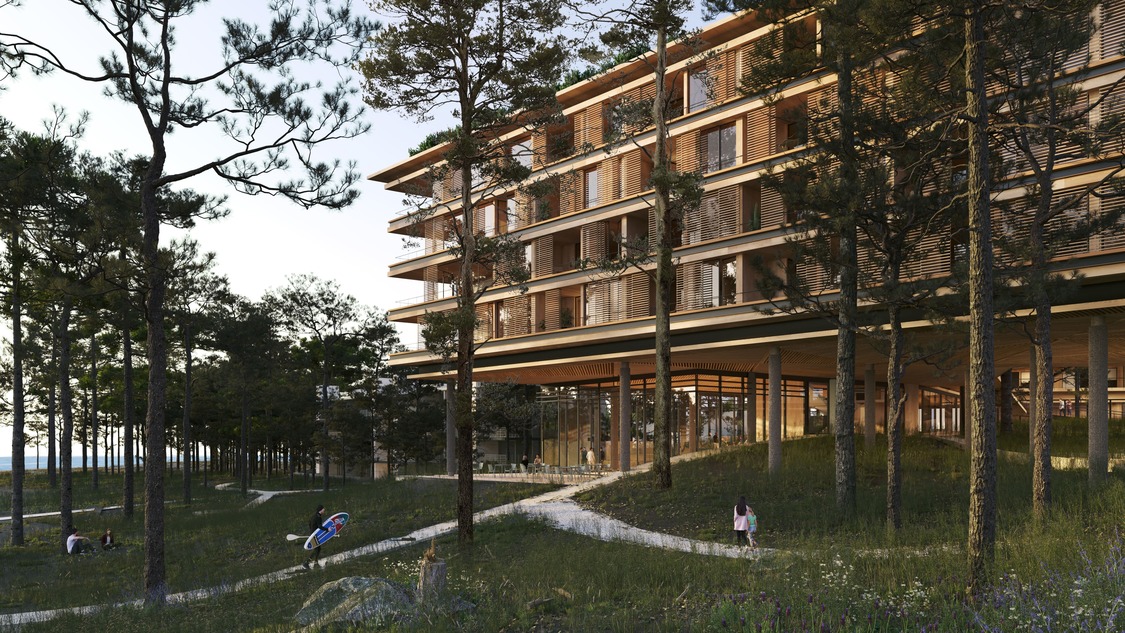
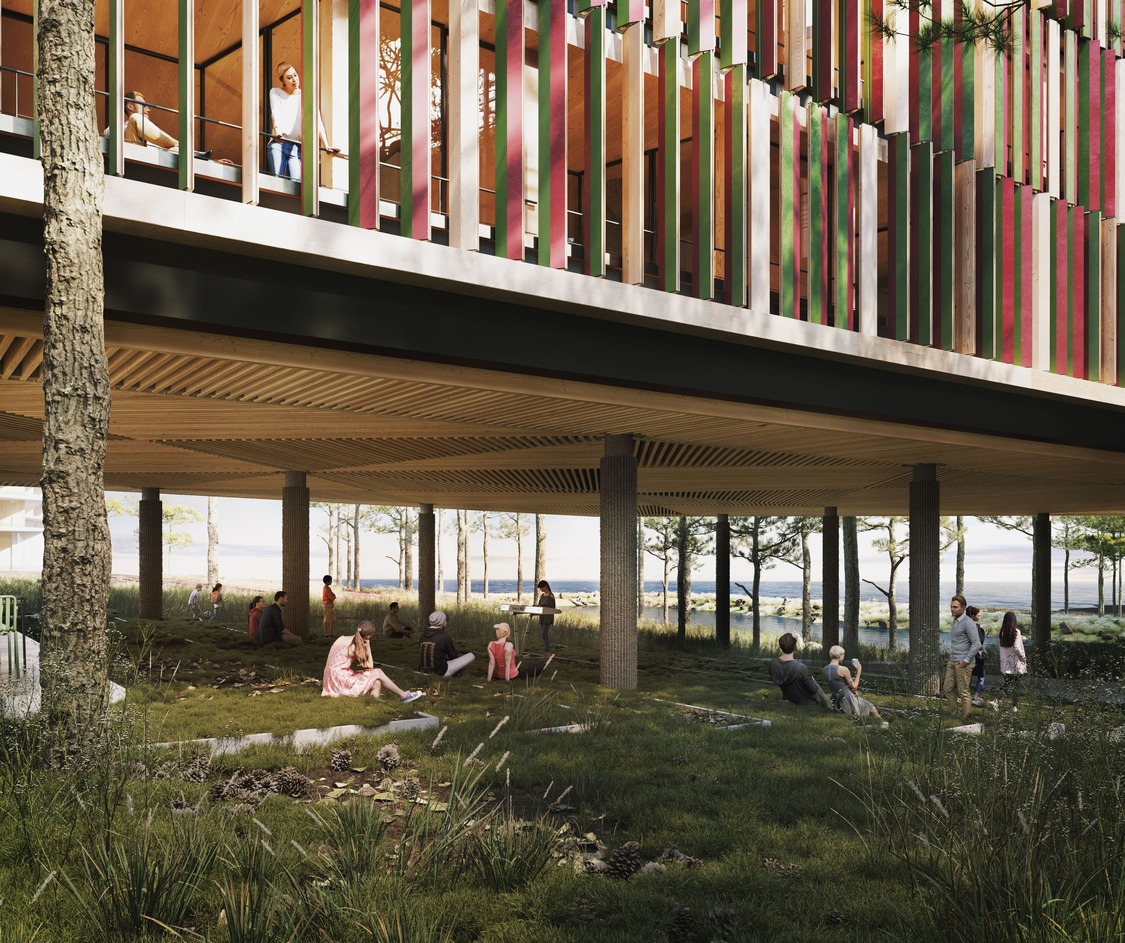
The project was awarded first prize in the competition for the master plan and a landmark building within the new Next Gen district at +Colonia, an urban development located east of Colonia del Sacramento, Uruguay. It occupies a coastal strip along the Río de la Plata, set within a landscape of beaches and gentle dunes interwoven with an existing pine plantation. This geography defines a medium-density urban fabric composed of compact, freestanding mixed-use volumes embedded among natural reserves. The district unfolds through a series of architectural typologies arranged along a linear park that culminates at the waterfront. Buildings are delicately placed upon the dunes and merge with the landscape beneath the pines, creating a variety of semi-covered spaces ideally suited to collective and urban programs.
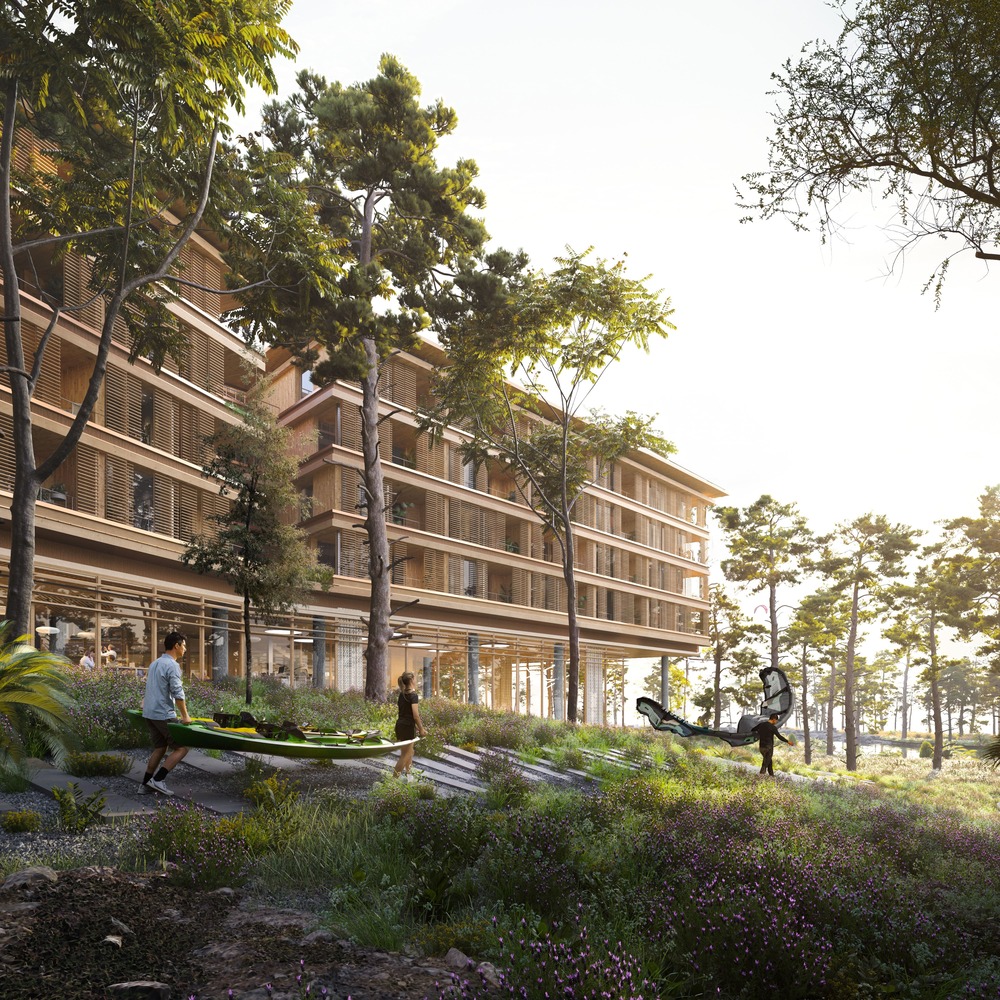
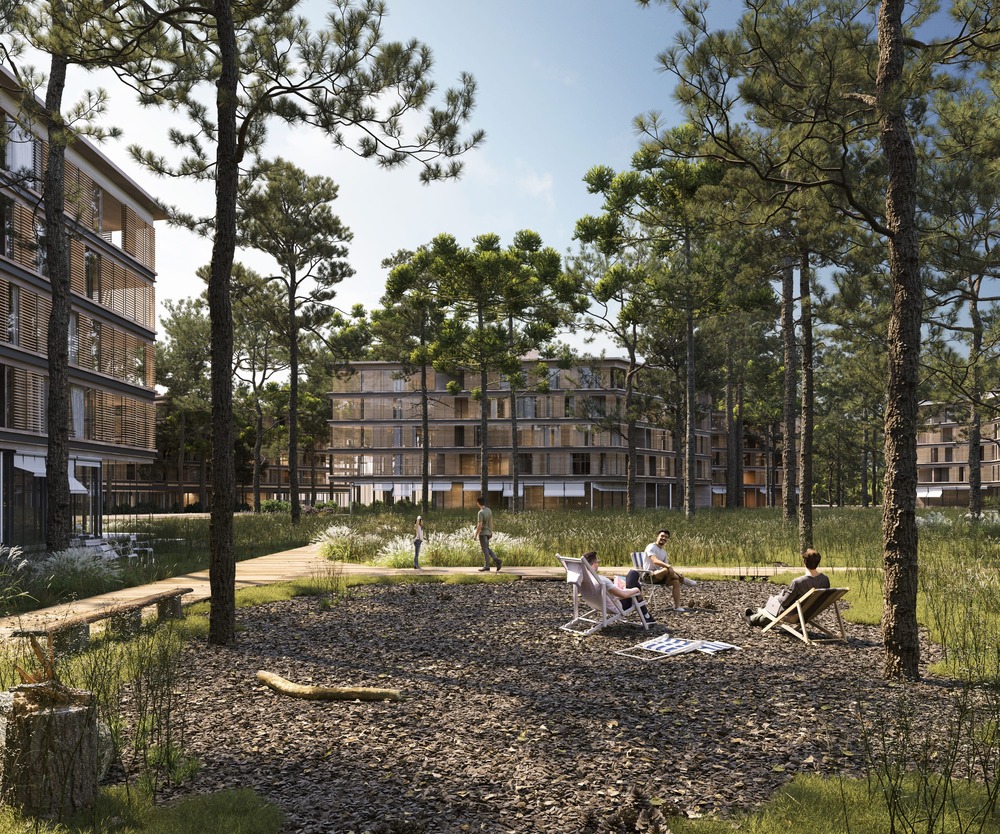
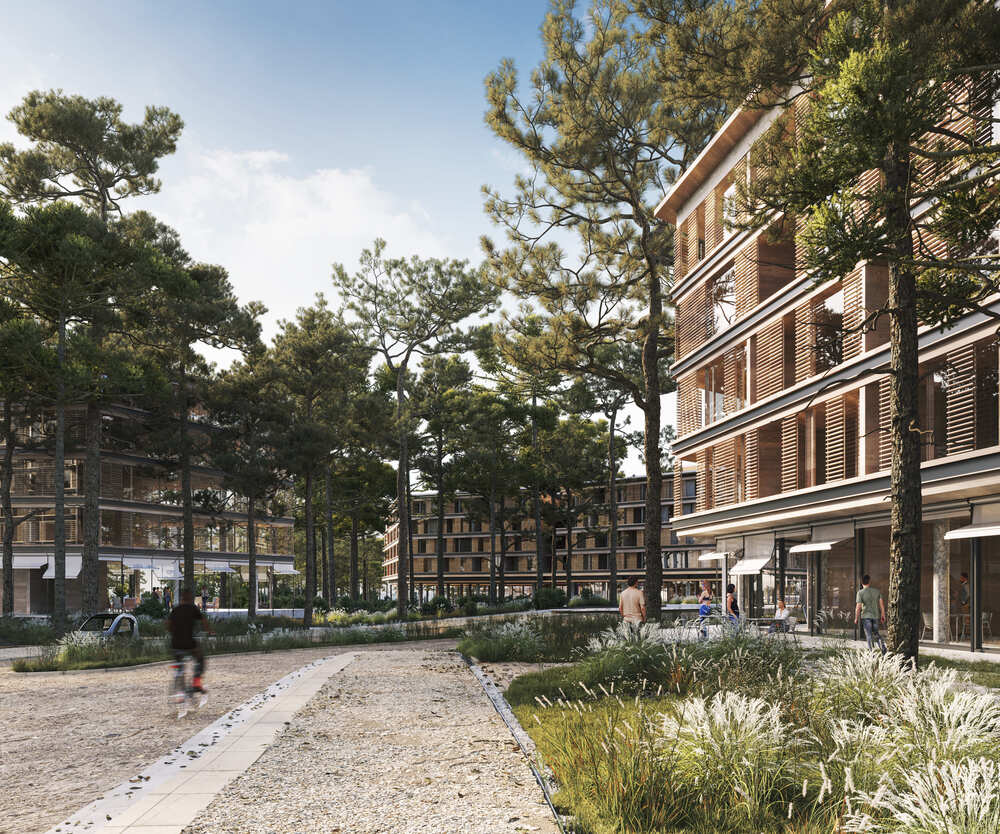
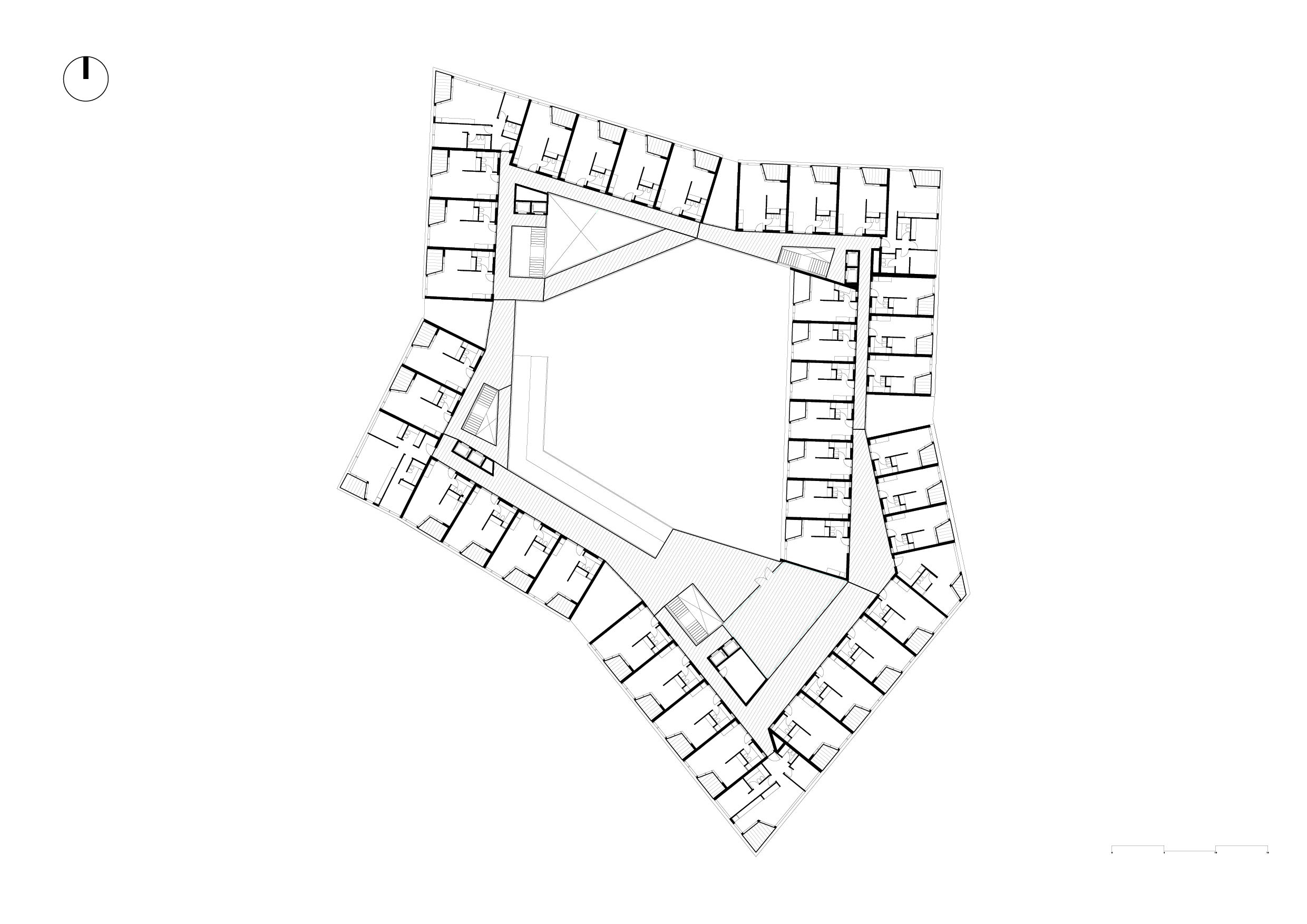
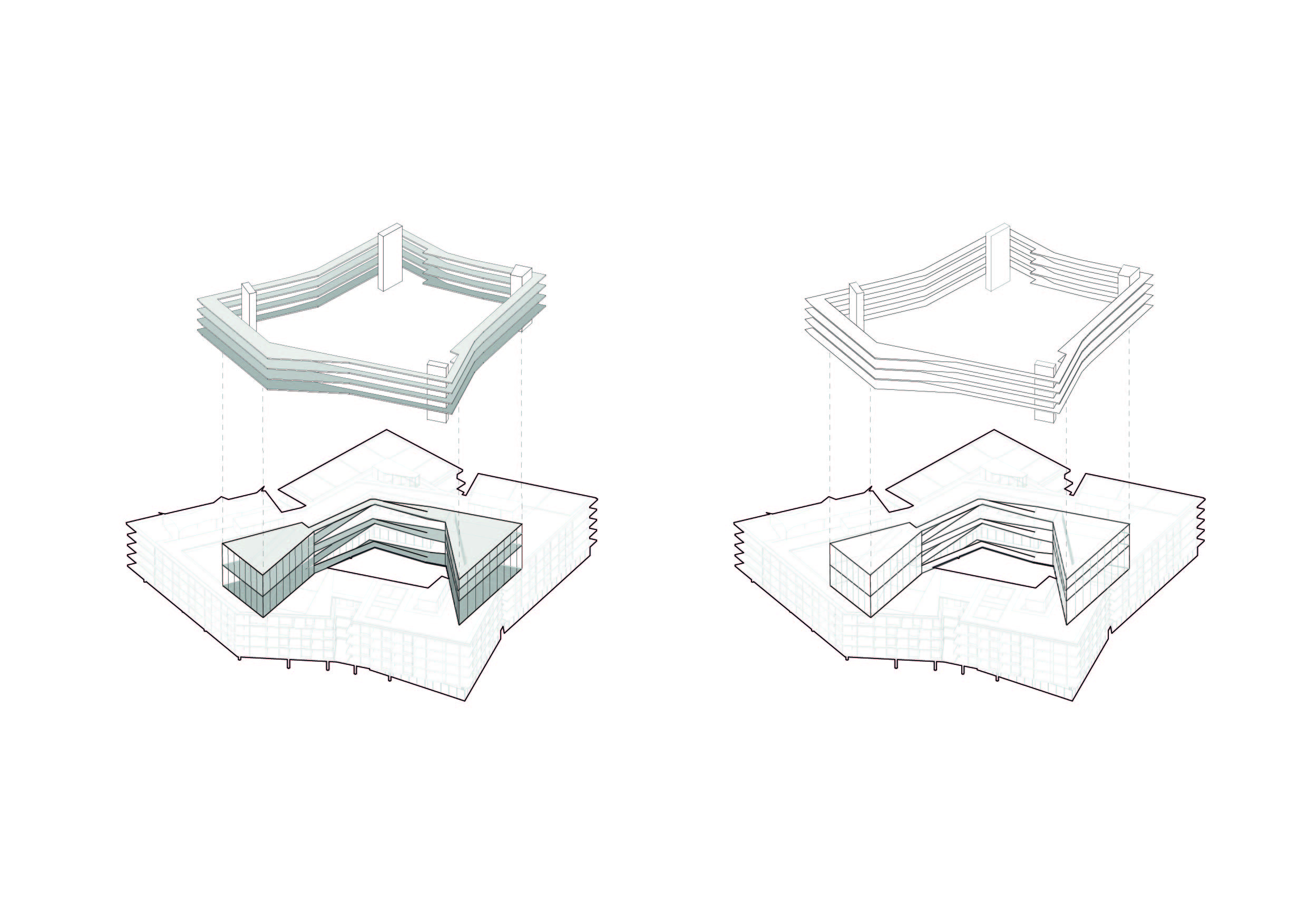
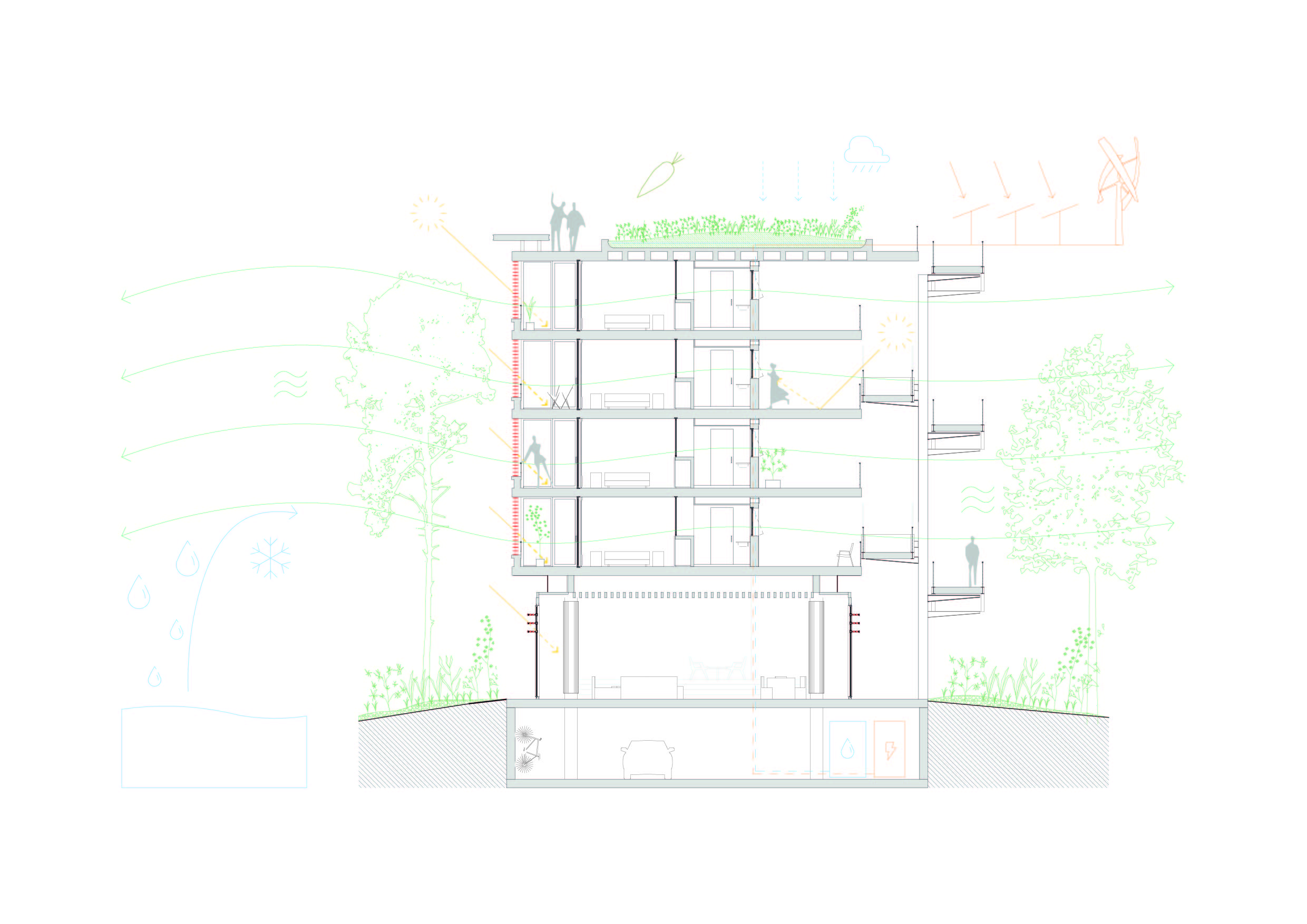
The building develops an extensive perimeter of residential frontages overlooking both the forest and the shoreline. Recessed folds within the volume connect internal circulation spaces to the exterior while breaking down the building’s mass into four intermediate-scale, domestic volumes. Its envelope moderates solar exposure through operable shutters and balconies positioned close to the tree canopy. Fixed and movable enclosures facilitate natural ventilation, allowing breezes filtered through shade and tempered by the river’s humidity to flow throughout the building.
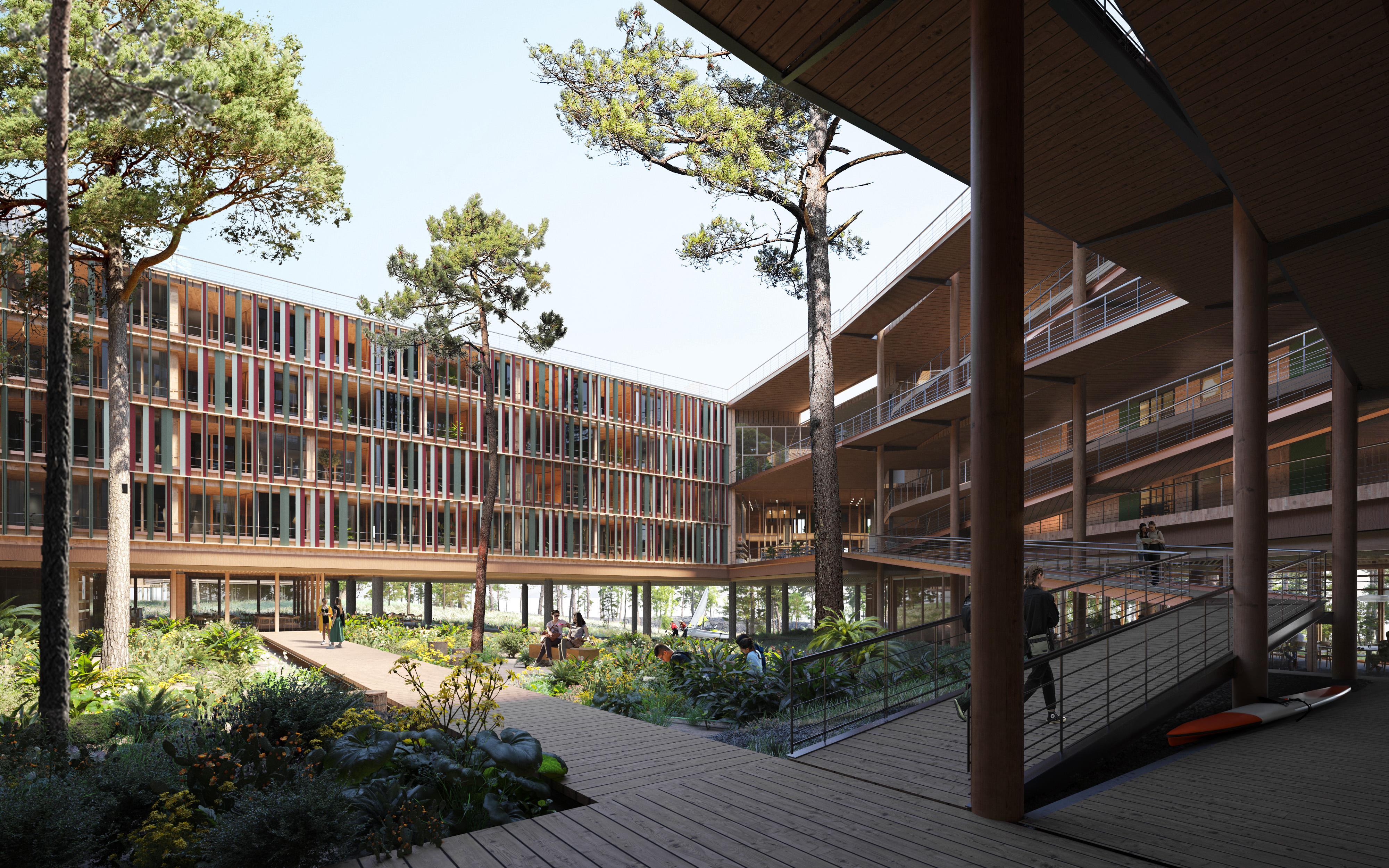
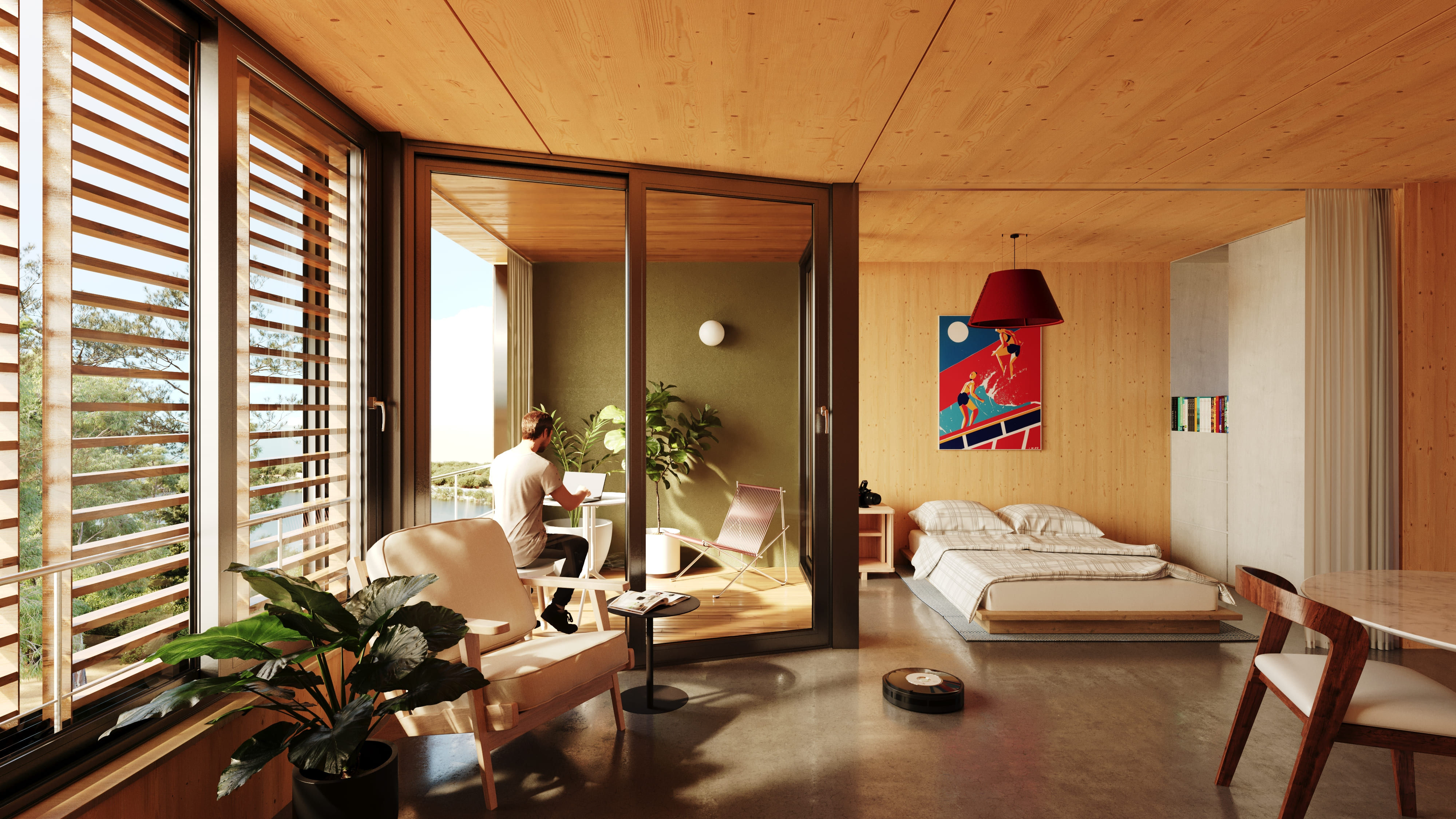
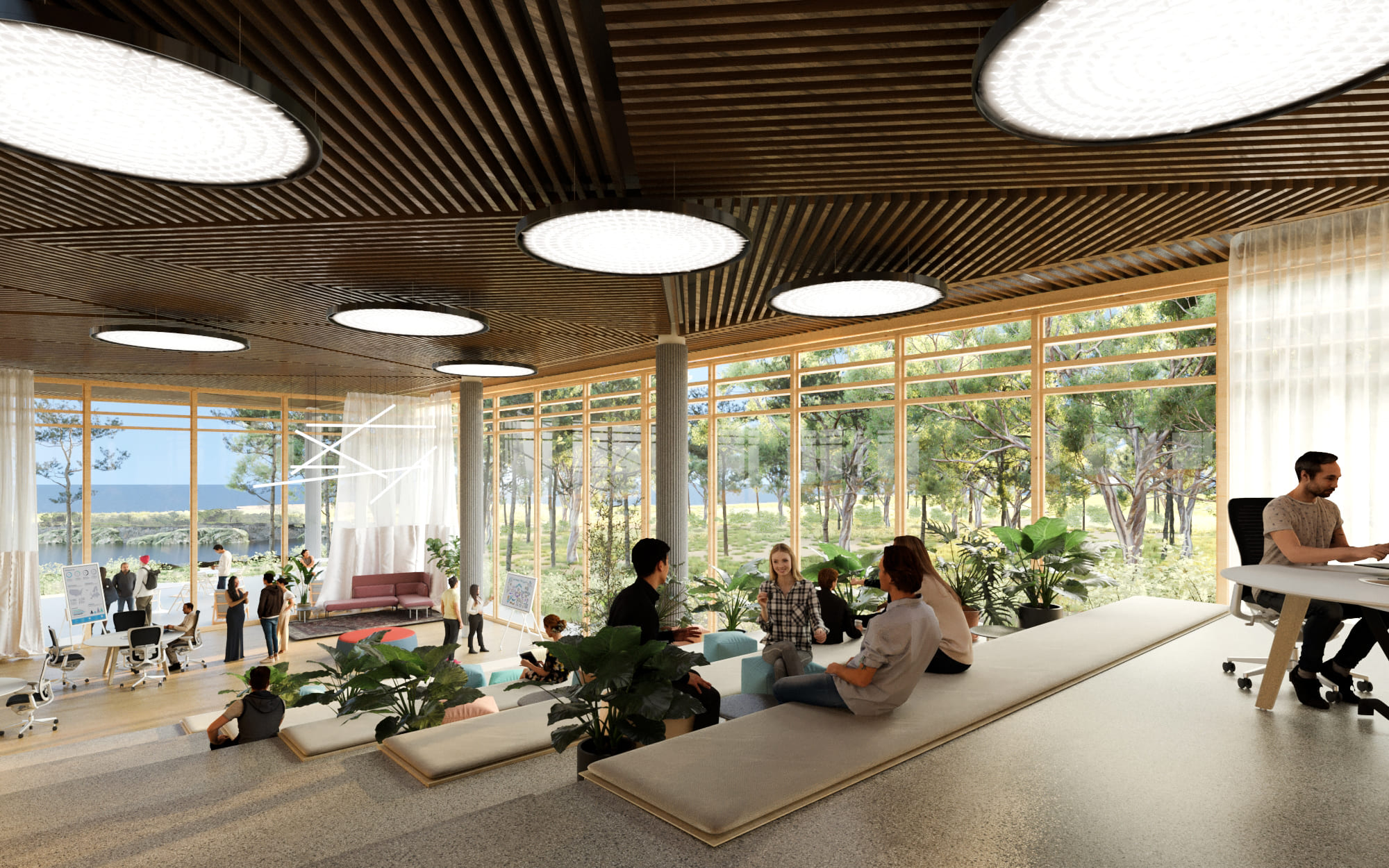
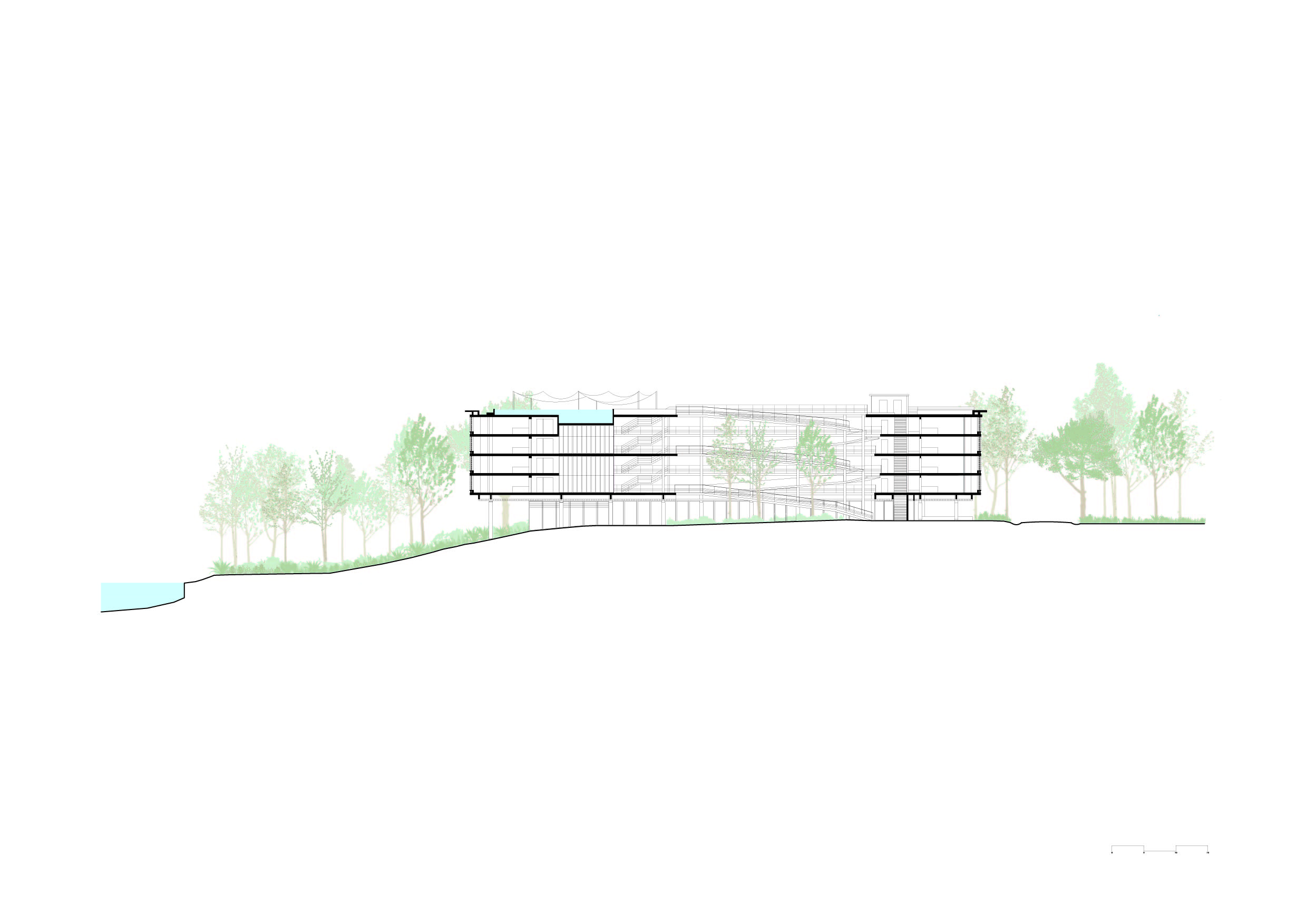
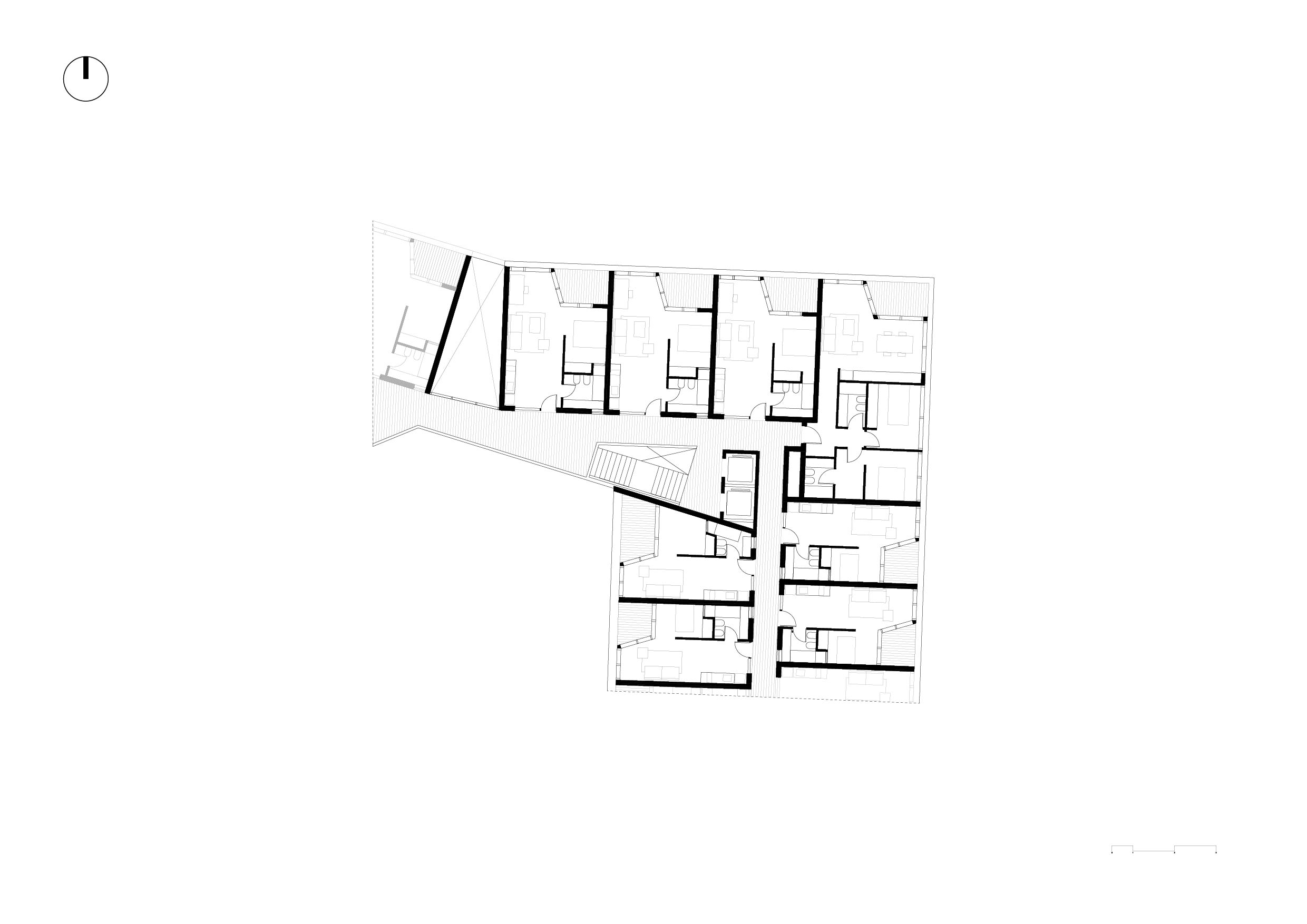
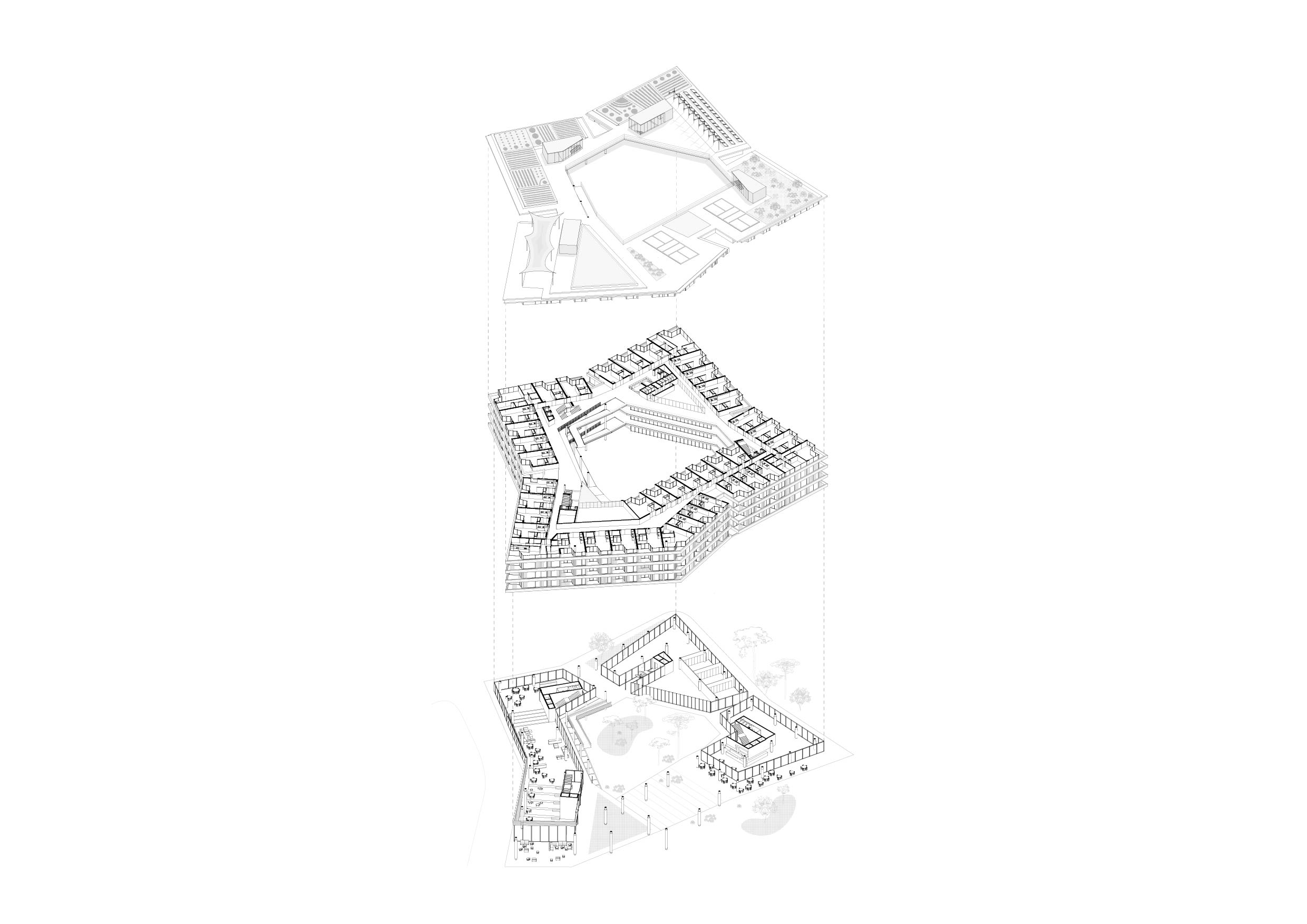
At its center, a planted courtyard is enclosed by the residential units, which are connected to shared amenities through semi-covered galleries and ramps, forming a continuous promenade from the forest to the rooftop terrace. The residential program is organized through a modular system of cross-laminated timber (CLT) walls and slabs, establishing rhythmic and flexible structural-spatial spans. These modules alternate living-working areas and sleeping spaces, while accommodating more enclosed configurations suitable for studio apartments, one-bedroom units, or customized layouts. The timber system is supported by a reinforced concrete structure conceived as a large-span table hovering above the ground floor, separating the timber construction from the terrain while opening views and public space in dialogue with the streetscape and surrounding landscape.
Ignacio Dahl Rocha, Facundo Morando, Nicole Michel, Tomás Kenny, Roberto Lombardi, Clara Carrera, Bárbara Oestereicher, Jerónimo Fortunati, Lucía Di Loreto, Juan Shimazu, Franco Bisso, Valeria Tawara, María Bianchi, Félix Ludueña, Valentina Fernandez Pescuma, Lola Flores
2023 - 2024 · Uruguay, Colonia · Housing » Grouped
The project was awarded first prize in the competition for the master plan and a landmark building within the new Next Gen district at +Colonia, an urban development located east of Colonia del Sacramento, Uruguay. It occupies a coastal strip along the Río de la Plata, set within a landscape of beaches and gentle dunes interwoven with an existing pine plantation. This geography defines a medium-density urban fabric composed of compact, freestanding mixed-use volumes embedded among natural reserves. The district unfolds through a series of architectural typologies arranged along a linear park that culminates at the waterfront. Buildings are delicately placed upon the dunes and merge with the landscape beneath the pines, creating a variety of semi-covered spaces ideally suited to collective and urban programs.