Archivo General de la Nación
Urban strategy: The sculpture.
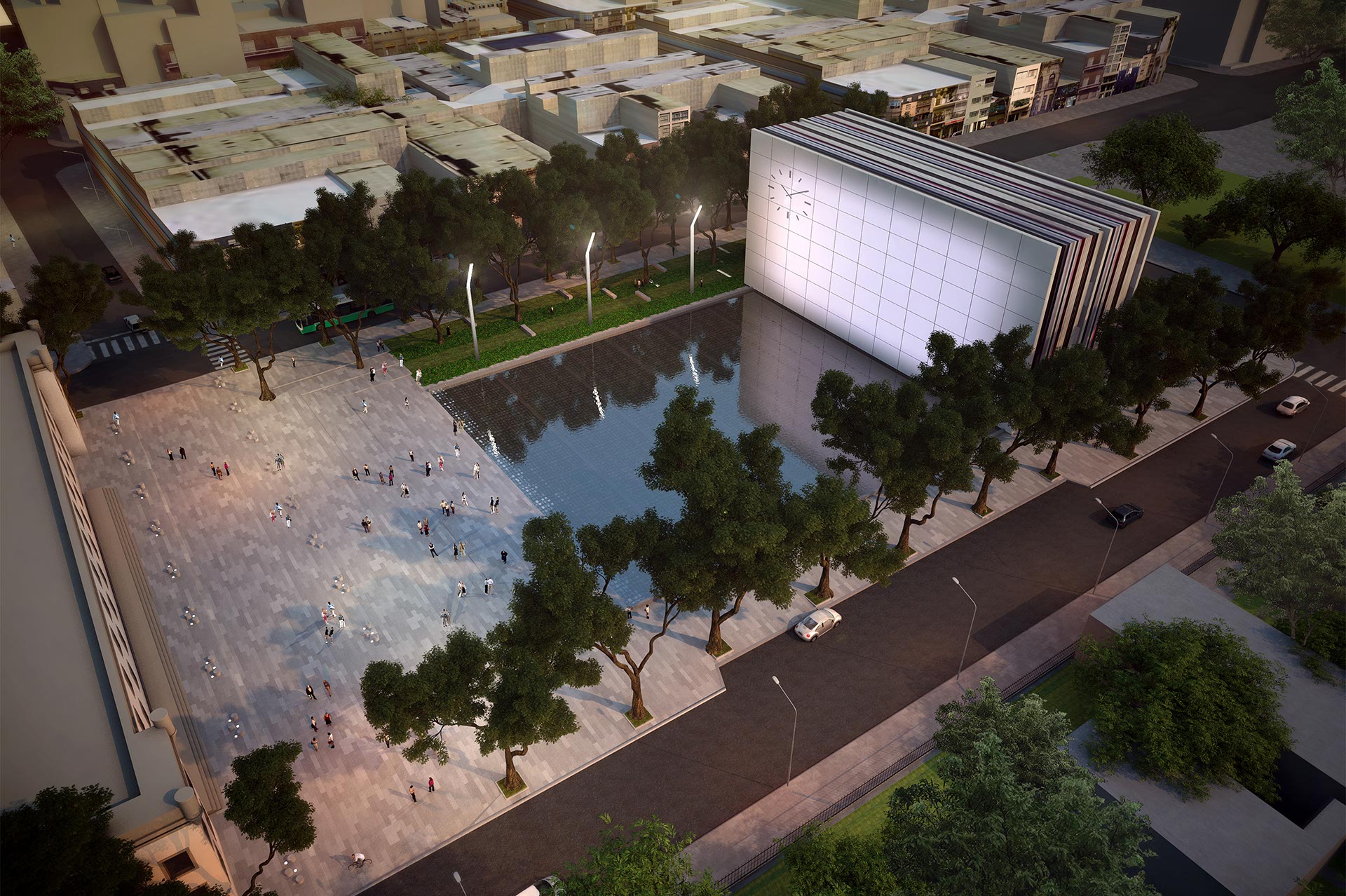
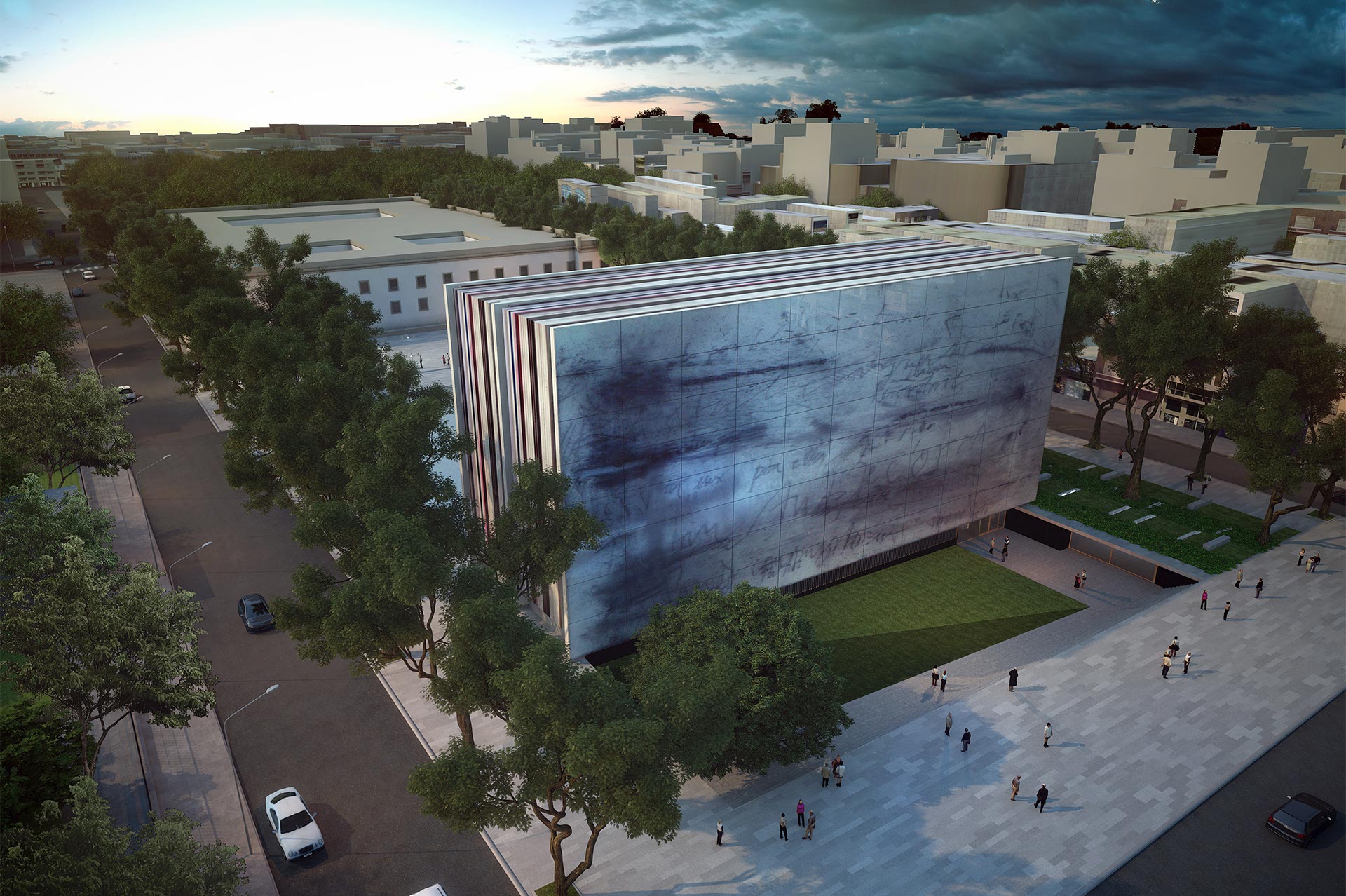
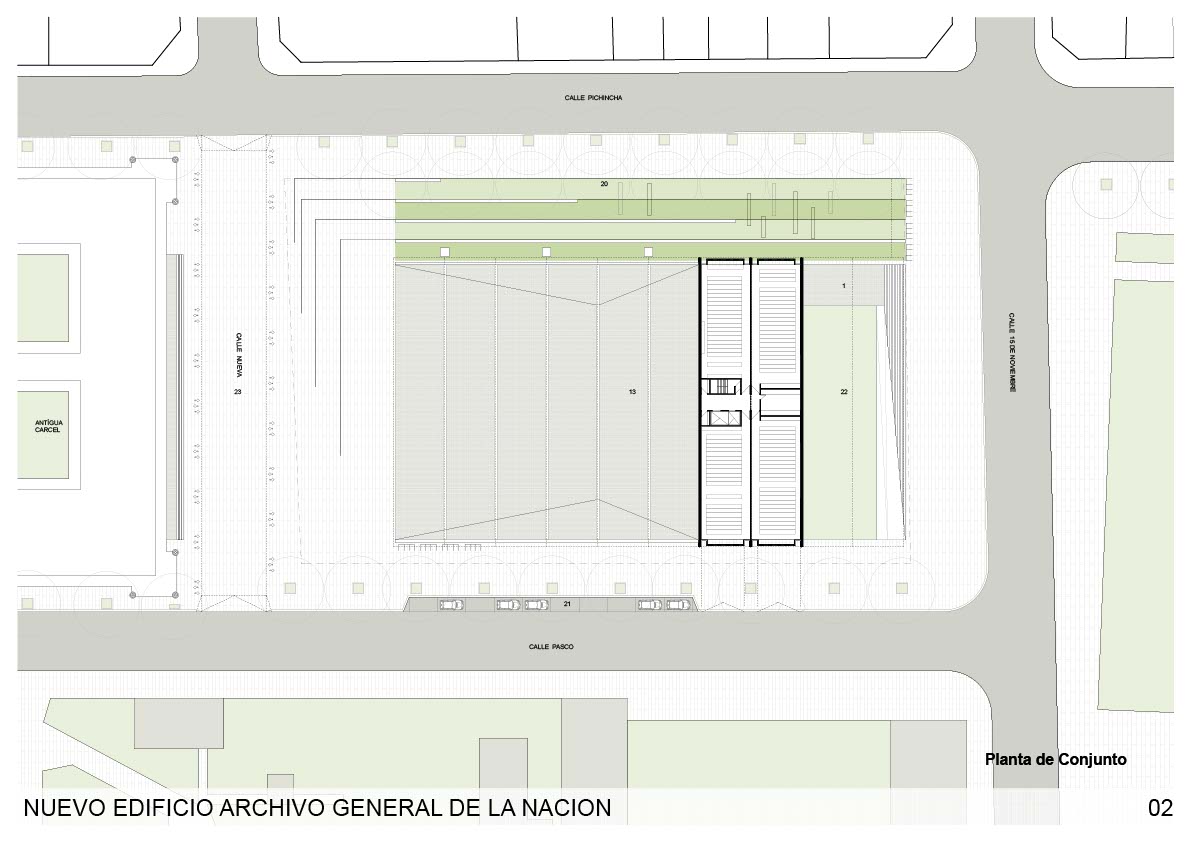
The project aims to revitalise this run-down area through a targeted and striking intervention. Like an urban sculpture, it focuses all its energy on becoming a focal point. It is an object set within a void, an open and accessible space; a luminous, multifaceted and enigmatic object that breathes new life into a dilapidated setting.
Time.
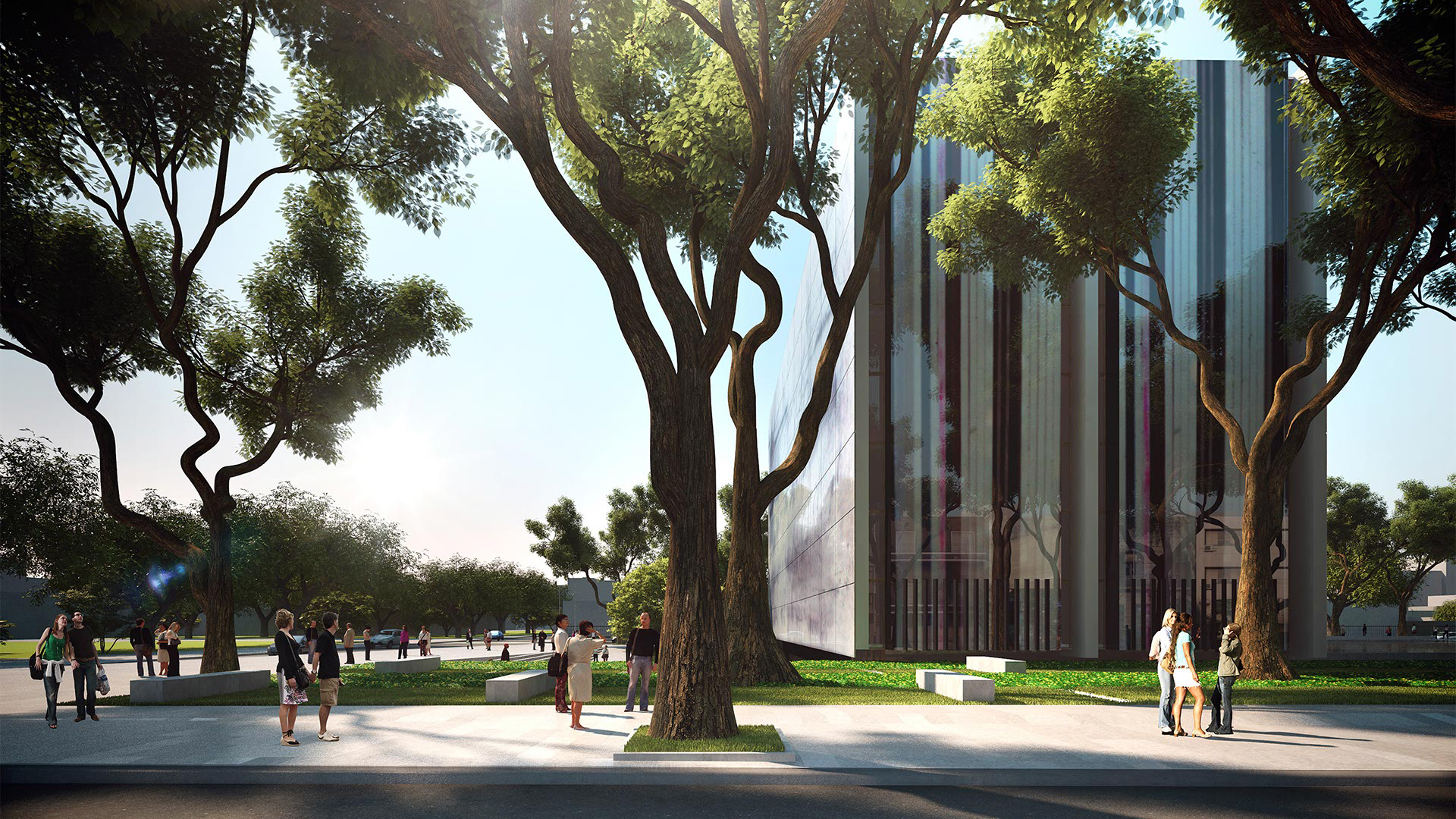
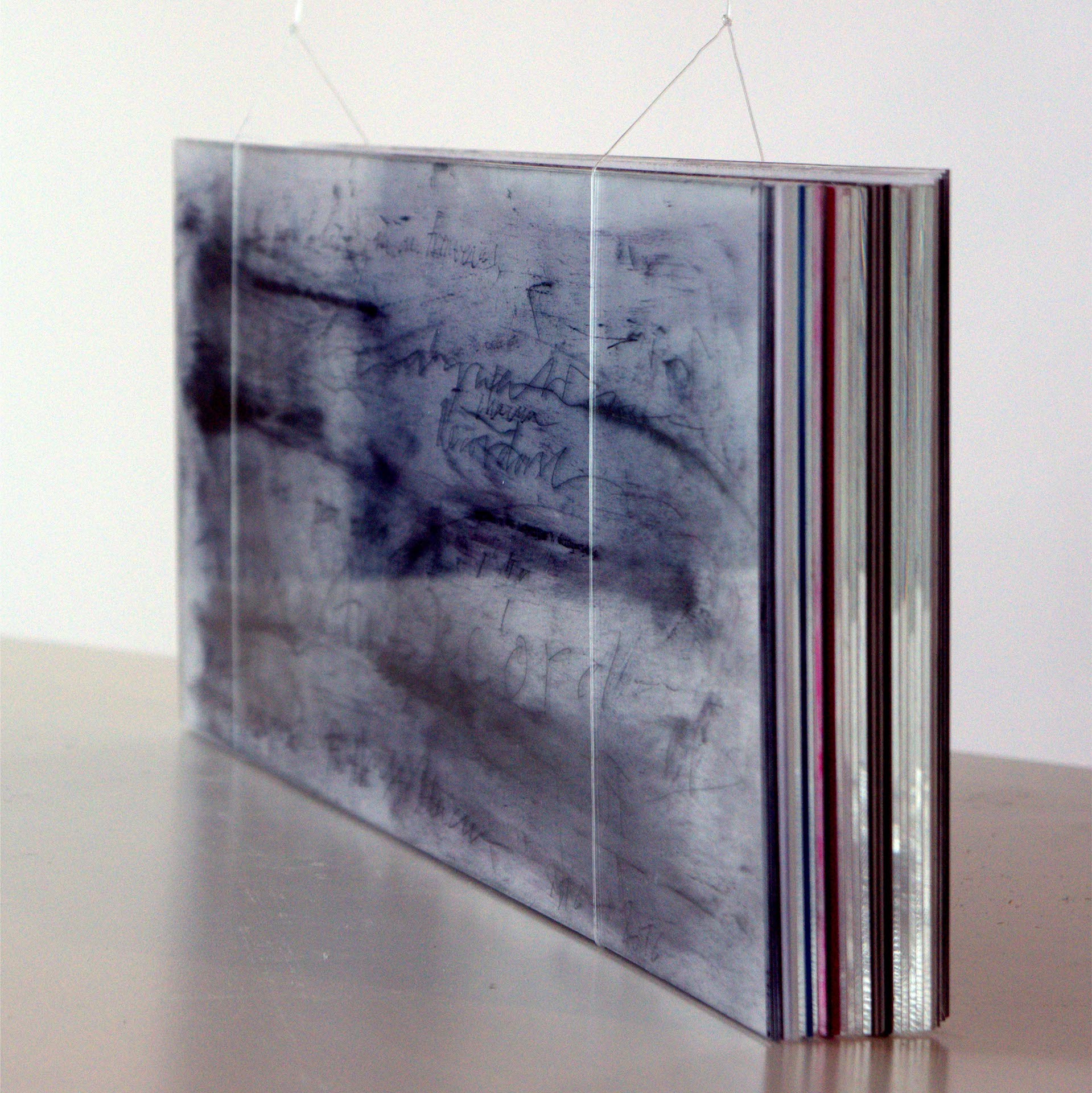
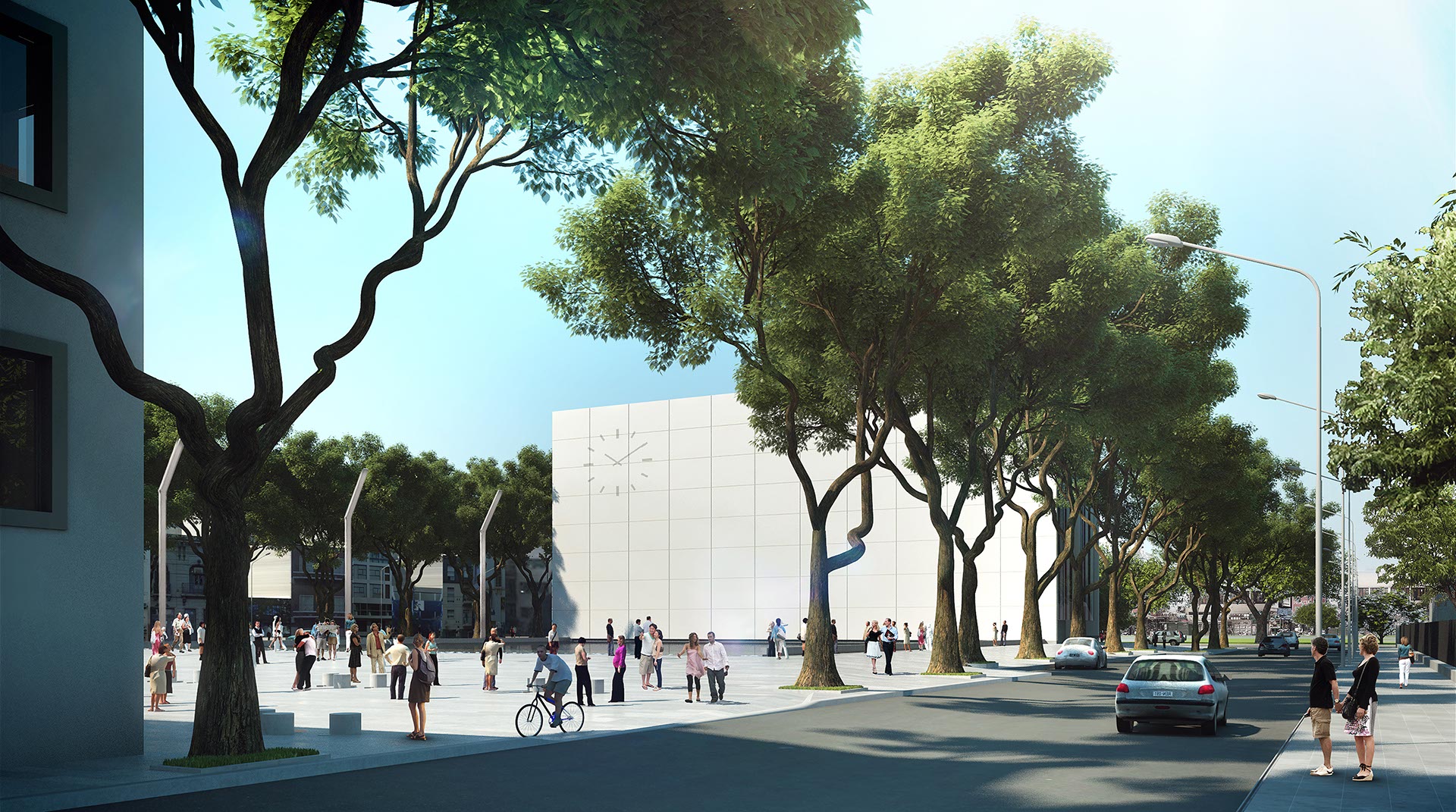
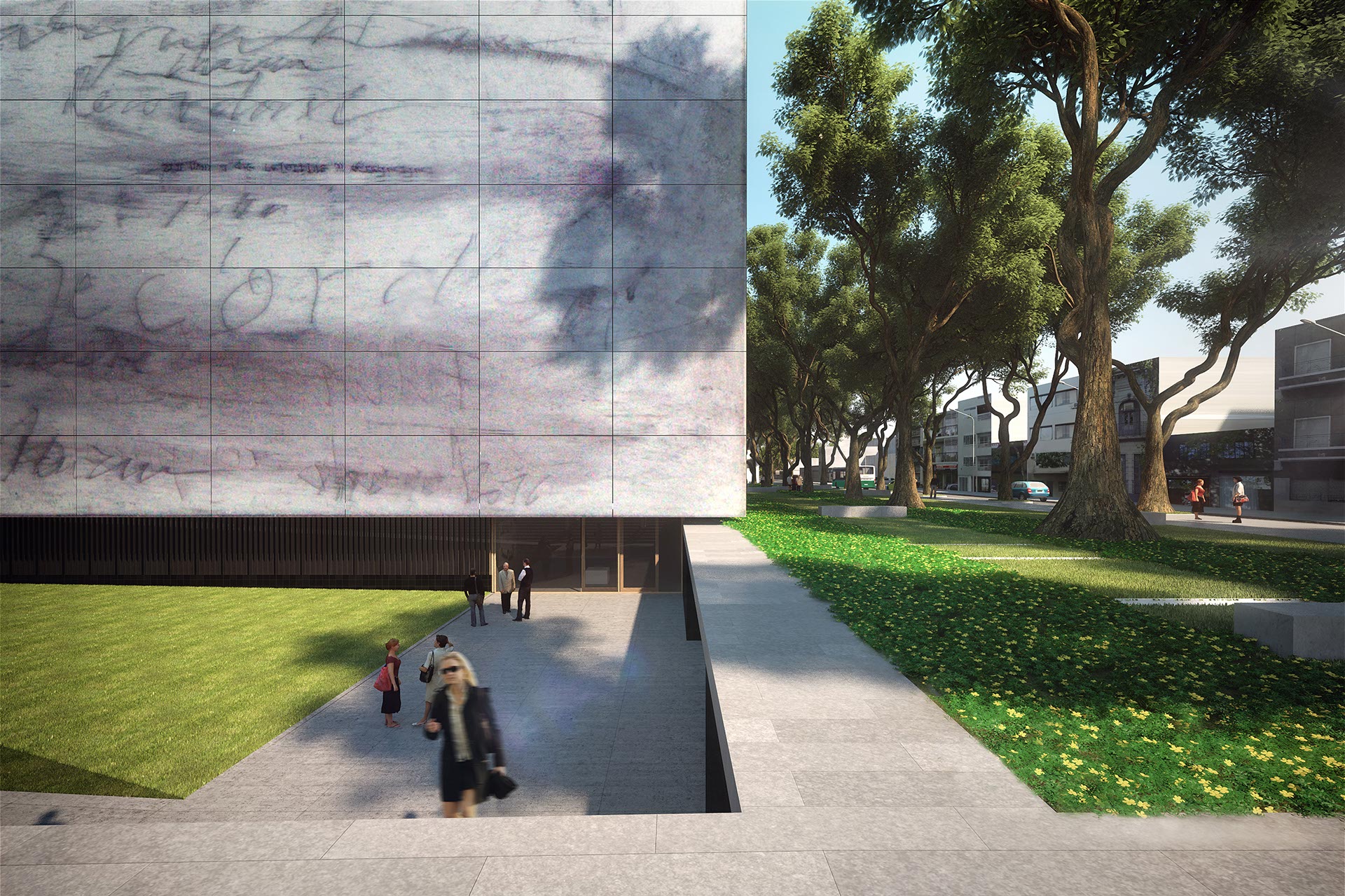
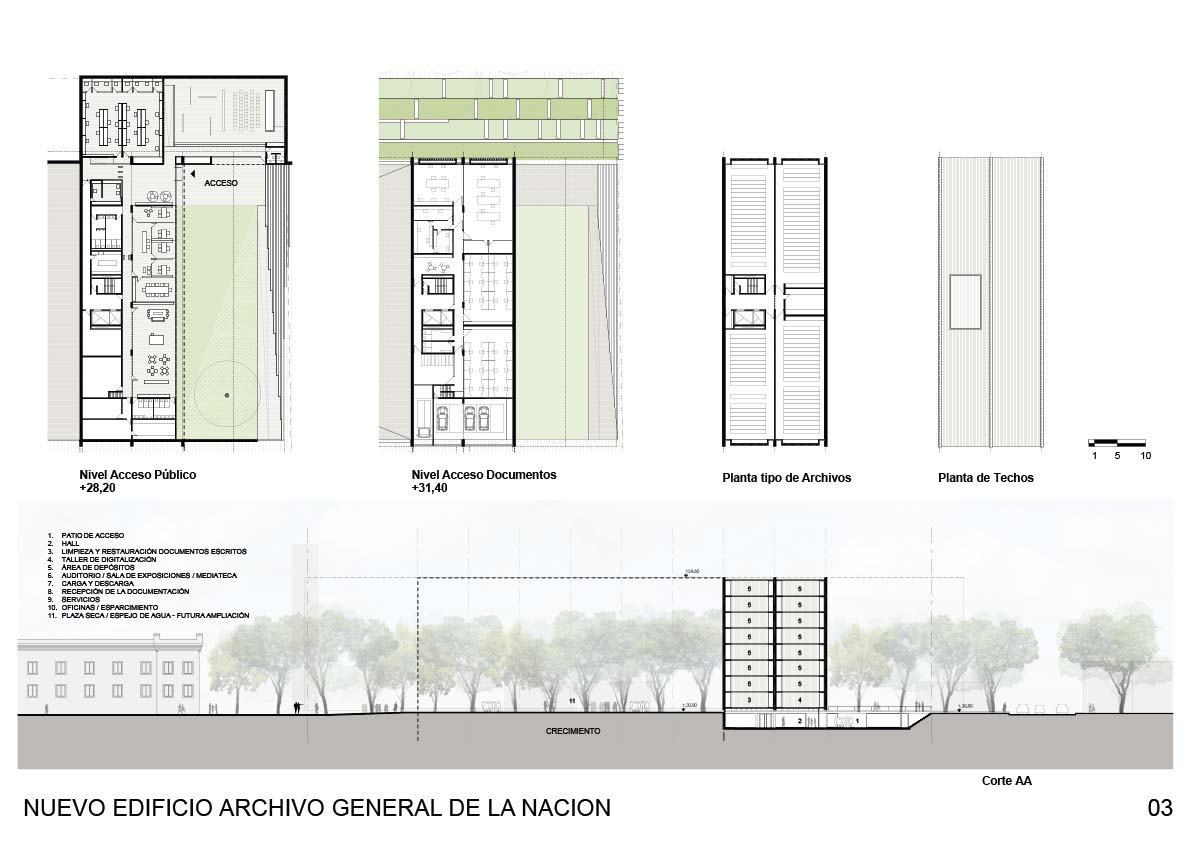
The building is composed of segments. Moments in history that accumulate. To the north, on 15 de Noviembre, the building presents a timeless image. A large slab suspended over the public access garden. The material treatment alludes to the accumulation of marks over time, visualising that depth. To the south, the building presents a blank, austere façade that will be replaced by another as it grows. This façade is the present, the action. Here, time passes in images; here, nothing accumulates. On the sides, the building opens up; its urbanity is doubly metaphorical. Its walls function as party walls which, every 10 metres, allude to the character of our dense, consolidated city. The content is the accumulation of pages of history.
Opportunity: the urban space.
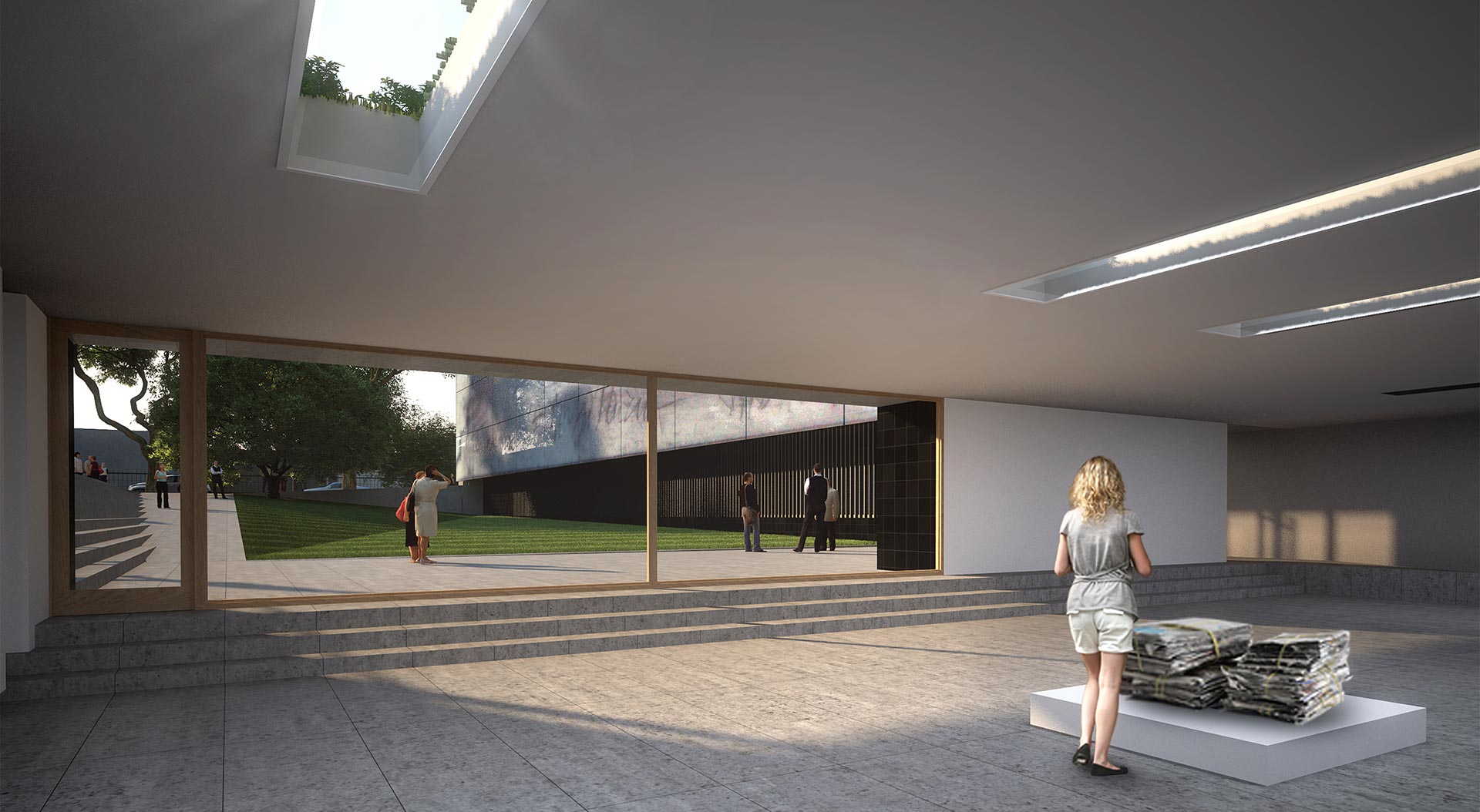
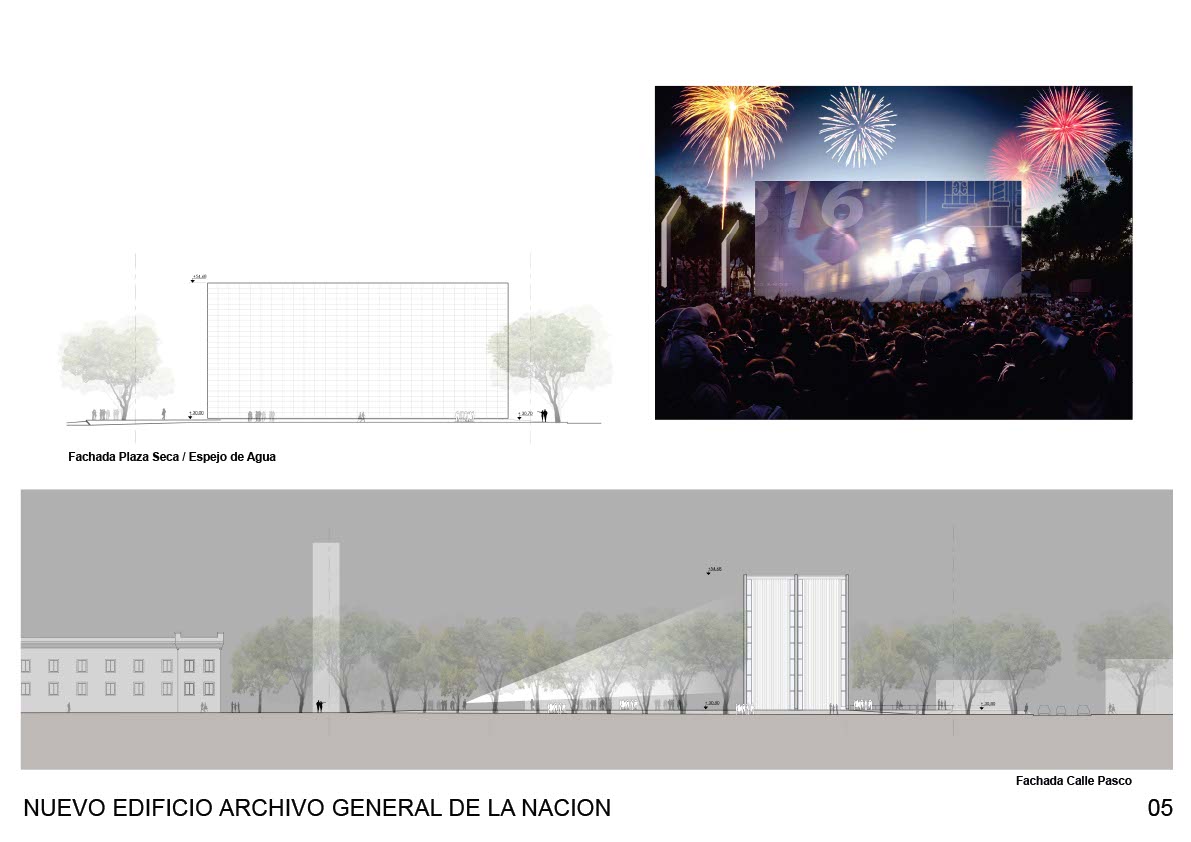
To the south, the building leaves a large, ephemeral urban void, which engages in dialogue with the former prison building, destined for future public use. In this space lies a large cobbled area that imprints the mark of future growth upon the ground. In this fragile and elusive space, a thin layer of water spreads out, defining its everyday and contemplative use. At times, the water drains away and the esplanade becomes a public venue for mass events: cinema screenings, fairs, concerts and commemorations. The building offers its smooth façade as a backdrop or screen for these events. A place of civic life, of gathering and openness, replacing the demolished prison.
Landscaping.
The proposed double row of trees extends the line of tipa trees that characterises Pichincha Street, echoing the existing linear park proposal in the area. The material treatment of the opening onto Rondeau Street integrates it into this pedestrian space.
Growth.
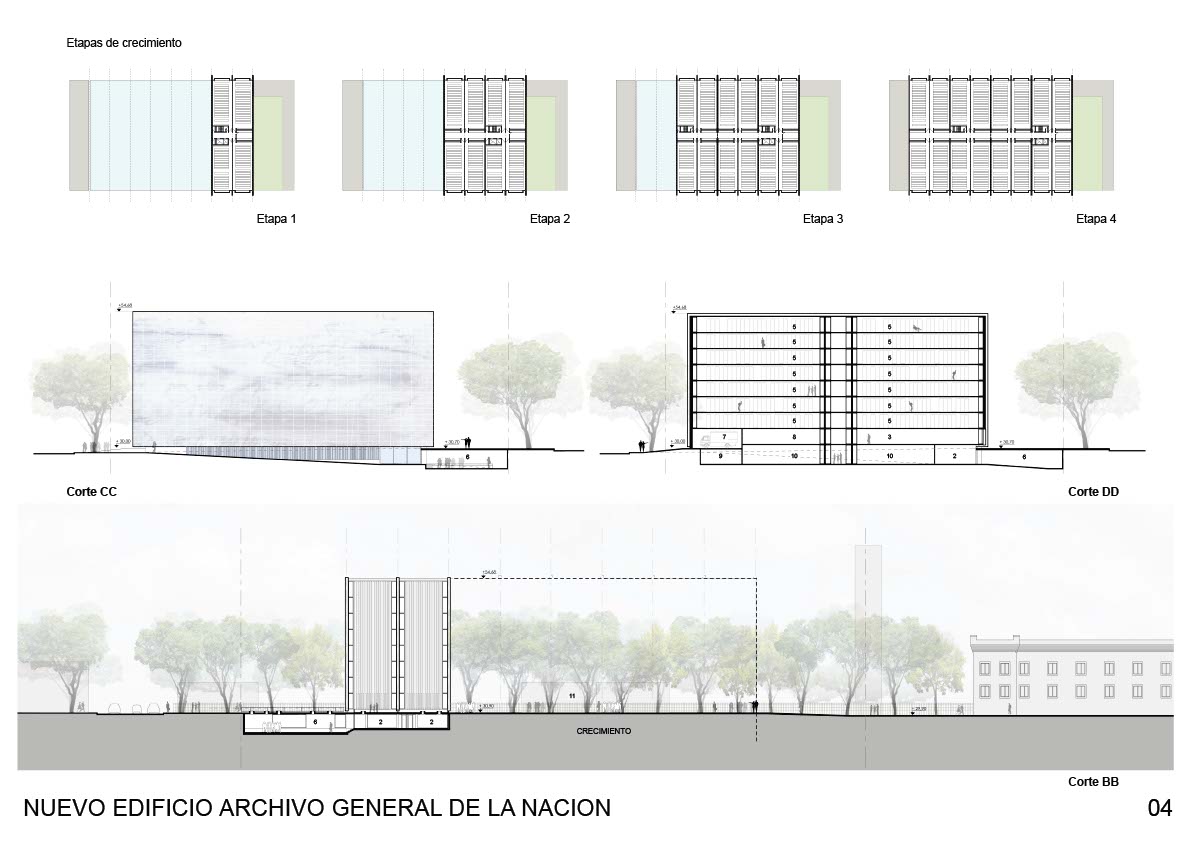
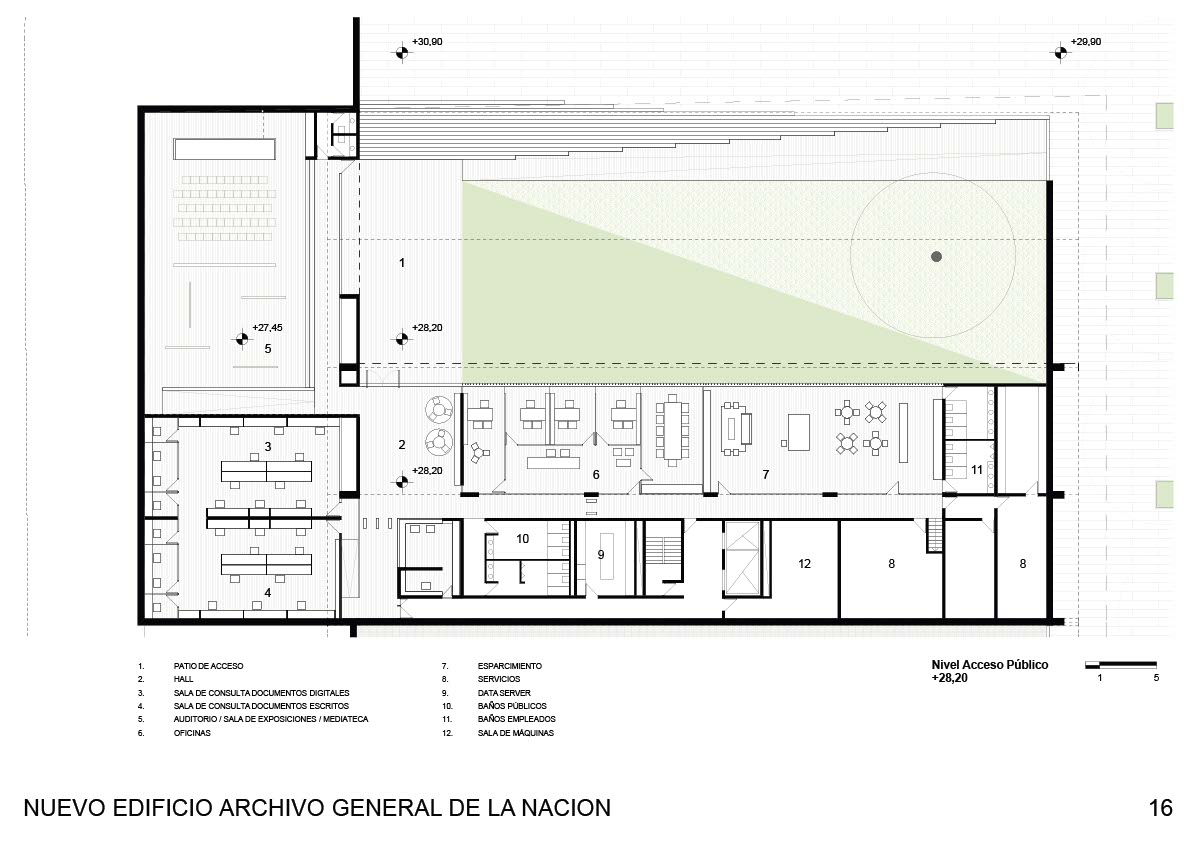
The stages of growth may vary. The simplicity of the growth allows for the development of a compact, modular building with a highly efficient circulation system.
From the outset, the building exhibits a high degree of compactness, ensuring good energy efficiency and thermal stability. As extensions are added to the same volume, this compactness will be gradually enhanced.